

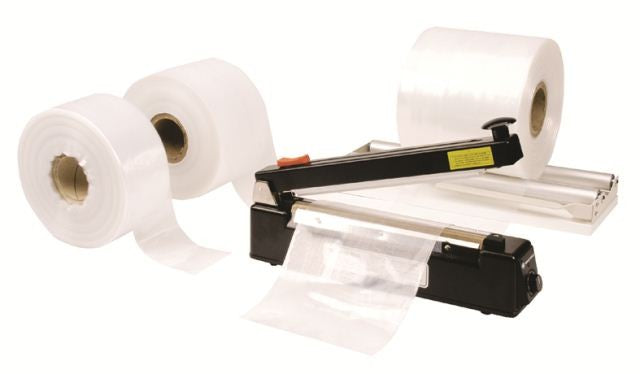
500G Lay Flat Tubing (LFT)
Overview
Lay Flat Tubing (LFT) is a versatile polythene packaging film supplied as a continuous flattened tube on a roll. It allows you to create custom-length bags and sleeves on demand: simply cut to the required length, insert the product, then seal the open end(s) using a suitable heat sealer. This format is ideal when you need flexible packaging for items of varying lengths, want to reduce the number of bag sizes you keep in stock, or need a protective wrap that can be tailored quickly at the packing bench.
This listing is for heavy-duty Lay Flat Tubing in the 500g / 127 micron (often referred to as “500 gauge”) category, designed for robust protection and dependable sealing performance. Lay flat tubing is commonly used across warehousing, manufacturing, e‑commerce fulfilment, engineering, and general storage where a clean, protective barrier is required.
Key Features
Made for custom-length packaging
Because the film is supplied as a continuous tube, you can cut exactly what you need—creating sleeves, long bags, or short protective covers without relying on pre-made bag lengths.
Heavy-duty thickness (127 micron / ~500 gauge)
A thicker film helps provide improved puncture resistance and durability for handling, storage, and transit, making it well suited to heavier or more angular items.
Heat-sealable for secure closure
Lay flat tubing is designed to be sealed with heat sealing equipment, enabling neat, tamper-evident style closures and consistent pack presentation.
Clean, protective barrier
Polythene tubing helps protect products from dust, light surface moisture, and scuffs during storage and distribution.
Efficient stockholding
One roll can replace multiple bag sizes, helping reduce storage space and simplifying purchasing for operations that pack many different product lengths.
Flexible packing workflows
Ideal for bench packing, kitting, and production environments where speed and adaptability matter—cut, load, seal, and move on.
Key Features (Bullet Summary)
- Continuous layflat tube format for made-to-measure bags and sleeves
- Heavy-duty film thickness: 127 micron (commonly referenced as ~500 gauge)
- Designed for heat sealing to create secure closures
- Protects against dust, scuffs, and light surface moisture
- Reduces the need to stock multiple pre-made bag lengths
- Suitable for industrial, warehouse, and fulfilment use
Typical Uses
- Packaging long or awkward items where standard bag lengths are impractical
- Protective sleeves for components, parts, and assemblies
- Bundling and grouping items for picking, kitting, or dispatch
- Dust covers for stored goods and work-in-progress
- General-purpose protective wrapping in workshops and warehouses
Lay Flat Tubing — Full Product Guide
Introduction
Lay Flat Tubing is one of the most adaptable packaging formats available. Instead of choosing from many fixed-length bags, you start with a roll of tubing and create the exact pack length you need at the moment you need it. This approach can improve packing efficiency, reduce waste from oversized bags, and help standardise packaging across a wide range of product lines.
How It Works
Lay flat tubing is supplied as a flattened tube of polythene film wound onto a roll. In use, you typically:
- Pull out the required length of tubing
- Seal one end (if not already sealed as part of your process)
- Cut to length
- Insert the product
- Seal the remaining open end to close the pack
This simple workflow makes it easy to create consistent packaging for items that vary in length, while keeping the same width and film specification.
Materials and Construction
Lay flat tubing is a polythene film product (often referred to as LDPE in general packaging contexts). The film is manufactured as a continuous tube and then flattened for winding and storage. The “layflat” measurement refers to the width of the flattened tube; when opened, the circumference is approximately double the layflat width.
Thickness reference
This product is specified at 127 micron thickness. In packaging shorthand, this is commonly described as approximately 500 gauge. Thickness is a key factor in durability, puncture resistance, and how the film behaves during sealing and handling.
Choosing the Right Width (Layflat vs Open Size)
When selecting lay flat tubing, it helps to consider:
- Layflat width: the width of the tubing when flattened on the roll
- Open circumference: roughly twice the layflat width when opened
- Product profile: the widest point of the item, including any protrusions or packaging layers
- Ease of loading: allowing a little extra room can speed up packing and reduce snagging
If you are packaging irregular shapes or items with sharp edges, consider allowing additional clearance and using appropriate internal protection where needed.
Heat Sealing and Closure Options
Lay flat tubing is intended for heat sealing. Depending on your packing setup, you may use:
- Impulse heat sealers for general packing benches
- Constant heat sealers for higher throughput environments
- Cut-and-seal workflows to create one sealed end and one open end before loading
For best results, ensure the sealing area is clean and free from dust or product debris, and match sealing time/temperature to the film thickness and your equipment.
Floor Type Compatibility
This product is a packaging film and is not a floor covering. If you are using lay flat tubing in a production area, it is typically handled at packing benches, on racking, or alongside conveyor and dispatch stations. Keep rolls stored clean and dry to maintain consistent sealing performance.
Health and Safety
- Heat sealing equipment: Use appropriate care and training when operating sealers; sealing bars can be hot and may cause burns.
- Cutting: Use suitable cutting tools and safe cutting practices when trimming tubing to length.
- Film handling: Polythene film can be slippery; keep work areas tidy to reduce slip/trip risks from offcuts.
- Suffocation hazard: Keep plastic packaging away from children and follow your site’s safety procedures.
Ideal Applications and Use Cases
Heavy-duty lay flat tubing is commonly chosen for:
- Engineering and industrial parts: sleeves for components, assemblies, and spares
- Warehouse storage: dust protection for stock and work-in-progress
- Fulfilment and dispatch: custom-length packs for mixed product ranges
- Manufacturing: protective wrapping between process steps
- Bundling: grouping items for picking, kitting, or internal movement
Maintenance, Cleaning and Care
- Store rolls in a clean, dry area away from direct heat sources
- Keep sealing bars clean for consistent seals and neat finish
- Remove offcuts promptly to keep packing areas safe and efficient
- If film becomes dusty, wipe down work surfaces and review storage practices
Case Study (Typical Workflow Example)
Scenario: A small manufacturing and dispatch team ships products in a wide range of lengths. Pre-made bags either don’t fit or require stocking many sizes.
Approach: The team uses lay flat tubing at a packing bench. For each order, they pull out the required length, seal and cut to create a bag, insert the item, then seal the top. This reduces the number of packaging SKUs they hold and improves packing speed for unusual lengths.
Outcome: More consistent packaging, less wasted bag space, and simpler stock control—while maintaining a protective barrier for storage and transit.
Who Is It For?
- Warehouses and fulfilment operations packing variable-length items
- Engineering and manufacturing teams protecting parts and assemblies
- Workshops and maintenance departments organising spares
- Businesses wanting a flexible alternative to multiple pre-made bag sizes
Colours / Features Available
Lay flat tubing is commonly supplied as a clear/natural polythene film for easy product identification. If your operation requires tinted, coloured, printed, or anti-static options, check availability within the wider lay flat tubing range.
Sizes Available
This product page may include multiple width and pack options as variants. Select the option that best matches your product’s width and your preferred quantity. Lay flat tubing is supplied on a roll and is intended to be cut to length as required, enabling bespoke pack lengths without needing custom-manufactured bags.
Need help choosing?
If you’re unsure which layflat width or thickness is best for your application, consider the widest point of your product, how quickly you need to pack, and the level of protection required during handling and transit.