

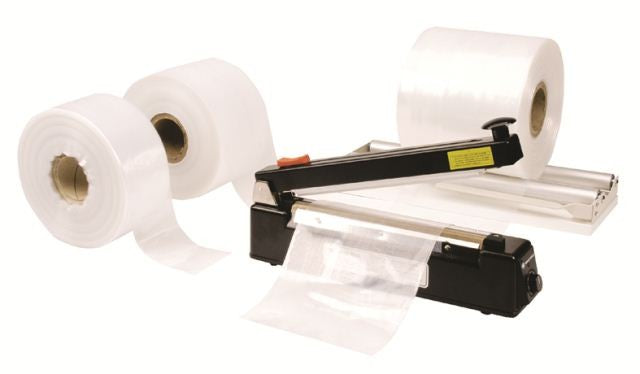
250G Lay Flat Tubing (LFT)
Overview
Lay flat tubing (often shortened to LFT) is a continuous tube of polythene supplied on a roll. It’s designed to be cut to length and sealed at one or both ends to create protective sleeves and bags on demand. This listing is for 250 gauge lay flat tubing (approx. 64 micron / 64µm) in a wide format, supplied as a heavy-duty roll option. It’s a practical choice when you need flexible, fast packaging for long, awkward, or variable-length items—without holding lots of pre-made bag sizes.
Because the material is supplied as a tube, you can create packaging that closely matches the length of your product: cut, insert, then seal. That helps reduce wasted film compared with oversized bags, and it can speed up packing where product lengths vary throughout the day.
Key Features
Made to length (pack what you need, when you need)
Lay flat tubing lets you produce sleeves and bags in-house. Cut the tubing to your required length, seal one end (if needed), load the product, then seal the other end. This is ideal for operations handling mixed product lengths or bespoke orders.
250 gauge / ~64 micron thickness
This tubing is specified as 250 gauge and listed as approximately 64 micron thickness. That thickness is commonly selected for protective packaging where you want a robust film that still remains easy to handle and seal.
Wide layflat format for bulky items
A wide layflat width is useful for larger profiles, grouped items, or products that need extra room for easy insertion. It can also be used to create pallet-top covers or protective shrouds when cut and sealed appropriately.
Continuous roll supply for efficient packing
Supplied on a roll, layflat tubing supports repeatable workflows at a packing bench. It pairs well with heat sealers and cutting stations, helping teams standardise pack-out steps.
Versatile protection for storage and transit
Polythene tubing is widely used to protect goods from dust, light moisture, and handling scuffs during storage and distribution. It’s commonly used as an inner protective layer inside cartons, crates, or on pallets.
Simple to seal
Layflat tubing is typically sealed using a suitable heat sealer. Once sealed, it forms a neat, enclosed pack that can be labelled and handled like a conventional bag.
Key Features (Bullet Summary)
- On-demand bag making: cut and seal to create sleeves/bags to your required length
- 250 gauge / ~64µm film: a popular thickness for protective packaging
- Wide layflat tubing: suited to bulky, grouped, or awkward items
- Roll format: supports efficient, repeatable packing workflows
- Protective barrier: helps guard against dust and light moisture during storage/transit
- Heat-sealable: compatible with typical heat sealing processes
Typical Uses
- Creating protective sleeves for long or variable-length products
- Packaging bulky components, assemblies, or grouped items
- Dust covers for stored goods (cut and seal as required)
- Inner protection for items shipped in cartons, crates, or on pallets
- General warehouse and distribution packaging where flexibility is key
250G Lay Flat Tubing — Full Product Guide
Lay flat tubing is one of the most adaptable packaging formats available because it allows you to create the pack size you need at the moment you need it. Instead of choosing from a limited range of pre-made bag lengths, you work from a continuous tube of film. This is especially helpful for businesses that pack a mix of product lengths, handle custom orders, or want to reduce the number of packaging SKUs they keep in stock.
How It Works
Step 1: Measure and cut
Pull the tubing from the roll and cut it to the required length. Many packing benches use a simple measuring guide or marked work surface to keep lengths consistent.
Step 2: Seal one end (if creating a bag)
If you’re making a bag rather than a sleeve, seal one end first using a suitable heat sealer. This creates the base of the bag.
Step 3: Insert the product
Slide the item into the open end. The tubular format makes it easy to load long products without needing to open a flat bag.
Step 4: Seal the open end
Seal the remaining open end to fully enclose the product. The result is a neat, custom-length pack that can be labelled or placed into an outer carton.
Step 5: Repeat efficiently
Because the material is on a roll, the process is repeatable and can be streamlined for higher throughput packing lines.
Materials and Construction
This product is polythene layflat tubing. Polythene film is widely used in packaging because it is lightweight, flexible, and provides a practical barrier against dust and light moisture. The tubing format means the film is supplied as a continuous tube rather than a flat sheet, enabling quick conversion into sleeves or bags.
Thickness reference
This listing specifies 250 gauge and approximately 64 micron (64µm). In day-to-day packaging terms, gauge and micron are common ways to describe film thickness. If you are matching an existing specification, it’s good practice to confirm whether your process references gauge, micron, or another unit so you can compare like-for-like.
Floor Type Compatibility
Layflat tubing is used across many environments—from small packing benches to larger warehouse operations. It can be deployed wherever you have a stable cutting surface and a suitable sealing method. If you are using it in a production area, consider how the roll will be mounted (bench stand, dispenser, or spindle) to keep handling smooth and reduce film damage.
Health and Safety
Handling and cutting
Use appropriate cutting tools and safe cutting practices. Keep blades stored safely when not in use.
Heat sealing
Heat sealers operate at high temperatures. Follow your equipment guidance, allow sealing bars to cool before maintenance, and keep hands clear of the sealing area during operation.
Packaging safety
As with many plastic films, keep packaging away from children and avoid placing film where it could create a suffocation hazard. Dispose of waste film responsibly in line with local requirements.
Ideal Applications and Use Cases
Variable-length products
If you pack items that vary in length—such as profiles, trims, components, or mixed orders—layflat tubing helps you create a close-fitting pack without relying on oversized bags.
Bulky or grouped items
A wide layflat format can be useful for bundling multiple items together or packaging products with a larger cross-section.
Warehouse protection
Use as an inner protective layer to keep goods clean during storage, picking, and transit. It can also be used to create protective shrouds or covers when cut and sealed to suit.
Maintenance, Cleaning and Care
Storage
Store rolls in a clean, dry area to keep the film free from dust and debris. Avoid placing heavy items on top of rolls to prevent deformation.
Handling
Mount the roll on a suitable dispenser or spindle where possible. This helps prevent telescoping, reduces snagging, and makes it easier to pull consistent lengths.
Sealing performance
If seals are inconsistent, check your sealer settings (temperature, dwell time, and pressure) and ensure the sealing area is clean and free from contamination.
Case Study (Example Workflow)
A packing team handling mixed-length items can keep one roll of layflat tubing at the bench alongside a heat sealer. Instead of selecting from multiple bag lengths, the operator cuts the tubing to match each order line, seals, inserts the product, and seals again. This approach can reduce the number of packaging sizes kept in stock and helps produce a tidy, consistent pack for dispatch.
Who is it for?
- Warehouses and distribution centres packing mixed or variable-length goods
- Manufacturers and fabricators needing protective sleeves for components
- Operations looking to reduce packaging SKUs by switching to a cut-and-seal format
- Businesses that want a robust film thickness for general protective packaging
Colours / Features Available
This product is listed as lay flat tubing in a standard polythene format. If you require specific colours, printing, or special properties, check the available options on the product page or contact the supplier for suitability.
Sizes Available
This product page may represent multiple options (such as different pack quantities or related variants). Select the option that matches your requirements from the available choices on the page. If you need a specific cut length, layflat tubing is designed to be cut to your required length during packing.
Need help choosing?
If you’re matching an existing bag size, consider the product’s circumference (or width when laid flat), the thickness you need for protection, and how you plan to seal and label the finished pack.