

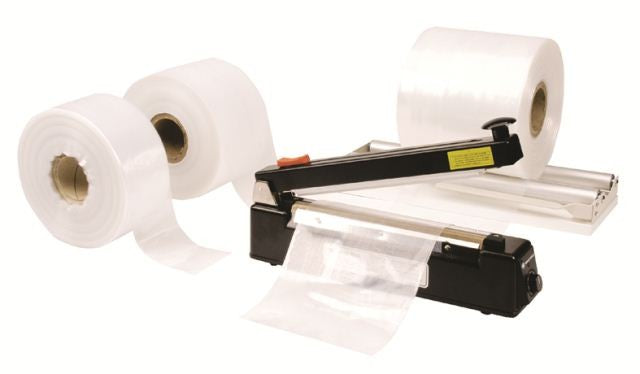
250G Lay Flat Tubing (LFT)
40" Lay Flat Tubing (Approx. 250 Gauge / 63–64 Micron) — Overview
Lay flat tubing (often shortened to LFT) is a continuous tube of polythene film supplied flattened on a roll. It’s designed to let you create custom-length bags and sleeves on demand: simply cut the tubing to the length you need and seal one or both ends using an appropriate heat sealer. This makes it a practical choice for packing items that are awkward, long, or variable in size—without needing to stock multiple pre-made bag sizes.
This listing is for 250G (approx. 63–64 micron) lay flat tubing in a wide format (commonly referenced as 40" layflat). The 250 gauge / 63–64 micron thickness is widely used as a durable, general-purpose film where you want a balance of flexibility, tear resistance, and puncture resistance for everyday industrial and warehouse packaging.
Key Features
Made-to-measure packaging:
Cut exactly the length you need to create a sleeve or bag, helping reduce wasted material and the need to hold many different bag sizes in stock.
Continuous roll format:
Ideal for repeat packing tasks—especially where product lengths vary—because you can produce consistent packs quickly with a simple cut-and-seal workflow.
250 gauge / 63–64 micron film:
A popular “workhorse” thickness that offers improved strength and durability compared with lighter films, while remaining easy to handle and seal.
Protects against dust and handling marks:
Helps keep products clean during storage, picking, and transit, and provides a neat outer wrap for presentation and organisation.
Versatile sealing options:
Compatible with many heat sealing methods (subject to your equipment and settings), allowing you to create open-ended sleeves, one-end sealed bags, or fully enclosed packs.
Key Features (Bullet Summary)
- Lay flat tubing supplied on a roll for cut-to-length packaging
- Approx. 250 gauge / 63–64 micron thickness for robust everyday protection
- Wide format suitable for larger or bulky items
- Efficient packing workflow—cut, insert, seal
- Helps reduce SKU count versus stocking many pre-made bag sizes
Typical Uses
- Long or awkward items: trims, profiles, mouldings, tubing, hoses, cables, and similar products
- Industrial parts and components: spares, assemblies, and items needing clean handling
- Warehouse and distribution: dust protection for stored goods and grouped items
- Textiles and soft goods: bundling and protecting garments, linens, and fabric packs
- Printed materials: protecting posters, large sheets, or bundled print runs (where suitable)
40" Lay Flat Tubing (250G / 63–64 Micron) — Full Product Guide
Choosing the right lay flat tubing is mainly about matching width, film thickness, and sealing method to your product and packing process. Below is a practical guide to help you get the best performance from 250G lay flat tubing and to avoid common packing issues such as weak seals, excessive waste, or film damage.
How It Works
Lay flat tubing is supplied as a flattened tube. When you open it, it forms a sleeve that can wrap around products. The typical workflow is:
- Measure the required pack length (allowing extra for seals)
- Cut the tubing from the roll
- Seal one end to create a bag (or start with a pre-sealed end if your process uses that)
- Insert the product
- Seal the remaining open end
This approach is especially useful when product lengths vary, because you can create a snug pack without needing multiple bag sizes.
Materials and Construction
Lay flat tubing is typically manufactured from polythene film (commonly LDPE or similar polyethylene blends depending on supplier specification). The film is extruded as a tube and wound onto a roll in a flattened form. The key construction characteristics that affect performance are:
- Thickness (micron / gauge): This product is listed as 250G, commonly around 63–64 micron. Thicker films generally provide better puncture and tear resistance.
- Consistency: Even thickness and uniform film help produce reliable seals and predictable handling.
- Surface: Film may be smooth and can be easier to slide products into; some films may have slip additives depending on specification.
If you have a specific requirement (e.g., food contact compliance, anti-static properties, or recycled content), confirm the exact specification needed for your application before use.
Understanding Width (Layflat vs. Open Size)
Lay flat tubing width is usually stated as the flat width (the measurement across the flattened tube). When opened, the tubing forms a circumference approximately twice the layflat width. In practical terms, the layflat width helps you estimate what size item will fit:
- For flat items (e.g., sheets, panels): choose a layflat width slightly larger than the item’s width to allow easy insertion.
- For bulky items (e.g., boxed goods, irregular shapes): consider the item’s overall girth and allow extra room so the film isn’t overstretched.
Allowing a little extra width can also reduce stress on seals and improve pack appearance.
Film Thickness: Why 250G (63–64 Micron) Is Popular
250 gauge (around 63–64 micron) is commonly chosen because it offers a strong balance between:
- Durability: Better resistance to tearing and punctures than lighter films, helping reduce damage during handling.
- Flexibility: Still flexible enough to wrap around products and conform to shapes.
- Sealability: Typically seals well with standard heat sealing equipment when settings are correctly adjusted.
If your products have sharp edges, heavy weight, or are handled frequently, this thickness can be a sensible step up from lighter options.
Floor Type Compatibility (Packing Area Considerations)
While lay flat tubing isn’t “floor-specific” like mats or flooring products, your packing environment affects how smoothly the process runs:
- Clean, smooth benches help prevent film snagging and reduce contamination.
- Rough surfaces can scuff or puncture film—use a cutting mat or smooth packing table where possible.
- Static-prone environments may cause film to cling; consider process controls or specialist film if static is a known issue.
Health and Safety
- Heat sealing: Sealers operate at high temperatures—use appropriate PPE and follow equipment instructions to avoid burns.
- Cutting: Use safe cutting tools and techniques; keep blades sharp to reduce slips and ragged edges.
- Suffocation hazard: Plastic film can present a suffocation risk—keep away from children and follow your site safety procedures.
- Ventilation: Ensure adequate ventilation around sealing equipment as recommended by the sealer manufacturer.
Ideal Applications and Use Cases
Lay flat tubing is often selected when you need flexibility and speed in packing. Common scenarios include:
- Variable-length products: Cut-to-length sleeves reduce wasted space and improve presentation.
- Batch packing: Create consistent packs quickly for production runs.
- Protection during storage: Keep items clean and grouped, especially in warehouses and workshops.
- Transit protection: Provide a protective outer layer before boxing or palletising.
For items with sharp corners, consider adding edge protection or using additional outer packaging to reduce puncture risk.
Maintenance, Cleaning and Care
- Storage: Keep rolls in a clean, dry area away from direct sunlight and excessive heat to help maintain film performance.
- Handling: Avoid dragging rolls across rough floors; store upright or on racking designed for rolls.
- Sealer care: Clean sealing bars regularly (following your equipment guidance) to maintain consistent seals and reduce film sticking.
Case Study (Typical Workflow Example)
Scenario: A warehouse ships mixed orders containing long components and boxed items in varying lengths. Stocking multiple bag sizes created picking errors and excess packaging waste.
Approach: The team switched to 250G lay flat tubing on a bench-mounted heat sealer. Packers cut tubing to suit each item, sealed one end, inserted the product, then sealed the other end.
Outcome: The packing station reduced the number of bag SKUs required, improved consistency of packed goods, and reduced the need to “make do” with oversized bags for long items.
Note: Results depend on product type, handling conditions, and packing process.
Who Is It For?
- Warehouses and fulfilment teams needing flexible, cut-to-length protection
- Manufacturers packing components, assemblies, and finished goods
- Workshops and maintenance teams storing and protecting parts
- Retail and e-commerce operations that pack a wide variety of product sizes
Colours / Features Available
Lay flat tubing is commonly supplied as standard polythene film. If your application requires specific features (e.g., tinted film, printed warnings, anti-static, UV resistance, or food-grade certification), check the available options for this product range before ordering.
Sizes Available
This product page represents a lay flat tubing option within a broader range. Lay flat tubing is typically offered in multiple widths and thicknesses, and may be supplied in different roll lengths or weights depending on the variant selected. If you need a particular width, thickness, or roll format, select the appropriate variant or contact us for guidance.