

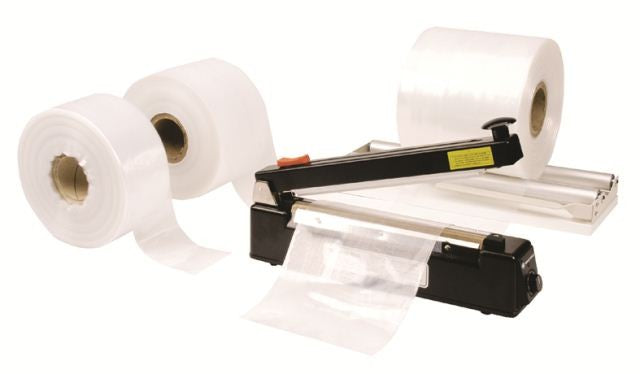
500G Lay Flat Tubing (LFT)
Clear Regran Lay Flat Tubing (Heavy Duty) — Overview
Lay flat tubing is a versatile polythene packaging format supplied as a continuous tube flattened onto a roll. It’s designed to let you create custom-length bags and sleeves on demand: simply pull off the length you need, cut, then seal one or both ends to suit your product. This listing is for clear regran lay flat tubing in a heavy-duty thickness commonly referred to as 500 gauge (also shown as 127 micron), making it a robust choice for protecting items during storage, handling and transit.
What “regran” means: “Regran” (regranulate / reprocessed material) indicates the polythene is made using recycled/reprocessed polymer. It’s a popular option where you want practical protection and value, while supporting recycled-content packaging choices.
What “lay flat tubing” means: Unlike pre-made bags, layflat tubing comes as a continuous tube on a roll. You make the bag length you need, when you need it—ideal for long, awkward or variable-length products.
Gauge vs micron: Packaging suppliers commonly describe thickness in either gauge or microns. 500 gauge is commonly listed as approximately 125–127 micron, and this product is specified as 127 micron (often paired with “500g”).
Key Features
Custom-length packaging on demand:
Cut to the exact length required to reduce waste and avoid stocking multiple bag sizes.
Heavy-duty thickness (500 gauge / 127 micron):
A robust film thickness suited to tougher handling and added puncture resistance compared with lighter tubing.
Clear film for easy identification:
Transparency helps with quick visual checks of contents, labels and barcodes without opening the pack.
Regran material:
Made from reprocessed polythene (“regran”), a widely used option for cost-effective protective packaging.
Compatible with common sealing methods:
Typically used with heat sealers to create sealed bags/sleeves; can also be closed with tape or ties depending on the application.
- Customisable: make sleeves or bags to suit variable product lengths
- Protective: heavy-duty film thickness for demanding packing tasks
- Efficient: reduce the need to stock many different bag sizes
- Practical: clear film supports fast picking and checking
Typical Uses
- Creating bespoke polythene sleeves for long or irregular items
- Protecting products from dust and light moisture during storage
- Bundling multiple components together into one sealed pack
- General warehouse, manufacturing and distribution packaging
Clear Regran Lay Flat Tubing — Full Product Guide
Lay flat tubing is a straightforward idea that solves a common packaging problem: many products don’t fit neatly into standard bag sizes, or their lengths vary from order to order. With tubing, you keep one roll on hand and create the bag length you need in seconds. This guide explains how it works, what the key specifications mean, and how to choose and use it effectively.
How It Works
1) Pull and cut: Unroll the tubing and cut the required length. Because it’s supplied as a tube (flattened), you’re effectively creating a sleeve/bag blank at whatever length you choose.
2) Seal one end: Use a heat sealer to close one end and form the base of the bag. (Some operations may use tape or ties for temporary closure, but heat sealing is the typical method for a secure finish.)
3) Insert product: Slide the item into the open end. Clear film helps you confirm the correct item is packed.
4) Seal the other end: Seal the open end to complete the pack. You now have a custom-sized bag made from tubing.
This workflow is especially useful when you’re packing items that are long, awkward, or vary in length—where pre-made bags would either be too short or leave excessive unused film.
Materials and Construction
Polythene film: Lay flat tubing is made from polythene film formed into a continuous tube and wound onto a roll. The film is supplied clear for visibility.
Regran (reprocessed) content: “Regran” indicates the polymer has been reprocessed. In many packaging environments, regran film is chosen for its balance of performance and value, particularly for protective outer packaging and general-purpose use.
Thickness: This product is specified as 127 micron and commonly described as 500 gauge. Packaging suppliers often list 500 gauge as approximately 125–127 micron, so you may see either unit used depending on the supplier or internal documentation.
Understanding the Key Specifications
Width: Lay flat tubing width is typically stated as the flat width of the tubing on the roll. When opened, the circumference is roughly double the flat width. Choosing the right width ensures your product fits comfortably without overstretching the film.
Thickness (micron / gauge): Thicker film generally offers improved durability and puncture resistance. Heavy-duty tubing is often preferred for sharper edges, heavier items, or more demanding handling conditions.
Roll format: Tubing is supplied on a roll for easy dispensing and consistent cutting. Roll weight and length can vary by variant; select the option that best suits your throughput and handling preferences.
Floor Type Compatibility
Lay flat tubing is used across a wide range of packing environments, from small packing benches to busy warehouse dispatch areas. It can be dispensed from a bench, a roll holder, or a simple spindle stand. For smoother operation, pair the roll with a stable dispenser and keep a clear cutting area.
Health and Safety
- Heat sealing: If using a heat sealer, follow equipment instructions and allow sealing bars to cool before handling.
- Cutting: Use appropriate cutting tools and safe cutting practices to avoid injury.
- Film handling: Keep polythene away from heat sources and ensure good housekeeping to reduce slip/trip risks from offcuts.
Ideal Applications and Use Cases
Long products: Tubing is a go-to solution for items that are longer than standard bags, such as profiles, trims, rods, or bundled components.
Variable-length orders: If your product lengths change from job to job, tubing lets you create the right size each time without overpacking.
Protection during storage and transit: Use as an outer protective sleeve to keep items clean and reduce scuffing.
Batching and kitting: Create sealed packs for kits, spares, or grouped components to simplify picking and reduce loss.
Maintenance, Cleaning and Care
- Storage: Keep rolls in a clean, dry area away from direct heat and sunlight.
- Dispensing: Use a suitable roll holder to prevent telescoping and to keep the roll edges protected.
- Sealing quality: If seals are inconsistent, check sealer temperature/time settings and ensure the film is clean and flat at the seal line.
Case Study (Typical Workflow Example)
A packing team handling mixed-length components keeps lay flat tubing at the bench alongside a heat sealer. For each order, the operator pulls the tubing to the required length, seals one end, inserts the item, then seals the top. This approach reduces the number of bag SKUs required, speeds up packing for non-standard lengths, and helps maintain a consistent, professional finish.
Who is it for?
- Warehouses and dispatch teams packing variable-length items
- Manufacturing and assembly operations bundling parts and components
- Maintenance teams creating protective sleeves for stored items
- Any business that wants flexible, cut-to-length protective packaging
Colours / Features Available
This product is supplied as clear lay flat tubing for visibility of contents. (Other colours or printed options may exist in some ranges; select from the options shown on this page where available.)
Sizes Available
This product page may include multiple variants within the same range (for example, different widths, roll weights, or pack quantities). Choose the option that matches your required width and thickness. Because lay flat tubing is supplied on a roll, you can cut bespoke lengths as needed for each pack.
Need help choosing?
If you’re unsure which width or thickness is best, consider the product’s maximum cross-section and whether it has sharp edges or heavy weight. Heavy-duty (500 gauge / 127 micron) tubing is commonly selected where extra durability is beneficial.