

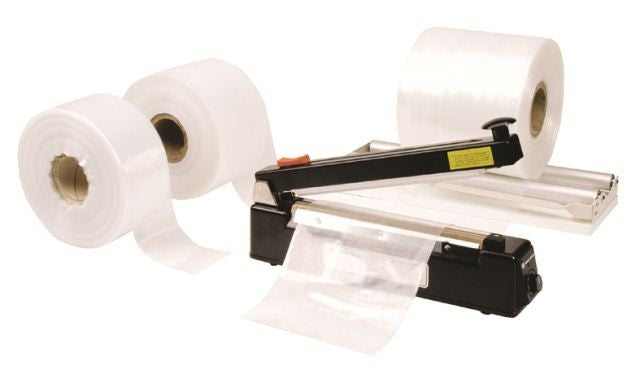
250G Lay Flat Tubing (LFT)
7" Lay Flat Tubing (250g / ~64µm) — Overview
Lay flat tubing is a continuous tube of polythene film supplied flattened on a roll. It’s designed for fast, flexible packing where you want to create bags or sleeves to suit the length of your product—simply cut to size and seal the ends. This listing is for Sapphire’s 7" lay flat tubing supplied as a 250g roll, with a film thickness shown on the product as approximately 64 micron (often referenced as 250 gauge in UK packaging terminology). It’s a practical choice for general-purpose protection, bundling and presentation where a clear, lightweight polythene film is suitable.
Key Bullet Points
- Make-your-own bag lengths: cut the tubing to the length you need and seal to create custom bags or sleeves.
- Consistent lay-flat width: supplied as flattened tubing (7" lay-flat width) for predictable fit and repeatable packing.
- Everyday protective film: helps protect items from dust, light scuffs and handling marks during storage and transit.
- Roll format for efficiency: ideal for bench packing, production lines, and environments where you need continuous film on demand.
- Common thickness class: ~64µm (often described as 250 gauge) for a balance of flexibility and durability in typical packaging tasks.
Typical Uses
- Creating custom-length sleeves for long or awkward items
- Bagging parts, components, and small assemblies
- Protective wrapping for products going into cartons
- Bundling multiple items together before dispatch
- General workshop, warehouse, and fulfilment packing
7" Lay Flat Tubing — Full Product Guide
Lay flat tubing is popular because it reduces the need to stock multiple pre-made bag sizes. Instead, you keep a roll (or several widths) and create the bag length you need at the point of packing. This can simplify inventory, speed up packing for variable-length products, and reduce wasted space compared with using oversized bags.
How It Works
The tubing is supplied as a continuous tube of film that has been flattened (so it looks like a double layer). To use it, you typically:
- Pull out the required length of tubing from the roll
- Cut the tubing squarely to your chosen length
- Seal one end (if you’re making a bag from scratch)
- Insert the product
- Seal the open end to close the pack
Because it’s tubing (not a single sheet), you’re forming a fully enclosed sleeve/bag once both ends are sealed. This makes it especially useful for items where you want all-around coverage without complex folding.
Understanding the Size (Lay-Flat Width)
This product is described as 7" lay flat tubing. “Lay-flat width” is the width of the tubing when it is flattened. When opened into a tube, the circumference is approximately double the lay-flat width. In practical terms, lay-flat width helps you estimate whether your product will fit around its perimeter once bagged.
Tip: If your item is bulky or has sharp corners, allow extra room. A snug fit can be fine for soft goods, but rigid items often need additional clearance to avoid stressing the film.
Film Thickness (Micron / Gauge)
The listing shows a thickness of approximately 64µm (micron). In UK packaging, this thickness class is commonly referred to as 250 gauge. Thickness influences how the film behaves:
- Thicker film generally offers improved puncture resistance and durability.
- Thinner film is typically more flexible and may be more economical for light-duty protection.
This ~64µm class is widely used for general packaging tasks where you want a dependable film without moving into heavy-duty specialist grades.
Materials and Construction
Lay flat tubing is typically manufactured from polythene film and supplied on a roll as a continuous tube. The roll format supports repeatable cutting and sealing, and the flattened presentation makes it easy to handle on a packing bench. If you are matching this tubing to an existing process, the key parameters to confirm are lay-flat width, thickness (micron/gauge), and the sealing method you intend to use.
Sealing and Closure Options
Lay flat tubing is commonly sealed using heat sealing equipment. Depending on your workflow and the finish you want, you may use:
- Impulse heat sealers for quick, clean seals at a packing station
- Constant heat sealers for higher throughput applications
- Bag neck sealing / taping for temporary closure (where a full heat seal is not required)
Note: Always test seal settings on a small offcut first. Seal quality depends on film thickness, dwell time, and temperature/impulse settings.
Floor Type Compatibility
This product is a packaging film roll rather than a flooring product, so “floor type compatibility” isn’t applicable. If you’re using it in a warehouse or production environment, compatibility is more about your packing setup—bench dispensers, cutters, and sealing equipment—rather than the floor surface.
Health and Safety
- Keep away from heat sources unless using appropriate sealing equipment.
- Cutting safety: use a suitable safety cutter where possible and keep blades stored securely.
- Suffocation hazard: polythene film can present a risk—keep away from children and follow your site’s safety guidance.
- Manual handling: store rolls securely to prevent them rolling or falling from shelves.
Ideal Applications and Use Cases
Because you can create custom lengths, lay flat tubing is especially useful when your products vary in length or when you pack long items that don’t suit standard bag formats. Common scenarios include:
- Engineering and maintenance: bagging parts, fasteners, and assemblies
- Retail and eCommerce fulfilment: protective sleeves inside cartons
- Manufacturing: work-in-progress protection between process steps
- Print and signage: sleeves for long, flat items prior to boxing
- General warehousing: bundling and dust protection for stored stock
Maintenance, Cleaning and Care
Lay flat tubing itself is a consumable, but you can improve performance and reduce waste by keeping your packing area set up well:
- Store rolls clean and dry to avoid dust contamination on the film.
- Use a dispenser to prevent the roll from telescoping and to keep cuts square.
- Keep sealing bars clean so seals remain consistent and strong.
- Cut squarely to maximise seal area and reduce the chance of weak corners.
Case Study (Typical Workflow Example)
Scenario: A small fulfilment team ships mixed-length items and wants to reduce the number of bag sizes held in stock.
Approach: They keep lay flat tubing at the packing bench, cut sleeves to suit each order, and heat seal both ends for a neat, tamper-evident finish inside an outer carton.
Outcome: Fewer bag SKUs to manage, faster packing for unusual lengths, and a consistent presentation across different product types.
Who Is It For?
- Packing benches that need flexibility for variable-length products
- Warehouses and workshops that want on-demand bag making
- Businesses looking to reduce bag size inventory by using tubing instead
- Teams that need a simple protective sleeve before boxing or palletising
Colours / Features Available
This listing is for lay flat tubing as supplied by Sapphire in this product configuration. If you are choosing between options on the page, select the variant that matches your required width and thickness. (Some ranges may offer different gauges/thicknesses or pack quantities.)
Sizes Available
Sapphire lay flat tubing is typically offered in multiple widths and thicknesses across the range. This product page represents a specific width/thickness combination; choose the variant that best suits your application. If you need a different width or film grade, browse the lay flat tubing category or contact Sapphire for guidance.
References used for terminology and comparable listings: UK Packaging lay flat tubing product page; ODL Packaging 7" lay flat tubing (250/500 gauge) page; U.S. Plastic lay-flat tubing listing (size format reference).