

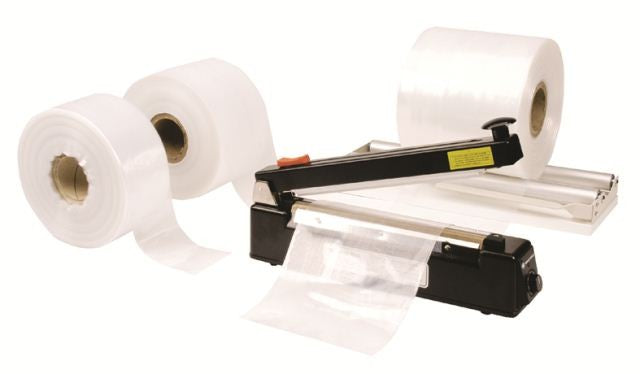
250G Lay Flat Tubing (LFT)
8" Lay Flat Tubing (Approx. 203mm) — 250G / 63–64µm Polythene Tube Film
Lay flat tubing is a versatile, roll-fed polythene tube film supplied flattened (“layflat”) so you can create bags and sleeves to suit your product length as you pack. This listing is for 8" lay flat tubing (approx. 203mm layflat width) in a 250G / ~63–64 micron (µm) thickness, supplied on a roll. It’s a popular choice for general-purpose protection, bundling and packing where you want the flexibility of making your own bag length on demand.
Because lay flat tubing is a continuous tube, you can cut it to the length you need and seal the ends (with appropriate sealing equipment) to form a custom-sized bag. This helps reduce wasted material compared with stocking many pre-made bag sizes, and it can speed up packing when you’re handling products of varying lengths.
Key Bullet Points
- Flexible “make-your-own” bagging: cut to length as you pack to create sleeves or bags.
- Popular 8" layflat width: approx. 203mm measured across the flattened tube.
- 250G / ~63–64µm thickness: a robust, general-purpose film thickness for everyday packing tasks.
- Clean, simple presentation: ideal where you want a neat protective wrap around products.
- Efficient stockholding: one roll can cover many pack lengths, reducing the need for multiple bag sizes.
Typical Uses
- Creating protective sleeves for long or awkward items
- Bundling multiple components together into one pack
- General packing and protection from dust and handling marks
- Workshop, warehouse and dispatch environments where pack lengths vary
8" Lay Flat Tubing — Full Product Guide
Lay flat tubing (often abbreviated to LFT) is a continuous tube of polythene film wound onto a roll. Unlike pre-made bags, it gives you control over the finished pack length: you simply cut the tube to size and seal one or both ends depending on how you’re using it. This makes it especially useful for products that are consistent in width but vary in length, or for operations that want to standardise on a small number of roll widths.
How It Works
1) Select the right layflat width: The width shown for lay flat tubing is the measurement across the flattened tube. When opened, the tube forms a larger circumference. As a practical guide, an 8" layflat tube opens to roughly a 16" circumference (before allowing for product shape and clearance).
2) Cut to length: Pull the tubing from the roll and cut to the length required for your product plus any allowance needed for sealing.
3) Seal the ends: Seal one end to create a bag, insert the product, then seal the other end. Alternatively, use it as a sleeve by leaving one end open. The sealing method depends on your process and equipment.
4) Pack consistently: Once your team has a repeatable cut length for a given product, lay flat tubing can streamline packing and reduce the need to keep many different bag sizes in stock.
Materials and Construction
This product is a polythene lay flat tube film supplied on a roll. The specification indicates a 250G grade with a thickness of approximately 63–64µm (microns). Film thickness is a key factor in how the tubing performs: thicker films generally offer improved puncture resistance and durability for handling, while thinner films can be more economical for light-duty protection.
Micron thickness is commonly used to describe polythene film. For reference, 63–64µm is approximately 0.063–0.064mm thick. This is a widely used thickness range for general packaging tasks where you want a dependable film without moving into very heavy-duty grades.
Choosing the Right Width (Layflat vs. Open Size)
Lay flat tubing is measured flat, not as a diameter. That means the stated width is the distance across the flattened tube. When opened, the tube’s circumference is approximately double the layflat width. However, the real-world fit depends on the shape of your product:
- Round items: need enough circumference to go around the diameter plus clearance.
- Square/rectangular items: need enough circumference to go around the perimeter (and corners can increase stress on the film).
- Irregular shapes: often benefit from extra allowance to avoid stretching and to make sealing easier.
If you’re unsure, it’s usually best to trial a roll width with your product and packing method, especially if the item has sharp edges or protrusions.
Floor Type Compatibility
This product is a packaging consumable used at packing benches, in warehouses and in dispatch areas rather than a floor covering. It is compatible with typical packing environments and can be used alongside standard bench-top sealing equipment and cutting tools as appropriate for your process.
Health and Safety
- Cutting: Use appropriate cutting tools and safe handling practices when cutting film from the roll.
- Sealing equipment: If using heat sealing equipment, follow the equipment manufacturer’s safety guidance and allow sealing bars to cool before contact.
- Slip hazard: Loose film offcuts can be slippery underfoot—keep work areas tidy and dispose of waste promptly.
- Suffocation risk: As with many plastic films, keep away from children and do not place over the head.
Ideal Applications and Use Cases
8" lay flat tubing in a 250G / ~63–64µm thickness is commonly chosen for:
- General-purpose protection: keeping items clean during storage and transit.
- Variable-length products: where pre-made bags would require many different lengths.
- Component kitting: bundling parts together into one pack for assembly or dispatch.
- Workshop and warehouse packing: quick, repeatable packing with a consistent roll width.
If your products are particularly heavy, have sharp corners, or are prone to puncturing film, you may wish to compare thickness options within the lay flat tubing range.
Maintenance, Cleaning and Care
- Storage: Keep rolls in a clean, dry area away from direct heat sources.
- Handling: Avoid crushing the roll edges, which can affect unwind and cutting.
- Work area: Keep sealing surfaces clean for consistent seals and a neat finish.
- Waste management: Collect offcuts and used film promptly to maintain a safe packing area.
Case Study (Typical Packing Scenario)
Scenario: A dispatch team ships products that are consistent in width but vary in length. Stocking multiple pre-made bag lengths created picking errors and excess inventory.
Approach: The team standardised on a lay flat tubing width that comfortably fits the product profile. Packers cut the tubing to the required length per order and sealed the ends to create a tidy, protective pack.
Outcome: Fewer bag SKUs to manage, reduced packing waste from oversized bags, and a more consistent packing process for mixed-length orders.
Who Is It For?
- Warehouses and fulfilment teams that need flexible, on-demand bag lengths
- Manufacturers and workshops bundling parts or protecting components
- Businesses looking to reduce the number of different bag sizes they stock
- Packers who want a simple, clean protective sleeve or bag format
Colours / Features Available
This listing is for lay flat tubing as specified on the product page. If you require a particular colour, transparency, or special feature (for example, printed film or other variants), please check the available options within the lay flat tubing range.
Sizes Available
This product page represents a lay flat tubing option within a configurable range. Select the required option(s) on the page for the width and specification you need. If you’re looking for alternative widths or thicknesses, browse the lay flat tubing category to compare options.