

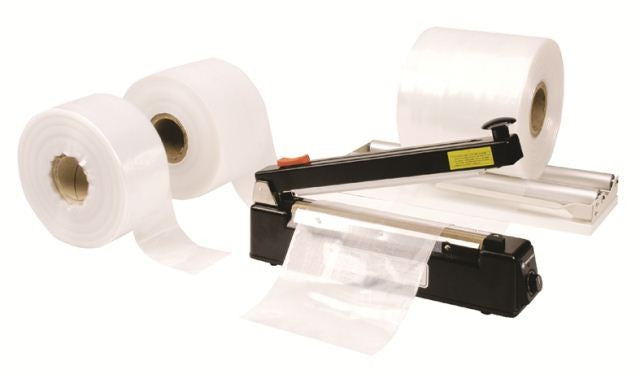
500G Lay Flat Tubing (LFT)
Orange Translucent Layflat Tubing (127 micron / 500 gauge) — Flexible Protection & Packaging on a Roll
Layflat tubing is a simple, highly adaptable way to create protective sleeves and bags on demand. Supplied as a continuous tube flattened on the roll, it can be cut to the length you need and sealed to form a custom-sized pack for long, awkward, or variable-length items. This orange translucent tint version helps you quickly identify contents or product lines while still allowing a degree of visibility through the film.
This listing is for heavy-duty layflat polythene tubing in 127 micron (500 gauge) film. It’s designed for robust everyday packaging tasks where a thicker, more puncture-resistant material is preferred.
Key Features
Made-to-measure packaging:
Cut the tubing to your required length and seal the ends to create bags or sleeves that fit your product—ideal when you don’t want to stock multiple bag sizes.
Heavy-duty 127 micron (500 gauge) film:
A thicker layflat tubing option suited to applications where extra strength, durability, and resistance to tearing are important.
Orange translucent tint:
Helps with quick visual identification and sorting while maintaining partial visibility of the packed item.
Continuous roll format:
Efficient for packing benches and production lines—dispense, cut, and seal in a repeatable workflow.
Versatile sealing options:
Commonly used with heat sealers to create strong end seals; can also be paired with suitable closure methods depending on your process.
- Custom-length sleeves and bags from one roll
- 127 micron / 500 gauge heavy-duty polythene film
- Orange translucent tint for identification and organisation
- Ideal for long or irregular items where standard bags don’t fit well
- Efficient packing workflow—dispense, cut, seal
Typical Uses
- Protective sleeves for profiles, trims, mouldings, and extrusions
- Packaging for posters, prints, and rolled materials
- Covering and protecting components, parts, and assemblies
- Bundling multiple items together before boxing
- General warehouse, workshop, and dispatch protection
Orange Translucent Layflat Tubing — Full Product Guide
Layflat tubing is widely used across warehousing, manufacturing, and fulfilment because it reduces the need to hold many different bag sizes. Instead, you keep one or a few roll widths and create the length you need at the point of packing. This is especially useful for products that vary in length, are unusually shaped, or are difficult to bag using standard off-the-shelf formats.
Because this product is supplied as a flattened tube, the stated width refers to the layflat width (the width of the tubing when laid flat). When opened, the tubing forms a tube that can accommodate items up to an equivalent circumference. If you’re unsure which width you need, it’s common practice to allow extra room for easy insertion and to avoid stressing the seals.
How It Works
1) Dispense: Pull the tubing from the roll to the required length.
2) Seal one end: Use a heat sealer to create a bottom seal (or start with a pre-sealed end if your process uses pre-made lengths).
3) Insert product: Slide the item into the tube. The smooth polythene surface helps items feed in easily, particularly when the correct width is selected.
4) Seal the top: Create the final seal above the product to form a secure bag or sleeve.
5) Cut: Cut between seals (or cut first, then seal—either workflow can be used depending on equipment and preference).
This simple cut-and-seal method makes layflat tubing a practical choice for both low-volume packing benches and higher-throughput environments.
Materials and Construction
This tubing is made from polythene film and supplied in a continuous roll. The film thickness is specified as 127 micron (500 gauge), a heavy-duty grade commonly chosen when you want a more robust pack that can better withstand handling, scuffing, and minor impacts during storage and transit.
The orange translucent tint provides a distinctive appearance that can support internal organisation—helping teams quickly identify packed items, separate product families, or highlight priority goods—while still allowing partial visibility of the contents.
Film Thickness: Understanding 127 Micron / 500 Gauge
Packaging film thickness is often quoted in either microns (µm) or gauge. For this product, the thickness is given as 127µm, which is also commonly referred to as 500 gauge. This is a thicker option compared with lighter-duty tubing, making it a good fit for more demanding packaging tasks.
Choosing the right thickness is about balancing protection, ease of use, and cost. Thicker film generally offers improved durability and puncture resistance, while thinner film can be easier to conform tightly around products and may be more economical for lightweight items.
Floor Type Compatibility (Packing Area Considerations)
While layflat tubing itself isn’t floor-specific, your packing environment can influence how smoothly the process runs:
- Warehouse and concrete floors: Consider using a dispenser stand to keep the roll clean and prevent the film from picking up dust or grit.
- Clean rooms or clean packing zones: Keep rolls stored in protective outer packaging until use and avoid placing rolls directly on the floor.
- High-traffic dispatch areas: A dedicated cutting and sealing station helps maintain consistent pack quality and reduces handling damage.
Health and Safety
- Heat sealing: If using a heat sealer, follow equipment guidance and allow sealing bars to cool before contact. Keep hands clear of the sealing area during operation.
- Cutting: Use appropriate cutting tools and safe cutting practices. A bench-mounted cutter or guarded blade can improve consistency and reduce risk.
- Slip and trip hazards: Keep offcuts tidy and dispose of film waste promptly to prevent slips.
- Suffocation warning: As with many plastic films, keep away from babies and children and do not place over the head.
Ideal Applications and Use Cases
Long products and profiles: Layflat tubing is particularly effective for items that are long and narrow, where standard bags are either too short or wasteful.
Variable-length items: If your products come in multiple lengths, tubing lets you create the exact pack length each time.
Parts protection: Use as a protective sleeve to reduce scuffs and surface marks during internal handling or storage.
Bundling: Group multiple components together into one neat pack before placing into cartons.
Work-in-progress protection: Cover assemblies between production stages to keep dust and debris off surfaces.
Maintenance, Cleaning and Care
- Storage: Store rolls in a dry area away from direct sunlight and excessive heat to help maintain film performance.
- Dispensing: Use a dispenser to prevent telescoping (roll shifting) and to keep the film edges from being damaged.
- Sealing quality: If seals appear weak, check sealer temperature, dwell time, and cleanliness of the sealing bar. Dust or debris can reduce seal integrity.
- Handling: Avoid dragging the film across rough surfaces to reduce the chance of punctures or abrasion.
Case Study (Typical Workflow Example)
A small fabrication and dispatch team ships mixed-length components daily. Previously, they stocked multiple bag sizes and still struggled to find a good fit for longer items. By switching to layflat tubing, they standardised on a small number of roll widths and created custom-length sleeves at the packing bench. The orange translucent tint helped them visually separate finished goods from work-in-progress packs, improving picking speed and reducing packing errors.
Who Is It For?
- Warehouses and fulfilment teams needing flexible, on-demand bagging
- Manufacturers packing long or irregular products
- Workshops and trade counters that want quick protective sleeving
- Operations aiming to reduce the number of packaging SKUs held in stock
Colours / Features Available
This product is supplied in an orange translucent tint. Layflat tubing is often available in other colours and thicknesses across ranges; if you need a different appearance or performance level, consider selecting an alternative option within the layflat tubing category.
Sizes Available
This product page may represent multiple width and roll-length options within the same layflat tubing range. Select the option that best matches your product dimensions and packing process. If you require specific cut lengths or bespoke formats, it’s common to use the roll stock with a cutting and sealing workflow to create the lengths you need.
Need help choosing the right width or thickness?
Share what you’re packing (dimensions, weight, and whether edges are sharp), and we can help you select a suitable layflat tubing option and sealing approach.