

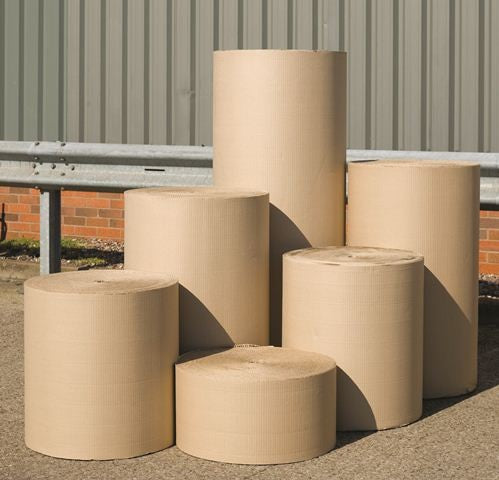
Corrugated Paper
Corrugated Paper (Corry Paper) — Protective Wrap & Cushioning Paper
Corrugated paper (often called corry paper) is a flexible, paper-based protective packaging material designed to help reduce scuffs, scratches and minor impact damage during handling, storage and transit. Supplied in an easy-to-use roll format, it’s a practical choice for packing benches, warehouses, removals, workshops and e-commerce dispatch areas where you need fast, consistent protection without the bulk of rigid boards or the mess of loose-fill.
Unlike flat kraft paper, corrugated paper includes a fluted layer that creates a springy cushion. That fluted structure helps absorb vibration and light knocks, while the paper surface provides a protective barrier between items. It’s especially useful for wrapping awkward shapes, separating stacked products, lining cartons, and creating quick protective layers around corners and edges.
Key Features
Fluted cushioning layer: The corrugated (fluted) profile adds a protective air-gap that helps absorb shock and vibration compared with flat paper.
Flexible roll format: Wrap around round, square and irregular items with minimal effort—ideal for fast-paced packing environments.
Surface protection: Helps prevent scuffs and scratches when items rub together in a carton, on a pallet, or during moves.
Cut-to-length convenience: Tear or cut exactly what you need to reduce waste and keep packing tidy.
Space-efficient storage: Rolls store neatly and are easy to dispense at a bench or packing station.
Paper-based packaging: A popular choice for businesses looking for paper protective packaging options.
- Cushioning wrap for fragile or easily marked items
- Interleaving / separation between products to reduce rubbing
- Carton lining to add a protective layer inside boxes
- Edge and corner protection when combined with tape or stretch wrap
- Void fill when loosely folded or layered (application dependent)
Typical Uses
- Wrapping ceramics, glassware and decorative items for storage or shipping
- Protecting painted, polished or coated surfaces from scuffs
- Separating flat items such as panels, frames, prints and boards
- Layering between products on a pallet to reduce abrasion
- General removals and moving protection for household and office items
Corrugated Paper (Corry Paper) — Full Product Guide
Corrugated paper rolls are widely used across packing, removals and industrial environments because they combine speed, flexibility and protection in one simple material. This guide explains how corrugated paper works, where it performs best, and how to get consistent results when wrapping and packing.
How It Works
Corrugated paper is made with a fluted (wavy) paper medium bonded to a liner. The flutes create a resilient structure that helps cushion items and reduce the transfer of small impacts. When wrapped around a product, the corrugated profile forms a protective buffer zone that can help reduce damage from knocks, vibration and abrasion.
Because it’s supplied on a roll, you can wrap items tightly for a compact pack, or wrap more loosely to increase cushioning. You can also use it as a separator layer between items to reduce rubbing and surface marking.
Materials and Construction
This product is a paper-based corrugated protective wrap. The key functional element is the corrugated flute, which provides structure and cushioning while remaining flexible enough to wrap around shapes. As with most paper protective packaging, performance depends on how it’s applied (number of layers, tightness of wrap, and whether it’s combined with other protective materials).
For best results, match the protection level to the risk: use more layers for heavier items, sharp edges, or longer transit routes; use fewer layers for light surface protection or short internal moves.
Floor Type Compatibility (Packing Station & Warehouse Use)
Corrugated paper rolls are typically used at packing benches, on pallet wrap stations, and in warehouse dispatch areas. They work well with:
- Bench-top cutting (with a safety knife or scissors)
- Roll dispensers (where fitted) for faster, cleaner dispensing
- Manual wrapping for irregular items and mixed product lines
If you’re using corrugated paper in a high-throughput environment, consider positioning the roll close to tape and labels to streamline your packing workflow.
Health and Safety
- Cutting safety: Use a suitable safety knife and cut away from the body. Keep blades sharp to reduce snagging.
- Manual handling: Rolls can be bulky—lift with appropriate technique and store securely to prevent rolling or falling.
- Dust and housekeeping: Keep the packing area tidy and remove offcuts to reduce slip/trip hazards.
Ideal Applications and Use Cases
1) Wrapping and cushioning
Wrap items directly to provide a protective layer that helps reduce scuffs and minor impact damage. This is particularly useful for items with delicate finishes or edges.
2) Interleaving and separation
Place sheets between stacked products to reduce abrasion and prevent surface-to-surface contact. This is common for framed items, panels, and flat-packed goods.
3) Carton lining
Line the inside of cartons to add a protective barrier and reduce movement-related scuffing. Combine with additional void fill if there is significant empty space.
4) Pallet layer protection
Use as a layer between products on a pallet to reduce rubbing during transport. Secure with stretch wrap or strapping as required.
Maintenance, Cleaning and Care
Corrugated paper is designed for single-use protective packaging in most shipping applications. Store rolls in a clean, dry area to maintain performance. Avoid exposure to moisture, as damp paper can lose strength and cushioning effectiveness.
- Keep rolls off wet floors and away from leaks
- Store upright or on racking to prevent crushing
- Protect from contamination (oil, chemicals, food residues) where possible
Recycling and Disposal
Paper-based corrugated packaging is commonly recyclable when it is clean and dry. Recycling acceptance can vary by local facility and contamination levels, so check your local recycling guidance—especially if the paper has been heavily taped, soiled, or exposed to liquids.
Case Study (Example Workflow)
Scenario: A small dispatch team ships mixed items daily, including boxed goods and products with easily marked surfaces.
- Step 1: Cut a sheet long enough to wrap the item with overlap.
- Step 2: Wrap once for surface protection; add extra layers on corners/edges.
- Step 3: Secure with packing tape (or combine with stretch wrap for bundles).
- Step 4: Place in a carton with additional void fill if movement is possible.
Result: Faster packing, fewer scuffs from product-to-product contact, and a consistent protective standard across different item shapes.
Who Is It For?
- Warehouses and fulfilment teams needing quick protective wrap
- Removal companies and storage facilities
- Retailers packing fragile or easily marked goods
- Workshops and manufacturers protecting parts between processes
- Home movers wanting a practical protective paper wrap
Colours / Features Available
This listing represents a corrugated paper protective wrap product that may be offered in multiple variants. Please select the option that best matches your packing needs from the available choices on this page.
Sizes Available
This product page may include multiple size/pack variants. Choose the required option from the variant selector. If you need guidance on selecting the most suitable roll width/length for your application, contact us with the item types you pack and your typical carton sizes.