

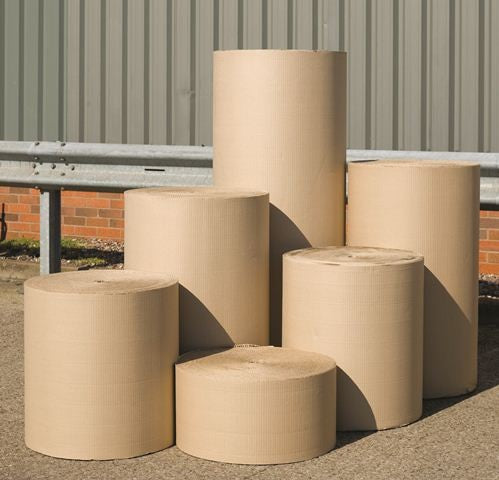
Corrugated Paper
Corrugated Paper (Corry Paper) Roll — Protective Wrap for Packing & Transit
Corrugated paper (often called corry paper) is a practical, paper-based protective wrap designed to help reduce scuffs, scratches and light impact damage during handling, storage and transport. Made with a fluted (corrugated) structure, it creates a cushioning layer between items, while still being easy to tear, wrap and shape around awkward profiles.
This product is commonly used as an alternative or complement to bubble wrap and foam, particularly where you want a paper solution that wraps quickly and provides a consistent protective barrier. It’s ideal for interleaving, wrapping, lining cartons, and separating products to prevent surface-to-surface contact.
Key Features
- Cushioning fluted structure: The corrugated profile helps absorb knocks and reduces abrasion between packed items.
- Fast to wrap and easy to handle: Flexible enough to wrap around corners and curves, while still offering structure and protection.
- Great for separation and interleaving: Helps prevent rubbing, marking and transit scuffs when packing multiple items together.
- Versatile packing protection: Useful as a wrap, a liner, or a protective layer between products and outer packaging.
- Paper-based protective packaging: A simple, familiar material choice for many packing environments.
Typical Uses
- Wrapping and protecting fragile or easily marked surfaces
- Interleaving between stacked items (e.g., panels, frames, flat components)
- Lining cartons and crates to reduce abrasion
- Separating products inside a box to minimise movement and contact
- General warehouse packing, despatch and storage protection
Corrugated Paper (Corry Paper) — Full Product Guide
Corrugated paper rolls are widely used across warehousing, removals, manufacturing and eCommerce fulfilment because they provide a reliable protective layer without adding excessive bulk. If you regularly ship items that can scuff, chip, or mark when they rub together, corry paper is a straightforward way to improve presentation on arrival and reduce damage risk.
How It Works
The protective performance comes from the corrugated (fluted) structure. The flutes create small air channels and a spring-like profile that helps cushion light impacts and reduces direct contact between surfaces. When wrapped around an item, the paper forms a protective barrier that can help prevent scratches and scuffs caused by vibration and movement in transit.
Corry paper is also useful as an interleaving layer. Placing sheets or lengths between items helps stop surface-to-surface rubbing, which is a common cause of cosmetic damage during shipping.
Materials and Construction
This product is a corrugated paper protective wrap supplied on a roll. Corrugated paper is typically made by combining paper layers with a fluted middle layer to create a lightweight cushioning material. The result is a wrap that is:
- Protective (helps reduce abrasion and minor impact damage)
- Flexible (wraps around shapes more easily than rigid board)
- Easy to dispense (tear off lengths as needed for each pack)
Because it’s supplied as a roll, it’s well suited to packing benches and despatch stations where speed and consistency matter.
Packaging & Product Protection Benefits
Corrugated paper is often chosen when you want a balance of cushioning and surface protection. It can be used on its own for many items, or combined with other packaging materials for higher-risk shipments.
- Surface protection: Helps reduce scuffs and scratches on painted, polished or coated surfaces.
- Edge and corner buffering: When wrapped with extra turns, it can add protection to vulnerable edges.
- Void fill support: Rolled or folded corry paper can help stabilise items inside cartons.
- Presentation: A neat wrap can improve unboxing and reduce dust/handling marks.
Floor Type Compatibility (Packing Area Considerations)
While this is not a flooring product, it’s often used in busy packing areas. For best results:
- Use on a clean packing bench or cutting surface to keep the wrap free from grit that could mark products.
- If dispensing from a roll holder, ensure the roll is supported to prevent telescoping and uneven tearing.
- Keep the roll dry and stored off the floor to maintain paper condition.
Health and Safety
Corry paper is generally straightforward to use, but good packing practice helps maintain safety and efficiency:
- Manual handling: Store rolls at a comfortable height to reduce lifting strain.
- Cutting: If using knives or cutters, use a safe cutting tool and a suitable cutting surface.
- Housekeeping: Dispose of offcuts promptly to reduce trip hazards around packing stations.
Ideal Applications and Use Cases
Corrugated paper wrap is used across many sectors. It’s particularly effective for items where the main risk is cosmetic damage (scuffs, scratches, rubbing) rather than heavy impact.
- Warehousing & distribution: Wrapping items before palletising or placing into cartons.
- Manufacturing: Protecting components between process steps or during internal transport.
- Removals & storage: Wrapping household items and protecting surfaces during moves.
- Retail & eCommerce fulfilment: Adding a protective layer for shipped goods to reduce returns due to transit marks.
- Glass, ceramics and decorative items: As a wrap layer and separator (often combined with additional cushioning where needed).
If you’re shipping high-value or highly fragile items, corry paper can be used as a first wrap layer, then combined with additional cushioning and a strong outer carton.
Maintenance, Cleaning and Care
Corrugated paper is a consumable packaging material, so “maintenance” is mainly about storage and handling:
- Keep dry: Store in a dry area to prevent softening or loss of structure.
- Avoid contamination: Keep away from oils, adhesives and dusty floors to protect the items you wrap.
- Dispense neatly: Use a roll stand or dispenser where possible for consistent tearing and reduced waste.
Case Study (Typical Packing Workflow)
Scenario: A small despatch team ships mixed items daily, including products with easily marked finishes. Previously, items were placed directly into cartons with minimal separation, leading to scuffs and customer complaints.
Approach: The team introduced corrugated paper as a standard wrap and interleaving layer. Each item is wrapped with a few turns, then additional lengths are used to separate items inside the carton. For higher-risk orders, corry paper is combined with other cushioning materials.
Outcome: Packs arrive with improved presentation and fewer surface marks, while the packing process remains quick and repeatable.
Who Is It For?
- Warehouses and fulfilment centres needing fast, consistent protective wrapping
- Manufacturers protecting components during storage and internal movement
- Removal companies and storage facilities wrapping household and commercial items
- Retailers and eCommerce sellers wanting to reduce scuffs and improve delivery presentation
Colours / Features Available
This listing is for corrugated paper (corry paper). Availability of specific colours, finishes or paper grades can vary by option/variant. Please refer to the selectable options on this page for the current range.
Sizes Available
This product is supplied as a roll, and this page may include multiple size options/variants. Please select the required option from the product choices shown on the page.