

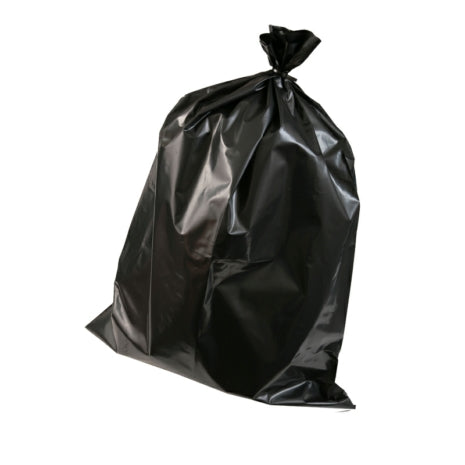
Refuse Sacks
18x29x39 Standard Black Refuse Sacks (20 micron) — Reliable Everyday Waste Containment
These standard black refuse sacks are designed for straightforward, hygienic waste collection in busy environments. Made from lightweight polythene film at a standard 20 micron thickness, they provide a practical balance of flexibility and economy for general waste streams. The classic black colour helps conceal contents for a tidy appearance in bins and during handling, making them a dependable choice for routine disposal tasks.
Refuse sacks are often selected by size, thickness and pack quantity. This product is supplied as a high-volume pack, making it well suited to workplaces that need consistent stock for daily bin changes and scheduled cleaning rounds.
Key Features
Standard 20 micron film
A lightweight, economical gauge intended for general waste where ultra-heavy-duty performance is not required.
Black, opaque appearance
Helps keep waste discreet and maintains a neat look in public-facing areas, back-of-house spaces and waste holding points.
Generous sack format
The sack dimensions are suited to common refuse bins and liners used in commercial and domestic settings.
Flexible polythene construction
Designed to open easily, conform to bin shapes and tie off for straightforward handling.
Bulk supply for operational efficiency
A large pack quantity supports high-throughput cleaning schedules and reduces the frequency of reordering.
Key Features (Bullet Summary)
- Standard black refuse sacks for everyday waste
- 20 micron thickness for lightweight, general-purpose use
- Opaque black film for a tidy, discreet presentation
- Flexible polythene for easy lining and tying
- Supplied in a high-volume pack for convenience
Typical Uses
- Office and workplace general waste bins
- Schools, colleges and public buildings
- Light-duty hospitality back-of-house waste
- Retail stockrooms and staff areas
- Domestic and light commercial refuse collection
18x29x39 Standard Black Refuse Sacks (20 micron) — Full Product Guide
Choosing the right refuse sack helps reduce mess, improve hygiene and keep waste handling efficient. This guide explains what a standard 20 micron black refuse sack is best used for, how to select the right option for your bins and waste type, and how to store and handle sacks for consistent performance.
How It Works
A refuse sack acts as a removable liner inside a bin or container. Once fitted, waste is deposited into the sack rather than directly into the bin. When full, the sack is removed, tied or sealed, and transferred to a waste collection point. Using liners helps keep bins cleaner, reduces odours and makes routine emptying faster.
Standard black sacks are commonly used for mixed, non-recyclable general waste. The black colour provides opacity, which can be useful where discretion is preferred.
Materials and Construction
These sacks are made from polythene film. Polythene is widely used for refuse sacks because it is lightweight, flexible and resistant to moisture. The 20 micron thickness places this product in a standard, light-duty category intended for everyday waste rather than sharp, heavy or wet loads.
Because polythene film is flexible, it can stretch slightly around irregular waste items and conform to bin interiors. However, like all lightweight sacks, performance depends on matching the sack to the waste type and avoiding overfilling.
Bin Fit and Capacity Considerations
Refuse sack sizing is typically expressed in inches as a flat width and length format. In practice, the right fit depends on the bin’s rim circumference and height. A sack that is too small may slip into the bin or tear during removal; a sack that is too large may be awkward to tie and can waste material.
For best results:
- Choose a sack that comfortably folds over the bin rim to create a secure cuff.
- Avoid stretching the sack tightly across the rim, which can reduce usable capacity and increase the chance of tearing.
- If your waste is bulky (e.g., packaging), consider leaving extra headroom for tying.
Floor Type Compatibility
Refuse sacks are used inside bins rather than directly on floors, so floor type compatibility is generally not a limiting factor. That said, the environments where sacks are handled can affect performance and safety:
- Smooth floors (vinyl, sealed concrete, tiles): easier to move wheeled bins and reduce snagging risks.
- Rough surfaces (unfinished concrete, outdoor yards): take care when dragging sacks, as abrasion can damage lightweight film.
- Stairs and thresholds: use a bin or trolley where possible rather than carrying sacks against sharp edges.
Health and Safety
Good waste handling practices help reduce spills and manual handling injuries. Consider the following:
- Do not overload: overfilled sacks are harder to tie and more likely to split during lifting.
- Avoid sharp waste: broken glass, sharp metal and rigid plastic edges can puncture lightweight sacks. Use a more suitable heavy-duty sack or rigid container where required.
- Double-bag when appropriate: for messy or damp waste, double-bagging can reduce leakage risk (subject to your waste policy).
- Use PPE: gloves are recommended for waste handling; follow site risk assessments for additional PPE.
- Keep walkways clear: store full sacks in designated areas to prevent trip hazards.
Ideal Applications and Use Cases
Standard 20 micron black refuse sacks are best suited to light-to-moderate general waste where cost efficiency and convenience are priorities. Typical examples include:
- Paper towels, tissues and light sanitary waste (where permitted)
- General office waste and non-recyclable packaging remnants
- Staffroom and canteen waste (excluding heavy wet food waste unless managed carefully)
- Light retail waste such as tags, wrappers and small cartons
If your waste stream includes heavy, wet or sharp items, consider selecting a thicker sack grade to reduce the risk of punctures and splits.
Maintenance, Cleaning and Care
Refuse sacks themselves are single-use consumables, but correct storage and handling helps maintain quality:
- Store in a cool, dry place: excessive heat can soften film and affect performance.
- Keep away from direct sunlight: prolonged UV exposure can degrade polythene over time.
- Prevent crushing: avoid storing heavy items on top of boxed sacks to reduce deformation and make dispensing easier.
- Dispense cleanly: open sacks carefully to avoid tearing at the seam.
Case Study (Example Workflow)
Scenario: A facilities team services multiple general waste bins across an office floor and shared kitchen areas.
Approach: The team lines bins with standard black sacks during morning rounds, replacing liners as needed throughout the day. Full sacks are tied off and transferred to a central waste holding area for collection.
Outcome: Using a consistent sack type simplifies stock control, speeds up bin changes and helps keep bins cleaner, reducing time spent wiping down containers.
Who Is It For?
- Cleaning contractors and facilities management teams
- Offices and shared workspaces
- Schools and public sector buildings
- Retail and light hospitality operations
- Households wanting a practical, everyday refuse sack
Colours / Features Available
This listing is for black refuse sacks. Black is commonly chosen for general waste because it is opaque and presents a uniform appearance in bins and waste areas. If you require colour-coded waste segregation (for recycling or clinical streams), consider selecting sacks specifically intended for those policies.
Sizes Available
This product page may include multiple pack or variant options. Select the option that best matches your usage rate and storage space. If you are lining a specific bin type, check your bin dimensions and choose a sack size that allows a secure fold-over at the rim and enough excess length for tying.
Note: Sack performance depends on matching thickness to the waste type. For heavier loads, wet waste or sharp-edged contents, a heavier-duty sack grade is recommended.