

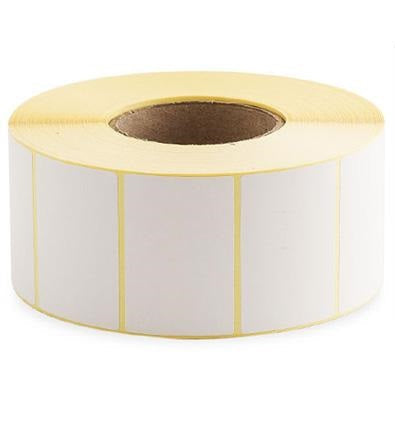
Printed Parcel Labels
38 x 38 Plain White Thermal Transfer Printer Labels (3,800 per roll) — Product Overview
These plain white thermal transfer labels in a 38 x 38 format are designed for crisp, durable printing when used with a thermal transfer label printer and the correct ribbon. Supplied on a roll with 3,800 labels, they’re a practical choice for high-volume identification and tracking tasks where you need consistent print quality and good resistance to handling.
Thermal transfer labels are widely used across warehousing, manufacturing, retail, healthcare, and logistics because the printed image is created by transferring ink from a ribbon onto the label surface. This method is typically chosen when you want stronger resistance to smudging, abrasion, and environmental exposure than many direct thermal applications. The result is a clean, professional label that supports barcodes, QR codes, product IDs, batch codes, and general text.
Key Features
38 x 38 label format: A compact square label size that suits small items, shelf-edge identification, component bins, and product marking where space is limited.
Thermal transfer print technology: Intended for use with thermal transfer printers and a compatible ribbon to produce sharp, long-lasting print.
Plain white face stock: A neutral, high-contrast background that helps barcodes and text stand out clearly.
High label count per roll: 3,800 labels per roll helps reduce roll changes in busy environments and supports efficient workflows.
Consistent roll supply: Roll-fed labels are convenient for batch printing and repeatable placement in standard label printer setups.
Key Features (Bullet Summary)
- Plain white thermal transfer labels
- 38 x 38 format
- 3,800 labels per roll
- Designed for thermal transfer printers (ribbon required)
- Suitable for barcodes, QR codes, and text
Typical Uses
- Inventory and stock control: Bin labels, shelf labels, and location markers.
- Product identification: SKU labels, batch/lot labels, and internal tracking labels.
- Work-in-progress tracking: Component and assembly identification in manufacturing.
- Retail and back-of-house: Small item labelling and internal logistics.
- General organisation: Filing, storage boxes, and equipment tagging (where appropriate).
38 x 38 Plain White Thermal Transfer Printer Labels — Full Product Guide
Choosing the right label is about more than just the dimensions. Print method, ribbon selection, application surface, and the environment the label will face all influence performance. This guide explains how thermal transfer labels work, what to consider when selecting ribbons and printer settings, and how to get reliable scanning and adhesion in real-world use.
How It Works
Thermal transfer printing uses a heated printhead to melt ink from a ribbon onto the label surface. The ribbon sits between the printhead and the label. As the printer runs, heat is applied in a controlled pattern, transferring ink to create text, barcodes, and graphics.
This approach is commonly selected when you need:
- High contrast, sharp edges for barcode readability
- Better resistance to smearing compared with many direct thermal prints
- Print that remains legible after handling, storage, or light exposure
Because the ink is transferred from a ribbon, the choice of ribbon (wax, wax/resin, or resin) and the label material both matter. Matching these correctly helps you achieve the durability you need without overdriving the printhead.
Materials and Construction
These labels are supplied as plain white thermal transfer labels on a roll. The white face stock is intended to provide a clean background for high-contrast printing. In most thermal transfer workflows, the label face stock and adhesive are selected to suit the application surface and the conditions the label will experience.
When comparing label options, it’s helpful to consider:
- Face stock: The printable top layer (white for clarity and contrast).
- Adhesive: Determines how well the label bonds to different surfaces and how it performs over time.
- Liner: The backing paper that supports the label until application.
If you’re applying labels to challenging surfaces (very rough, dusty, oily, or low-energy plastics), you may need to test adhesion or choose an adhesive designed for that surface type.
Printer and Ribbon Compatibility
Thermal transfer labels require a thermal transfer printer and a compatible ribbon. For best results:
- Confirm printer type: Ensure your printer is configured for thermal transfer mode (not direct thermal).
- Select the right ribbon: Wax ribbons are often used for general paper labels; wax/resin can improve durability; resin is typically used for synthetic labels and high-resistance needs.
- Match ribbon width: A ribbon slightly wider than the label can help protect the printhead from wear caused by label edges.
- Adjust heat and speed: Higher speed can reduce print darkness; too much heat can cause ribbon wrinkling or excessive wear.
If you’re printing barcodes, aim for consistent darkness and crisp edges. A quick scan test (with the scanners used in your operation) is a practical way to validate settings before running large batches.
Barcode and QR Code Print Quality Tips
Small labels can still carry highly scannable codes when designed correctly. To improve scan reliability:
- Use adequate quiet zones: Leave clear margins around barcodes.
- Choose appropriate barcode density: Avoid overly dense codes if scanners struggle at distance.
- Use high-contrast printing: Black on white is ideal for most scanners.
- Keep surfaces clean: Dust or oils can reduce adhesion and affect scan performance.
For QR codes, ensure the module size is large enough for your scanning distance and device type. If labels are handled frequently, consider a ribbon choice that improves rub resistance.
Floor Type Compatibility
These are product labels intended for items, packaging, shelving, and storage systems rather than floor marking. If you need floor labels, look for products specifically designed for floor use (with appropriate materials, adhesives, and protective laminates) to withstand foot traffic and cleaning.
Health and Safety
As with any labelling process, safe handling and good housekeeping help maintain quality and reduce waste:
- Store rolls in a clean, dry area away from direct sunlight and excessive heat.
- Keep label rolls in their packaging until use to reduce dust contamination.
- Follow printer and ribbon manufacturer guidance for loading and maintenance.
If labels are used for compliance or safety identification, ensure the printed content meets your internal standards and remains legible for the required duration.
Ideal Applications and Use Cases
The 38 x 38 format is commonly chosen when you need a compact label that still provides enough space for a barcode and key text. Typical environments include:
- Warehousing: Location labels for bins and racking, pick-face identification, and tote labelling.
- Manufacturing: Component identification, WIP tracking, and batch/lot marking.
- Retail operations: Back-of-house stock labels and internal tracking.
- Laboratory and healthcare support areas: General identification where thermal transfer durability is preferred (application-specific validation recommended).
Because these are plain white labels, they’re also suitable for general-purpose organisation tasks where a clean, professional appearance is desired.
Maintenance, Cleaning and Care
Label performance depends on both printing and application. To keep output consistent:
- Printer care: Clean the printhead and platen roller as recommended by your printer manufacturer to prevent streaks and uneven print.
- Ribbon handling: Store ribbons properly and avoid touching the inked surface to reduce contamination.
- Application surface prep: Apply labels to clean, dry surfaces for best adhesion.
- Application pressure: Firm pressure during application helps the adhesive wet out and bond.
If labels are exposed to abrasion, moisture, or chemicals, test a sample run with your chosen ribbon and settings to confirm durability before full deployment.
Case Study (Example Workflow)
A typical use case for compact thermal transfer labels is a busy stockroom that prints bin labels and replenishment identifiers daily. By using a high-count roll (3,800 labels), the team reduces printer downtime from frequent roll changes. Thermal transfer printing helps keep barcodes readable after repeated handling, improving scan success at goods-in and during picking.
To implement a similar workflow:
- Standardise label templates (SKU, location, barcode/QR).
- Validate scan performance with your actual scanners.
- Document printer settings (speed/heat) for repeatable results.
Who Is It For?
- Operations teams printing high volumes of small identification labels
- Warehouses and stores needing reliable barcode scanning
- Manufacturing environments tracking parts, batches, or assemblies
- Any organisation that prefers thermal transfer durability for handling and storage
Colours / Features Available
This listing is for plain white thermal transfer labels. If you require coloured labels, pre-printed designs, or special adhesives, consider checking related label ranges or contacting support to confirm availability.
Sizes Available
This product page covers the 38 x 38 format supplied on a roll of 3,800 labels. If you need alternative label sizes, different roll quantities, or other configurations, explore the wider thermal transfer label range to match your printer setup and application requirements.
Need help choosing ribbons or settings?
If you share your printer model and the surface you’re applying labels to, it’s easier to recommend a suitable ribbon type and printing setup for clear, durable results.