

Printed Parcel Labels
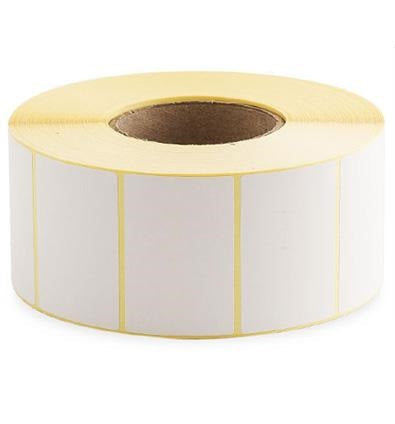
52 x 52 Plain White Thermal Transfer Printer Labels (2,750 per roll) — Product Overview
These plain white thermal transfer labels are designed for crisp, durable printing in busy packing, despatch and stock-control environments. With a square 52 x 52 mm format and 2,750 labels per roll, they’re a practical choice when you need consistent label presentation, efficient roll changes and reliable scan-ready output. Thermal transfer printing uses a ribbon to create a robust image on the label surface, helping text and barcodes remain clear through handling, storage and day-to-day logistics workflows.
Whether you’re producing internal identification labels, shelf-edge or bin labels, product ID stickers, or general-purpose operational labels, this format offers a neat footprint that fits many common labelling tasks without taking up unnecessary space. The plain white face provides strong contrast for black print, making it suitable for barcodes, QR codes, batch codes, dates and short descriptions.
Key Features
- Thermal transfer print compatibility: Designed for use with thermal transfer printers and ribbons to produce sharp, long-lasting print.
- Square 52 x 52 mm label format: A compact, versatile size for identification, location and product labelling.
- Plain white face stock: Clean, professional appearance with excellent contrast for barcodes and text.
- High label count per roll: 2,750 labels per roll helps reduce roll-change downtime in higher-throughput settings.
- Consistent presentation: Uniform label sizing supports tidy application and predictable layout for templates.
Typical Uses
- Warehouse bin, shelf and location labels
- Stock identification and inventory control
- Product ID labels for cartons, totes and inner packs
- Batch, date and traceability labels
- General operational labels for manufacturing and facilities
52 x 52 Thermal Transfer Labels — Full Product Guide
Choosing the right label is about more than just dimensions. Print method, ribbon selection, application surface and the environment the label will face all influence performance. This guide explains how thermal transfer labels work, what to consider when setting up your printer, and how to get consistent results from roll to roll.
How It Works
Thermal transfer printing creates an image by heating a printhead against a ribbon. The ribbon’s coating transfers onto the label surface to form text, lines and barcodes. Compared with direct thermal printing (which relies on heat-sensitive label material), thermal transfer is commonly chosen when you want a more durable print that stands up better to handling and general wear.
To get the best results, match your ribbon type to your label and application. In many operations, a wax or wax/resin ribbon is used for general-purpose paper labels, while resin ribbons are typically selected for more demanding conditions or synthetic label materials. Your printer settings (darkness/heat and speed) also affect barcode edge definition and overall clarity.
Materials and Construction
This product is a plain white thermal transfer label supplied on a roll. The white face stock is intended to provide a clean background for high-contrast printing. Labels on rolls are commonly used in despatch and warehouse environments because they feed smoothly through printers and support fast, repeatable output.
Because configurable product pages can represent multiple variants, it’s best to confirm the exact specification you need (such as core size, roll orientation and adhesive type) against your printer and application requirements before ordering in volume.
Printer and Setup Compatibility
Thermal transfer labels are used across a wide range of desktop, industrial and mobile label printers. To ensure compatibility, check the following before purchase:
- Print method: Your printer must support thermal transfer (and you’ll need a compatible ribbon).
- Label width and length capacity: Confirm the printer can accommodate a 52 mm wide label and the roll’s overall dimensions.
- Core size and roll diameter: These determine whether the roll physically fits your printer’s spindle and housing.
- Winding/orientation: Ensure the labels feed in the correct direction for your printer and sensor setup.
- Sensor type: Gap, notch or black mark sensing should match the label format used by your printer.
If you’re migrating from A4 sheets or pre-printed labels, moving to roll labels can significantly streamline your workflow by enabling on-demand printing and reducing manual handling.
Label Design Tips (Barcodes, QR Codes and Text)
The 52 x 52 mm square format is ideal for compact layouts. For reliable scanning and legibility:
- Leave quiet zones: Barcodes need clear margins around them for scanners to read accurately.
- Choose appropriate barcode size: Ensure the barcode module size suits your scanners and print resolution.
- Use high contrast: Black print on a white label is a strong combination for scanning.
- Avoid overly small fonts: Keep critical information readable at a glance.
- Test before rollout: Print a short run and scan in real conditions (distance, lighting, angles).
For operations using multiple label templates, standardising layouts helps reduce errors and speeds up training for new staff.
Surface and Application Considerations
Label performance depends on the surface you apply it to and the conditions it will face. For best adhesion and presentation:
- Apply to clean, dry surfaces: Dust, oil and moisture can reduce adhesion.
- Allow time to bond: Many adhesives build strength after application.
- Consider curvature: Very tight curves can cause edge lift; a square label may need careful placement on small-diameter items.
- Match to environment: Temperature swings, abrasion and exposure to chemicals can affect both adhesive and print.
If you’re labelling cartons, plastic totes, metal racking or shrink wrap, it’s worth validating adhesion and print durability with a small trial run.
Health and Safety
Thermal transfer labels are typically used in conjunction with printer ribbons and cleaning supplies. Follow standard workplace practices:
- Keep hands clear of moving printer parts during operation.
- Switch off and allow the printhead to cool before cleaning or maintenance.
- Store labels in a clean, dry area away from direct sunlight and excessive heat.
Good storage and handling helps prevent edge damage, contamination and print issues such as smudging or poor barcode definition.
Ideal Applications and Use Cases
These labels are well suited to organisations that need consistent, professional identification labels produced on demand. Common scenarios include:
- Warehousing: Location labels for racking, bins and pick faces; stock ID labels for totes and cartons.
- Manufacturing: Work-in-progress identification, batch tracking and internal routing labels.
- Retail back-of-house: Stockroom organisation and internal product identification.
- Facilities and maintenance: Asset labels, inspection tags and equipment identification.
The square format is particularly useful when you want a balanced layout for a barcode plus a few lines of text, or when you need a compact label that still looks tidy and intentional.
Maintenance, Cleaning and Care
Consistent print quality depends on both label and printer condition. To keep output sharp:
- Clean the printhead regularly: Dust and adhesive residue can cause streaks or faded areas.
- Use the correct ribbon: A mismatched ribbon can lead to poor transfer, smudging or excessive printhead wear.
- Check printer settings: Adjust heat/darkness and speed to balance clarity and throughput.
- Store rolls properly: Keep rolls sealed until use to reduce contamination and curling.
If you notice inconsistent print density across the label, inspect the printhead for debris and confirm the ribbon is correctly tensioned and aligned.
Case Study (Example Workflow)
A typical warehouse workflow might involve printing location labels for racking and bins, then printing matching stock ID labels for incoming goods. Using a consistent 52 x 52 mm format allows teams to standardise templates across multiple processes. With 2,750 labels per roll, operators can run longer print batches with fewer interruptions, helping maintain throughput during busy receiving and picking periods.
For best results, teams often create a small set of approved templates (e.g., location label, stock ID label, quarantine label) and train staff to select the correct template at the point of use. This reduces mislabelling and improves traceability.
Who Is It For?
- Operations teams needing dependable, on-demand identification labels
- Warehouses and 3PLs standardising location and stock labelling
- Manufacturers implementing batch and traceability processes
- Businesses that prefer thermal transfer for more durable print
Colours / Features Available
This listing is for plain white thermal transfer labels. If you require alternative colours, pre-printed designs, or different adhesives, consider checking related label ranges or contacting the supplier to confirm available options.
Sizes Available
This product is a 52 x 52 mm label format supplied on rolls with 2,750 labels per roll. Many label ranges offer additional sizes and roll configurations; if you need a different label dimension or roll specification to suit your printer, look for other thermal transfer label options within the same category.