

Printed Parcel Labels
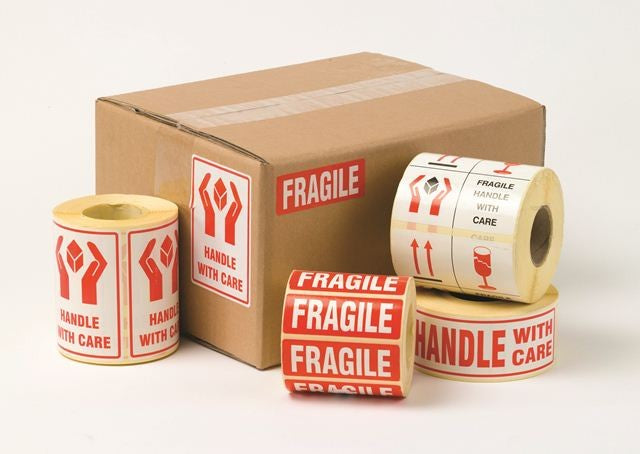
89x32mm VL89 “Fragile” Labels — Clear Handling Instructions for Parcels
Fragile labels are a simple, highly visible way to communicate careful handling requirements throughout the delivery chain. The 89x32mm VL89 “Fragile” label format is designed to be compact enough to fit neatly on cartons, mailers and stretch-wrapped consignments, while still being easy to spot at a glance. Adding a clear “Fragile” message helps reduce the risk of rough handling, improves warehouse and courier awareness, and supports a more professional presentation for your outgoing goods.
These labels are commonly used as part of a wider packing process alongside protective void fill, cushioning materials and strong carton sealing tape. By combining physical protection with clear external messaging, you create a more complete packaging system that helps protect products in transit and supports smoother receiving at the destination.
Key Features
Instant recognition:
Displays a clear “Fragile” message to highlight that the contents require careful handling during picking, packing, loading and delivery.
Compact 89x32mm format:
A practical label size that fits well on a wide range of outer packaging types without dominating the pack face or covering important shipping information.
Supports better handling behaviour:
Helps communicate handling expectations to multiple touchpoints in the supply chain, including internal warehouse teams and third-party carriers.
Works as part of a complete packing system:
Most effective when used alongside protective packaging (bubble wrap, foam, paper void fill) and robust outer cartons to reduce movement and impact.
Professional presentation:
Clear handling labels can improve the perceived care and quality of your dispatch process, especially for customer-facing shipments.
- Clear “Fragile” handling message
- Convenient 89x32mm label size (VL89)
- Ideal for cartons, mailers and wrapped pallets
- Helps reduce avoidable transit damage
- Complements protective packaging materials
Typical Uses
- Marking cartons containing breakable or delicate items
- Labelling parcels with glass, ceramics, electronics or precision components
- Outbound eCommerce orders where presentation and care matter
- Warehouse picking/packing stations to reinforce handling requirements
- Returns shipments where contents may be re-packed inconsistently
89x32mm VL89 “Fragile” Labels — Full Product Guide
Introduction
Handling labels are one of the quickest upgrades you can make to a packing operation. They don’t replace good packaging design, but they do add a clear, standardised instruction that can be understood instantly. The VL89 89x32mm “Fragile” label format is widely used for parcel marking because it balances visibility with a tidy footprint, making it easy to apply on different pack sizes and shapes.
How It Works
Once applied to the outside of a parcel, a “Fragile” label acts as a visual cue for anyone who touches the shipment—packers, warehouse operatives, drivers and receiving teams. The goal is to encourage gentler handling, reduce stacking pressure, and prompt more careful placement during loading and unloading.
For best results, apply labels to clean, dry surfaces and position them where they are most likely to be seen during handling—typically on the main face of the carton or near the shipping label without covering barcodes, addresses or carrier documentation.
Materials and Construction
Fragile labels are typically supplied as self-adhesive labels intended for quick application during packing. In most operations, they are used on common outer packaging materials such as corrugated cardboard cartons, paper mailers, shrink/stretch wrap and some plastics. If you are applying labels to low-energy plastics, dusty surfaces, or cold/condensation-prone packaging, it’s good practice to test adhesion in your real packing environment before rolling out at scale.
If your process involves automated labelling or high-speed packing lines, confirm that the label format and dispensing method suits your applicator setup.
Floor Type Compatibility
While labels are applied to packaging rather than floors, they play an important role in environments where parcels move across different handling zones—packing benches, conveyor systems, pallet build areas and loading bays. Clear handling labels help maintain consistent handling behaviour even when goods are transferred between teams or moved through busy dispatch areas.
Health and Safety
Using handling labels can support safer manual handling by encouraging operatives to treat marked parcels with additional care. However, labels should not be relied upon as the only control measure for hazardous or regulated goods. If your shipment requires specific compliance markings (for example, lithium battery labels, orientation arrows, or other regulated transport labels), ensure you use the correct approved labels and documentation in addition to “Fragile” marking.
Always keep shipping labels, barcodes and carrier-required markings unobstructed. Avoid placing “Fragile” labels over seams where tape needs to bond, or where the label could lift due to carton flexing.
Ideal Applications and Use Cases
eCommerce fulfilment:
Helps communicate care for customer orders containing delicate items, improving the unboxing experience and reducing damage-related returns.
Industrial and trade distribution:
Useful for components that can be damaged by impact or vibration, such as instruments, fittings, or precision parts.
Retail and wholesale dispatch:
Supports consistent handling across mixed consignments where some cartons require extra care.
Internal transfers:
Ideal for moving fragile items between sites, departments or storage areas where packaging may be handled multiple times.
Maintenance, Cleaning and Care
Labels are designed for single-use application. Store unused labels in a clean, dry area away from direct sunlight and excessive heat. Keeping labels in their original packaging helps protect them from dust and moisture, which can affect adhesion and dispensing.
When applying, ensure the surface is free from loose dust, oil or moisture. Press firmly across the label to ensure full contact, especially on textured cartons or wrapped surfaces.
Case Study (Example Workflow)
A small fulfilment team shipping delicate homeware items introduced a simple packing standard:
- Wrap each item with cushioning material and secure it to prevent movement.
- Use a strong outer carton sized to minimise void space.
- Seal all seams with quality carton tape.
- Apply a “Fragile” label on the main carton face near (but not covering) the shipping label.
- Add additional labels on adjacent faces for larger cartons or where parcels may be stacked.
By combining protective packaging with clear external handling instructions, the team improved consistency and reduced avoidable damage incidents during transit.
Who Is It For?
- Warehouses and fulfilment centres looking to standardise packing and handling communication
- eCommerce brands shipping breakable or premium products
- Manufacturers and distributors sending delicate components
- Offices and facilities teams shipping equipment between locations
- Anyone wanting a quick, low-effort way to reinforce careful handling
Colours / Features Available
This product listing covers the VL89 “Fragile” label format. If you need alternative handling messages (for example “Handle With Care”, “This Way Up”, or “Do Not Stack”), or different label sizes to suit larger cartons, consider using a consistent set of handling labels across your operation to make instructions easy to recognise.
Sizes Available
This listing is for the VL89 label size (89x32mm). If you require a larger label for improved visibility on bigger cartons, or a different format to suit your labelling process, choose a size that fits your packaging and remains clearly visible without covering shipping information.
Tip: For best visibility, apply handling labels to at least one prominent face of the parcel. For larger cartons or multi-drop consignments, applying labels to more than one face can help ensure the message is seen regardless of how the parcel is oriented during handling.