

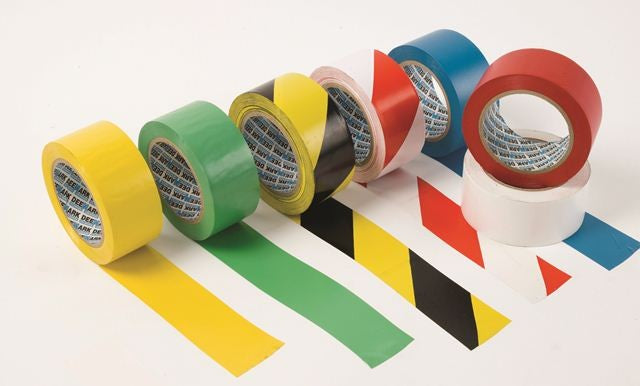
Line Marking - Hazard Tape
Red & White Line Marking Tape (Hazard Stripe) — Overview
Red & white hazard line marking tape is a fast, clean way to create highly visible safety markings in workplaces where you need to highlight hazards, define boundaries, or guide pedestrian and vehicle movement. Commonly used in warehouses, factories, workshops, schools, and facilities management environments, this tape helps you mark out “keep clear” zones, walkways, storage bays, and temporary or semi-permanent layouts without the downtime, fumes, or curing time associated with paint.
This product is a red & white striped line marking / hazard tape supplied on a roll (50mm wide x 30m long variant shown on this page). It is designed to be applied directly to suitable clean, dry surfaces to create crisp, professional-looking lines and warning zones.
Key Features
High-visibility hazard striping:
Red & white stripes provide an instantly recognisable warning pattern that draws attention to edges, obstacles, restricted areas, and changing floor levels.
Quick application with minimal disruption:
Apply by hand—no specialist tools required. Ideal when you need to update layouts quickly or mark areas during maintenance windows.
Clean, sharp lines:
Creates consistent line width and neat edges for a professional finish compared with freehand painting.
Flexible for changing layouts:
Useful for environments where bays, routes, or work areas change over time. Tape-based marking can be easier to update than painted lines.
Multi-purpose safety marking:
Suitable for marking hazards, boundaries, and guidance lines in a wide range of industrial and commercial settings.
- Hazard identification with red/white warning stripes
- Fast installation with minimal downtime
- Neat, consistent lines for professional floor marking
- Great for temporary or evolving layouts
- Ideal for warehouses, workshops, and facilities
Typical Uses
- Marking hazard zones around machinery, pinch points, or restricted access areas
- Creating keep-clear areas in front of fire exits, electrical panels, and safety equipment
- Defining walkways and pedestrian routes
- Outlining storage bays, staging areas, and pick/pack zones
- Highlighting edges, steps, ramps, and changes in floor level
- Temporary marking for events, audits, or reconfiguration projects
Red & White Line Marking Tape — Full Product Guide
Line marking tape is a practical alternative to paint for many indoor marking tasks. It can help improve organisation, reduce confusion, and support safer movement through busy work areas. The red & white hazard pattern is commonly used where you want to communicate caution or restricted access at a glance.
How It Works
The tape is supplied on a roll and is applied directly to the surface to create a visible line or boundary. Once positioned, firm pressure helps the adhesive bond to the floor. For best results, plan your layout first, then apply in straight runs, smoothing as you go to reduce trapped air and ensure good contact.
For corners and junctions, you can cut and butt-join sections for a crisp finish. In higher-traffic areas, taking extra time to press down edges can help reduce the chance of lifting.
Materials and Construction
This is a specialist line marking / hazard tape intended for safety marking. Like many floor marking tapes, it is designed to be flexible enough to follow the surface while maintaining a clear striped pattern for visibility. The adhesive backing is intended to hold the tape in place on suitable prepared surfaces.
Note: Performance depends heavily on surface condition, cleanliness, and the environment (traffic levels, moisture, dust, and temperature). Always test a small area if you are unsure.
Floor Type Compatibility
Line marking tapes are typically used on smooth, sealed, and well-prepared floors. The best results are usually achieved on clean, dry, non-dusty surfaces. If your floor is porous, rough, or contaminated with oil/dust, adhesion may be reduced.
- Best suited to: smooth, sealed concrete; epoxy-coated floors; vinyl and other smooth industrial flooring
- May require extra preparation on: rough concrete, dusty surfaces, or areas with frequent spillages
If you are applying to newly laid floors or freshly coated surfaces, ensure the surface is fully cured and free from release agents or residues before application.
Health and Safety
Clear floor marking supports safer workplaces by improving visibility and helping separate pedestrians from vehicles and equipment. Red & white hazard striping is commonly used to draw attention to risk areas and reinforce safe behaviour.
- Use hazard tape to highlight rather than replace formal safety controls.
- Ensure markings align with your site’s risk assessments and internal safety standards.
- Keep surfaces clean and markings visible—replace worn or damaged tape promptly.
Ideal Applications and Use Cases
This tape is a strong choice when you need a clear warning pattern and want a quick, tidy installation:
- Warehousing & logistics: mark staging lanes, keep-clear zones, and hazard areas near loading bays
- Manufacturing: define safe zones around equipment and indicate restricted access areas
- Workshops & maintenance areas: highlight trip hazards, edges, and temporary work zones
- Facilities management: improve navigation and compliance by clearly marking safety-critical areas
- Schools & public buildings: guide foot traffic and identify areas requiring caution
Maintenance, Cleaning and Care
To keep markings looking sharp and performing well:
- Clean regularly to prevent dirt build-up that can reduce visibility.
- Avoid aggressive scraping at tape edges during cleaning.
- If an edge begins to lift, address it early—trim and replace sections as needed.
- In high-traffic zones, consider periodic inspection and planned replacement to maintain clear safety communication.
Case Study (Typical Example)
Scenario: A busy warehouse needed to improve safety around a packing area where pallet trucks and pedestrians frequently crossed paths.
Approach: Red & white hazard tape was used to mark a keep-clear buffer zone around the packing benches and to highlight a crossing point.
Outcome: The area became easier to understand at a glance, helping reduce congestion and reinforcing safe routes during peak periods.
Tip: Combine hazard striping with clear signage and consistent colour rules across your site for best results.
Who Is It For?
- Health & safety teams implementing clearer hazard communication
- Warehouse and operations managers improving traffic flow and organisation
- Facilities teams needing quick, low-disruption marking solutions
- Maintenance teams setting up temporary work zones or restricted areas
Colours / Features Available
This listing is for red & white hazard stripe line marking tape. If you are standardising your site markings, you may also use other colours for walkways, bays, or directional guidance (availability varies by range).
Sizes Available
This product is supplied as a roll. The variant shown on this page is 50mm x 30m. If your site requires different widths or roll lengths, check the available options/variants on this product page.
Application Tips (Best Practice)
- Surface prep matters: remove dust, oil, and moisture before application.
- Plan your layout: measure and mark guide points for straight runs.
- Apply with pressure: press firmly along the full length, paying attention to edges.
- Allow time to bond: where possible, avoid immediate heavy traffic after application.
- Test first: if you have unusual flooring or coatings, trial a small section.
Need help choosing the right marking solution?
If you’re unsure whether tape or paint is best for your environment, consider traffic levels, surface condition, cleaning regime, and how often your layout changes. Tape is often ideal for fast deployment and flexible layouts, while paint may suit permanent markings in some settings.