

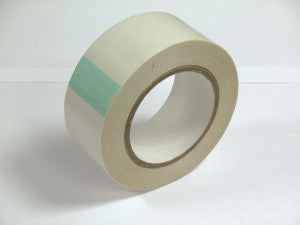
Double Sided Tape - Perm
19mm Double Sided Tissue Tape (Permanent) — Overview
Double sided tissue tape is a thin, flexible bonding tape designed for clean, fast joining of lightweight materials. This product is a 19mm wide double sided tissue tape with a permanent adhesive, making it a practical choice when you need a reliable bond without the mess and drying time of liquid glues.
Because tissue tapes use a thin carrier, they conform well to gentle curves and uneven surfaces, and they are commonly used for mounting, laminating, splicing, and general assembly tasks where a neat finish matters. The tape is supplied on a roll and is intended to be applied with firm pressure to help the adhesive wet-out onto the surface for best performance.
Key Features
Permanent double-sided bond
Designed for applications where you want the join to stay in place. Once applied correctly, the adhesive is intended for long-term holding rather than repositioning.
Thin tissue carrier for a neat finish
The tissue carrier keeps the tape low-profile, helping you achieve a clean, almost “invisible” bond line compared with thicker foam tapes.
Conformable and easy to apply
Tissue tapes are flexible and can follow gentle contours, making them useful for mounting and laminating where the surface is not perfectly flat.
Fast, dry application
No curing time and no squeeze-out like wet adhesives—ideal for production environments and quick turnarounds.
19mm width for versatile coverage
A popular general-purpose width that balances coverage and control for many packaging, print, and assembly tasks.
Key Features (Bullet Summary)
- Type: Double sided tissue tape
- Adhesive: Permanent
- Format: Roll tape with release liner
- Use style: Mounting, laminating, splicing, light-duty bonding
- Finish: Thin, neat bond line
Typical Uses
- Mounting & fixing: Attaching lightweight signs, displays, trims, and components where a clean look is important.
- Laminating: Bonding films, papers, and lightweight sheets together for presentation, protection, or reinforcement.
- Splicing: Joining webs of paper, film, or similar materials in converting and finishing processes.
- Packaging & presentation: Securing inserts, samples, and promotional items inside packs or folders.
- Craft & print finishing: General assembly tasks where you want a tidy, dry adhesive solution.
19mm Double Sided Tissue Tape — Full Product Guide
This guide explains how double sided tissue tape is typically used, what to consider when choosing it, and how to get the best results in real-world applications. As with all pressure-sensitive adhesive tapes, performance depends on surface condition, application pressure, and the environment the bond will experience.
How It Works
Double sided tissue tape uses a thin tissue carrier coated on both sides with pressure-sensitive adhesive and protected by a release liner. In use, you apply the tape to the first surface, press firmly to ensure good contact, then remove the liner and apply the second surface. The adhesive forms a bond through pressure and surface contact rather than drying or curing.
For best results, apply the tape with consistent pressure across the full width. A roller or squeegee can help improve contact, especially on larger areas or where you need a uniform bond.
Materials and Construction
Tissue carrier: The tissue layer provides a thin, flexible core that helps the tape conform and keeps the bond line low-profile.
Permanent adhesive: Designed for secure, long-term bonding in typical indoor applications. Permanent adhesives are generally chosen when you do not need clean removal.
Release liner: Protects the adhesive until application and helps with handling and accurate placement.
Surface & Substrate Compatibility
Double sided tissue tapes are commonly used on smooth, clean surfaces. Typical substrates include paper and card, many films, and other lightweight materials. As with any adhesive product, results vary depending on the exact surface energy, texture, coatings, and contamination.
- Best on: Clean, dry, smooth surfaces.
- May require testing on: Textured, dusty, oily, silicone-coated, or heavily plasticised surfaces.
- Important: If you are bonding plastics, coated papers, or printed/varnished surfaces, a quick trial is recommended to confirm adhesion and appearance.
Health and Safety
This is a dry, pressure-sensitive adhesive tape, which typically makes it easier to handle than solvent-based liquid adhesives. Even so, good workshop practice is recommended:
- Use in a well-ventilated area if you are applying large quantities.
- Avoid contact with eyes and prolonged contact with skin.
- Keep away from children and store in a cool, dry place.
- Dispose of liner and offcuts responsibly to reduce slip hazards.
Ideal Applications and Use Cases
Print finishing and display work: Tissue tape is often chosen where you want a neat bond without adding bulk—useful for mounting graphics, assembling point-of-sale items, and fixing lightweight components.
Converting and splicing: In roll-to-roll processes, double sided tissue tape can be used for splicing and joining where a thin profile helps reduce bumps through rollers.
General assembly: A practical option for quick bonding of lightweight parts where mechanical fixings are not desirable.
Application Tips (Getting the Best Bond)
- Prepare the surface: Ensure surfaces are clean, dry, and free from dust, grease, and release agents.
- Apply pressure: Firm, even pressure improves adhesive contact. A hand roller can help.
- Avoid touching the adhesive: Skin oils can reduce performance.
- Allow time where possible: Many pressure-sensitive adhesives build strength over time after application.
- Test first: If the application is critical (or the surface is unusual), trial a small area before full production.
Maintenance, Cleaning and Care
Once applied, the tape generally requires no maintenance. For best storage and handling:
- Store rolls in their packaging in a cool, dry environment.
- Avoid prolonged exposure to heat, direct sunlight, or high humidity before use.
- Keep the roll edges clean to prevent dust contamination.
Case Study (Typical Workflow Example)
Scenario: A small print and finishing operation needs a clean way to mount lightweight printed sheets onto backing board for short-run display pieces.
- The operator applies strips of 19mm double sided tissue tape to the backing board.
- Using a roller, they press the tape down to ensure consistent contact.
- The release liner is removed, and the printed sheet is aligned and laid down from one edge to minimise trapped air.
- Final pressure is applied across the surface to secure the bond.
Outcome: A tidy, low-profile bond without wet glue, helping speed up production and reduce mess.
Who Is It For?
- Packaging and presentation teams needing a fast, clean bonding method.
- Print finishers and display makers who want a thin bond line.
- Workshops and maintenance teams looking for a general-purpose double sided tape for light-duty tasks.
- Craft and hobby users who prefer a dry adhesive solution for assembly.
Colours / Features Available
This listing is for a double sided tissue tape format with a permanent adhesive. Product pages like this may cover multiple pack sizes or roll options; select the option that matches your requirements.
Sizes Available
This product is supplied in 19mm width. The available pack sizes and roll options are shown in the variant selector on this page. If you need a different width or a specific roll format for converting, please contact us to discuss availability.
Note: Adhesive performance depends on the materials being bonded and the conditions of use. If you are unsure, we recommend carrying out a small trial on your actual substrates before committing to volume use.