


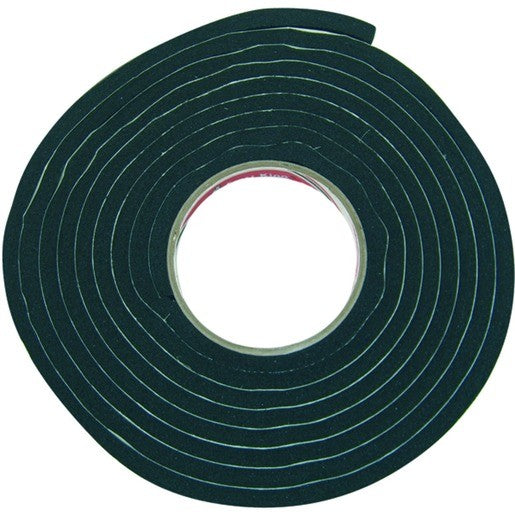
Foam S/A
Self-Adhesive Foam Tape (Foam S/A) — Overview
This self-adhesive foam tape is a simple, versatile sealing and cushioning solution designed to help fill small gaps, reduce vibration, and provide a soft compressible barrier between two surfaces. Supplied as an easy-to-handle roll, it combines a foam strip with a pressure-sensitive adhesive backing so it can be applied quickly without separate glue.
Foam tapes like this are commonly chosen where you need a neat, compressible seal that conforms to minor surface irregularities. They are often used for light-duty sealing, spacing, packing, and general workshop or site tasks where a fast, clean application is important.
Key Features
- Self-adhesive backing: Peel-and-stick application helps speed up fitting and reduces mess compared with liquid adhesives.
- Compressible foam: The foam structure cushions contact points and helps accommodate small variations in surfaces and gaps.
- Multi-purpose sealing: Useful for reducing draughts, dust ingress, and rattles where a soft seal is required.
- Quick to cut and position: Can be trimmed to length on-site for straightforward installation and tidy results.
- Helps reduce vibration and noise: Foam can dampen minor vibration between panels, covers, and enclosures.
- General protection: Can act as a buffer to help prevent scuffs and wear where two parts meet.
Typical Uses
- General gap filling and light sealing around panels, covers, and housings
- Cushioning between components to reduce rattles and vibration
- Spacing and packing applications in workshops, maintenance, and installation work
- Protective buffering on edges or contact points where a softer interface is preferred
Self-Adhesive Foam Tape — Full Product Guide Introduction
This guide explains what self-adhesive foam tape is, how it works, and how to get the best results when applying it. Because foam tapes are often selected for convenience and adaptability, the key to performance is good surface preparation, correct placement, and choosing a suitable foam thickness and width for the gap you want to seal or cushion.
How It Works
The tape combines two functional layers:
- Foam layer: Provides compressibility. When pressed between two surfaces, the foam deforms to fill small voids and create a soft barrier.
- Pressure-sensitive adhesive layer: Bonds the foam to the application surface. Once applied with firm pressure, the adhesive grips and holds the tape in place.
In many practical applications, the foam does the “sealing” work by conforming to the mating surface, while the adhesive ensures the foam stays positioned where you need it.
Materials and Construction
This product is described as Foam S/A (foam self-adhesive). Foam tapes are typically manufactured as a continuous strip of foam with an adhesive coating and a removable release liner. The release liner protects the adhesive until you are ready to apply the tape.
If you need confirmation of the exact foam type (for example, whether it is open-cell or closed-cell) or the adhesive chemistry, please refer to the product datasheet or contact the supplier—these details can vary by foam tape range and are important for demanding environments.
Surface Compatibility and Preparation
Adhesive performance depends heavily on the surface condition. For best results:
- Clean: Remove dust, grease, and loose particles. A clean, dry surface helps the adhesive wet-out properly.
- Dry: Moisture can reduce initial tack and long-term bond strength.
- Sound substrate: Flaking paint, chalky coatings, or crumbling materials can cause the tape to detach with the surface layer.
On rough or highly textured surfaces, foam tape may bridge peaks and valleys rather than fully bond. In those cases, consider whether a different sealing method is more suitable, or test a small section first.
Installation Tips (Getting a Neat, Reliable Fit)
- Measure and dry-fit: Plan the run and check clearances before removing the liner.
- Apply with steady tension: Avoid stretching the foam during application; stretching can cause shrink-back over time.
- Use firm pressure: Press along the full length to help the adhesive make full contact.
- Mind corners and joins: For corners, use careful mitres or neat butt joints to reduce gaps.
- Allow time: Many pressure-sensitive adhesives build bond strength over time after application.
Floor Type Compatibility
This product is a foam tape intended for general sealing and cushioning rather than a floor-specific underlay or flooring adhesive. If you are considering it for floor-related tasks (for example, temporary spacing, edge buffering, or light sealing), test compatibility with the specific surface finish and cleaning regime first.
Health and Safety
Use standard good practice when handling and cutting tape products:
- Cut away from the body using a suitable knife or scissors.
- Dispose of release liners responsibly to reduce slip hazards.
- If applying in enclosed areas, ensure adequate ventilation—especially if cleaning solvents are used for surface preparation.
For formal guidance, consult any available safety or technical documentation for the tape and any cleaners used during installation.
Ideal Applications and Use Cases
Self-adhesive foam tape is often selected for:
- Sealing light gaps: Where a compressible strip can reduce draughts, dust, or minor rattling.
- Cushioning contact points: Between panels, covers, access hatches, or enclosures to reduce vibration and noise.
- Spacing and packing: Creating a consistent stand-off or soft buffer during assembly or installation.
- General protection: Helping prevent scuffs where two surfaces meet repeatedly.
Maintenance, Cleaning and Care
Once installed, foam tape typically requires minimal maintenance. To help extend service life:
- Keep the area reasonably clean to prevent abrasive dirt from wearing the foam.
- Avoid aggressive solvents or harsh chemicals unless you have confirmed compatibility with the foam and adhesive.
- If the tape is used as a seal, periodically check for compression set, lifting edges, or damage in high-contact areas.
Case Study (Example Scenario)
Problem: A lightweight access panel vibrates slightly during operation, creating a rattle and allowing dust to enter around the edges.
Approach: Apply self-adhesive foam tape around the panel perimeter on the mating surface. Close the panel to compress the foam gently and confirm that the latch still engages correctly.
Result: The foam provides a soft interface that reduces vibration noise and improves the edge seal, while the adhesive backing keeps the strip positioned neatly.
Note: This is a general example to illustrate typical use; suitability depends on the specific gap size, surface condition, and operating environment.
Who Is It For?
- Maintenance teams needing a quick, clean sealing or cushioning solution
- Installers and fabricators looking for a compressible buffer between parts
- Workshops and facilities teams handling general repairs and minor gap sealing
- Anyone needing a peel-and-stick foam strip for light-duty applications
Colours / Features Available
This listing represents a foam self-adhesive tape product. Colour and foam characteristics can vary by range and batch. Please refer to the product options/variants shown on the page for the available selections.
Sizes Available
This product page may include multiple variants. Please select the required option from the size/pack choices shown. Where applicable, the roll format allows you to cut the tape to the exact length needed for your application.