

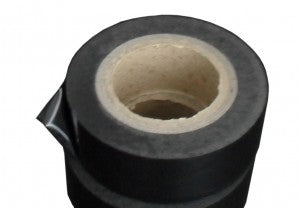
Low Tac Protection Tape
Black Low‑Tac Protection Tape (Surface Protection Film) — Overview
Black low‑tack protection tape is a temporary, self‑adhesive surface protection film supplied on a roll for fast application to sheet materials, profiles and finished components. It is designed to help protect vulnerable faces from dirt, scuffs, light abrasion and handling marks during fabrication, storage and transport, while still removing cleanly when the job is complete. The black film also helps reduce light transmission to the protected surface, which can be useful where you want to shield finishes from light exposure during short‑term storage or site work.
This product is supplied as a slit roll (width and length shown in the product options). Because protection films are often used across multiple substrates and finishes, performance depends on the surface energy, texture and cleanliness of the material you apply it to. For best results, always test on your exact substrate and finish before full production use.
Key Features
Low‑tack, temporary adhesion:
Designed to stay in place through normal handling and processing, then peel away without aggressive pull. Low‑tack films are commonly chosen for delicate or freshly finished surfaces where you want protection without a strong bond.
Polyolefin protection film construction:
Many black protection films in this category are polyolefin based, offering a flexible, conformable layer that can be applied to flat sheets and gentle curves while resisting tearing during removal.
Rubber‑based adhesive system:
Protection films of this type are commonly paired with rubber adhesives to provide reliable wet‑out on a range of substrates while maintaining removability when used within recommended timeframes.
Helps prevent surface damage during processing:
Acts as a sacrificial layer to reduce the risk of scratches, tool marks and general grime during cutting, drilling, routing, bending, assembly and packing.
Fast application from roll:
Suitable for manual application or use with applicators/laminators. The roll format supports consistent coverage and quick changeovers.
Black film for coverage and contrast:
The dark film can make it easier to see coverage edges on light substrates and can help shield the protected face from light during short‑term storage.
- Temporary surface protection for sheets, panels and profiles
- Low‑tack adhesion to support clean removal on suitable surfaces
- Flexible film that conforms to many flat and gently contoured parts
- Roll format for efficient application and consistent coverage
- Black colour for coverage visibility and light reduction
Typical Uses
- Protecting coated or finished sheet materials during cutting, drilling, routing and assembly
- Shielding decorative laminates and plastics from scuffs during handling and packing
- Temporary protection for metal sheets and profiles during fabrication and transport
- Keeping surfaces clean on site prior to final handover
Black Low‑Tac Protection Tape — Full Product Guide
Temporary protection films are widely used in manufacturing and installation workflows because they reduce rework and improve presentation at delivery. A low‑tack protection tape is typically selected when the surface is delicate, freshly finished, glossy, or otherwise sensitive to higher adhesion levels. The goal is to balance two needs: (1) the film must stay put through normal handling and processing, and (2) it must remove cleanly without leaving residue when removed within the recommended window.
How It Works
This product is a self‑adhesive film supplied on a roll. When applied to a clean, dry surface, the adhesive layer lightly bonds to the substrate. The film then acts as a barrier against dirt and minor abrasion. When you are ready to reveal the finished surface, you peel the film away, ideally at a steady angle and speed. Low‑tack films are intended to reduce the risk of aggressive pull on sensitive finishes compared with higher‑tack grades.
Because different materials and coatings behave differently, it is good practice to run a small trial: apply a sample, leave it for the expected duration, expose it to the expected temperatures/light, then remove and inspect for any residue or marking.
Materials and Construction
Protection films in this category are commonly made from polyolefin film with a rubber adhesive. A representative technical data sheet for a black protection film of this type specifies polyolefin construction, black colour, and rubber adhesive, with an average thickness around 80 micron and adhesion measured at 45 cN/cm (AFERA 5001), which aligns with a lower‑to‑medium adhesion profile rather than a high‑tack bond.
Mechanical properties published for a comparable black protection film include breaking strength greater than 1.0 daN/cm (machine direction) and 1.1 daN/cm (transverse direction), with elongation at break greater than 200% (machine direction) and 500% (transverse direction). These figures indicate a film that can stretch and conform during application while resisting tearing during removal when applied correctly.
Floor Type Compatibility
This product is a surface protection film intended for materials and components (such as sheets, panels and profiles), not a floor protection system. If you need protection for floors, walkways or carpets, choose a dedicated floor protection film or board designed for foot traffic and slip resistance.
Health and Safety
- Surface preparation: Apply to clean, dry surfaces. Dust, oils and moisture can reduce adhesion and may increase the chance of marking.
- Application tension: Guidance for comparable films recommends applying bubble‑free and without excessive tension; elongation during lamination should be kept below 1% to reduce shrink‑back and edge lift.
- Temperature: A representative black protection film specifies a recommended application temperature range of 15°C to 50°C. Applying outside this range can affect wet‑out and removability.
- Sunlight/heat exposure: Comparable guidance warns that the adhesive should not be exposed to direct sunlight. Heat and UV can increase adhesive flow and make removal more difficult.
- Trial first: Always test on your exact substrate/finish, especially on textured, matte, freshly painted, or low‑energy plastics.
Ideal Applications and Use Cases
Low‑tack black protection films are commonly used across metalworking, plastics fabrication, signage, shopfitting and general manufacturing where a finished face needs to remain presentable through multiple handling steps.
- Metal sheets and profiles: Temporary protection during cutting, bending, forming and transport.
- Pre‑coated metals: Suitable surfaces listed for a comparable black film include PES, PVDF, plastisol and skinplates.
- Plastics and decorative sheets: Suitable surfaces listed for a comparable black film include PC, acrylic, PETG, PVC, PS, ABS, SAN, ASA, PE and PP, plus decorative sheets.
- Profiles and laminates: Suitable surfaces listed include white PVC, decorative‑sheet PVC, painted aluminium, PVC boards, and standard/metallic decorative laminates.
Note: A comparable technical data sheet advises that it is not advisable for copper, brass, and brass‑containing alloys. If you are protecting these materials, select a film specifically approved for them.
Maintenance, Cleaning and Care
Protection film is designed to be applied and removed rather than cleaned and reused. However, good handling practices improve performance:
- Before application: Ensure the surface is fully cured (for paints/coatings), clean and dry. Remove dust and swarf that could imprint into the finish.
- During use: Avoid prolonged exposure to heat sources, direct sunlight and harsh chemicals. These can change adhesive behaviour.
- Removal: Peel back steadily. If the film has been exposed to heat or left on longer than planned, warming the film slightly and removing slowly can help reduce tearing (test first).
- Time limits: Comparable guidance suggests applying within 6 months of delivery and removing within 1 year from lamination for best removability (always validate on your substrate and conditions).
Case Study (Typical Workflow Example)
Scenario: A fabricator produces coated sheet components that are cut, drilled and assembled before being shipped to site. The finished face must arrive clean and unmarked.
- Step 1 — Apply protection: Film is applied to the finished face before cutting/processing to reduce handling marks.
- Step 2 — Process parts: Cutting and drilling are completed with the film in place, helping to protect against light scuffs and workshop grime.
- Step 3 — Pack and transport: Components are stacked and packed with reduced risk of face‑to‑face abrasion.
- Step 4 — Remove at installation: Film is peeled away at the final stage to reveal a clean surface for handover.
This is a typical use pattern for low‑tack protection films: protect early, remove late, and keep exposure to heat/UV within recommended limits.
Who Is It For?
- Fabricators and installers who need a removable protective layer for finished faces
- Manufacturers handling coated metals, plastics, laminates and decorative sheets
- Workshops looking to reduce rework caused by scratches and handling marks
- Packaging and dispatch teams wanting cleaner deliveries and fewer returns
Colours / Features Available
This listing is for a black low‑tack protection film. Black films are often chosen where you want strong coverage and reduced light transmission to the protected surface. If you require alternative colours, tack levels, printed branding, or different film thicknesses, protection films are commonly available in multiple grades—please check the available options or contact us for guidance.
Sizes Available
This product is supplied as a roll in the width and length shown in the product options. Protection films are commonly available in a range of slit widths and roll lengths, and some suppliers can provide custom converting (bespoke widths/lengths) depending on the film grade and order quantity. If you need a different width for your applicator or a longer run for production, ask about alternative roll formats.
Application Tips (Best Practice)
- Test first: Always trial on your exact substrate, finish and dwell time.
- Apply cleanly: Avoid trapping dust; apply bubble‑free and without excessive stretch.
- Mind the environment: Keep within recommended application temperatures and avoid direct sunlight exposure.
- Plan removal: Remove within the recommended timeframe for best results.
Need help choosing the right protection film?
If you can tell us the substrate (e.g., powder‑coated aluminium, stainless, acrylic), surface texture (gloss/matte/embossed), and expected exposure (indoor/outdoor, heat, duration), we can help you select an appropriate tack level and film type.