

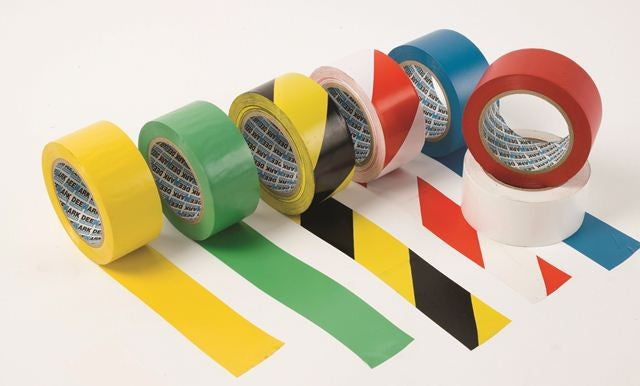
Line Marking - Hazard Tape
Social Distancing Floor Tape — “Keep a Safe Distance of 2m” (Yellow/Black)
This high-visibility social distancing tape is designed to help you communicate clear spacing guidance in busy environments. Printed with the message “Keep a Safe Distance of 2m” and finished in a bold yellow/black hazard-style colourway, it provides an immediate visual cue for customers, visitors and staff. Use it to create simple, consistent floor messaging for queues, walkways and controlled access areas where maintaining separation is important.
Because this is a line-marking / hazard-style floor tape product, it’s a practical choice when you need a fast, low-disruption way to add guidance without installing permanent signage. Apply it to clean, dry surfaces to mark out routes and standing points, and combine it with other floor markings to build a complete wayfinding system.
Key Features
Clear 2m message:
Printed wording helps reinforce distancing guidance at the point of use, reducing the need for repeated verbal reminders.
High-visibility yellow/black design:
The contrasting hazard-style colours are easy to notice on most floors, helping the message stand out in busy areas.
Floor marking / line marking format:
Ideal for creating lanes, queue lines and boundary markings where people naturally look—underfoot.
Quick to deploy:
A straightforward way to add temporary or semi-permanent guidance with minimal downtime compared with painted lines or fixed barriers.
Versatile for many environments:
Suitable for workplaces and public-facing spaces where clear spacing and directional guidance are required.
- Printed message: “Keep a Safe Distance of 2m”
- Colour: Yellow/Black
- Category: Line Marking – Hazard Tape / Specialist Tape
Typical Uses
- Queue management in retail, reception areas and service counters
- Marking one-way systems and pedestrian walkways
- Creating spacing reminders in warehouses, factories and staff areas
- Guidance markings for entrances, exits and waiting zones
- Temporary layout changes for events, pop-ups and seasonal peaks
Social Distancing Tape — Full Product Guide
Floor messaging works best when it is consistent, visible and placed exactly where people make decisions—at junctions, pinch points and waiting areas. This “Keep a Safe Distance of 2m” tape is intended to help you build that consistency quickly. Below is a practical guide to planning, applying and maintaining your floor marking so it stays effective over time.
How It Works
The tape combines two key elements: a bold, contrasting colour scheme and a direct instruction. When applied along a route or at a waiting point, it provides a repeated visual reminder that supports safer spacing behaviour. In many settings, floor markings are more effective than wall signage alone because they sit within the natural line of sight when people are walking or queuing.
For best results, use the tape to:
- Define queue lanes (straight runs that guide people into an orderly line)
- Highlight standing zones (short lengths placed at intervals to indicate where to wait)
- Reinforce direction (paired with arrows or “one way” markings where applicable)
Materials and Construction
This product is supplied as a printed line-marking / hazard tape. The printed message is designed to remain legible when used as a floor marking in typical indoor environments. As with all floor tapes, performance depends heavily on surface preparation and the condition of the floor (texture, dust levels, coatings and cleaning chemicals can all affect adhesion and longevity).
If you are applying tape in a demanding area (high footfall, frequent cleaning, or industrial traffic), consider testing a short section first to confirm suitability for your specific floor finish and cleaning routine.
Floor Type Compatibility
Floor marking tapes generally adhere best to smooth, sealed surfaces. Before full installation, check the floor for:
- Cleanliness: remove dust, grit, oils and residues that can prevent bonding
- Dryness: ensure the surface is fully dry after cleaning
- Texture: heavily textured floors may reduce contact area and shorten service life
- Coatings: some floor polishes or sealants can affect adhesion—test first
If you need to mark a challenging surface, a small trial application is the safest way to confirm performance before rolling out across a larger area.
Health and Safety
Clear floor messaging can support safer movement and spacing, but it should be part of a broader site approach. When planning your layout:
- Place markings where they won’t create confusion at junctions or doorways
- Avoid creating trip hazards by ensuring edges are firmly pressed down
- Replace worn or lifting sections promptly
- Combine floor tape with appropriate site signage and staff guidance where needed
In high-traffic areas, regular inspections help ensure the tape remains secure and readable.
Ideal Applications and Use Cases
This tape is commonly used anywhere you need a clear, repeatable distancing reminder. Typical scenarios include:
- Retail & customer service: queue lanes, checkout approaches, click-and-collect points
- Offices & shared buildings: reception areas, lift lobbies, corridors and waiting zones
- Warehousing & logistics: pedestrian routes, pick/pack areas, goods-in desks
- Healthcare & community settings: waiting areas, clinics, pharmacies and public counters
- Education & venues: entrances, ticketing points, canteens and event spaces
Because the message is printed directly on the tape, it can be used as a standalone reminder or as part of a wider floor marking scheme.
Maintenance, Cleaning and Care
To keep your floor markings looking professional and performing well:
- Clean gently: aggressive scrubbing can lift edges over time
- Inspect regularly: check for peeling, scuffing or loss of legibility
- Replace sections as needed: swapping a short worn length is often quicker than re-marking an entire route
- Keep edges sealed down: press firmly after application and re-press if edges begin to lift
If your site uses frequent wet cleaning, ensure the tape is fully bonded before exposing it to heavy cleaning cycles.
Case Study (Example Layout)
Scenario: A busy reception area with a single service desk and periodic surges in visitors.
Approach: The team applies the tape to create a simple queue lane leading to the desk, with short lengths placed at regular intervals to reinforce spacing. Additional floor markings are used to indicate the start of the queue and to keep walkways clear.
Outcome: Visitors receive a clear, consistent instruction at the point of waiting, helping reduce crowding and improving flow during peak times.
Who is it for?
- Facilities and operations teams managing shared spaces
- Retail managers improving queue flow and customer guidance
- Warehouse and site managers separating pedestrian routes
- Schools, venues and community organisations setting up temporary layouts
- Any workplace needing a clear, visible distancing reminder
Colours / Features Available
This listing is for the yellow/black hazard-style colourway with the printed message “Keep a Safe Distance of 2m”. If you are building a complete floor marking system, consider pairing with complementary line marking tapes (for example, directional arrows or boundary markings) to create a consistent on-site visual language.
Sizes Available
This product is supplied as a roll of social distancing tape (see the product options on this page for pack quantities and available variants). As this is a configurable listing, select the option that best matches your required quantity.
Tip: Before ordering for a full site rollout, measure your intended routes and queue lanes and allow extra length for overlaps, corners and replacement sections.