

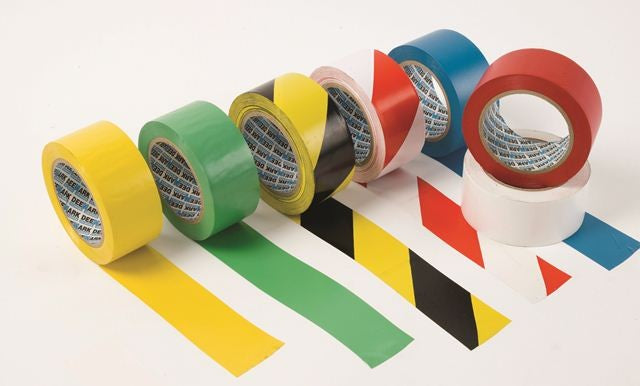
Line Marking - Hazard Tape
Yellow & Black Line Marking Tape (Hazard Tape) — High-Visibility Floor & Area Marking
Yellow and black hazard tape is a simple, highly effective way to create clear visual warnings and organised zones in busy environments. This line marking tape is designed to help you define walkways, highlight hazards, and separate work areas with a bold, high-contrast striped pattern that is easy to see at a glance. Whether you are improving safety in a warehouse, managing pedestrian routes in a workshop, or marking temporary caution areas during maintenance, hazard line marking tape provides a fast, low-disruption solution that can be applied with minimal tools and downtime.
Because this is a configurable product listing, options may vary by pack quantity and other selectable choices. The core purpose remains the same: to provide a strong, visible boundary or warning line on suitable clean, dry surfaces.
Key Features
- High-visibility hazard stripes: Yellow and black striping creates an instantly recognisable caution marking for safety zoning and hazard identification.
- Fast application: A practical alternative to paint for many situations—apply, press down, and reopen the area quickly.
- Strong adhesive backing: Designed to stay in place on properly prepared surfaces for reliable line marking.
- Clean, professional zoning: Helps standardise layouts for walkways, storage bays, equipment areas, and restricted zones.
- Versatile use: Suitable for a wide range of industrial, commercial, and facilities-management marking tasks.
Typical Uses
- Marking hazards, pinch points, and caution areas
- Defining pedestrian walkways and safe routes
- Creating exclusion zones around machinery or maintenance work
- Highlighting low obstacles, edges, and temporary restrictions
- Organising warehouse racking aisles and staging areas
Yellow & Black Line Marking Tape — Full Product Guide
Clear floor and area marking is a cornerstone of good housekeeping and safer working practices. Hazard tape is commonly used where you need a strong visual cue that communicates “caution” without requiring complex installation. This guide explains how to get the best results from yellow and black line marking tape, including surface preparation, application tips, and where it performs best.
How It Works
Line marking tape uses a pressure-sensitive adhesive layer on the reverse side. When applied to a clean, dry surface and pressed firmly into place, the adhesive bonds to the substrate and holds the tape down. The yellow and black striped face provides the visual warning. For best performance, the key is preparation: remove dust, grease, and moisture so the adhesive can make full contact with the surface.
In many facilities, tape is chosen because it can be installed quickly and adjusted more easily than painted lines. It is also useful for temporary or semi-permanent layouts where zones may change over time.
Materials and Construction
This product is a specialist line marking / hazard tape intended for safety zoning. While exact material composition can vary by manufacturer and batch, hazard marking tapes are typically produced with a durable backing designed to resist scuffing and everyday wear in busy environments. The adhesive is formulated to provide a secure bond when applied correctly.
If you are planning to use the tape in particularly demanding conditions (for example, heavy traffic, frequent cleaning, or exposure to oils), it is good practice to test a short length in the intended area first to confirm suitability.
Floor Type Compatibility
Hazard line marking tape is commonly used on smooth, sealed surfaces where the adhesive can achieve full contact. Typical suitable surfaces include sealed concrete, painted floors, epoxy-coated floors, and other smooth industrial flooring finishes. Performance can be reduced on rough, dusty, porous, or uneven substrates because the adhesive cannot fully wet-out and bond across the surface.
Best practice: If the floor is porous or textured, consider whether additional preparation is needed (such as sealing, thorough cleaning, or using a more specialised marking solution). Always ensure the surface is fully dry before application.
Health and Safety
Hazard tape supports safer workplaces by improving visibility and helping communicate risk areas. To maximise safety benefits:
- Use consistent zoning: Keep markings consistent across the site so staff and visitors can interpret them quickly.
- Avoid trip hazards: Apply the tape flat with firm pressure along the full length to reduce lifted edges.
- Inspect regularly: Replace worn or damaged sections promptly so markings remain clear and effective.
- Follow site policies: Align tape placement with your internal safety procedures and any relevant guidance for your environment.
When applying tape, ensure the area is controlled to prevent slips or interference during installation. If using cleaning solvents for preparation, follow the solvent manufacturer’s safety instructions and allow adequate ventilation.
Ideal Applications and Use Cases
Yellow and black hazard tape is widely used anywhere you need a clear caution marking. Common applications include:
- Warehouses and distribution: Marking pedestrian routes, staging zones, and caution areas near loading bays.
- Factories and workshops: Highlighting machine perimeters, maintenance zones, and areas requiring extra attention.
- Facilities management: Temporary hazard marking during repairs, refurbishments, or inspections.
- Schools, venues, and public buildings: Creating clear boundaries for restricted access or temporary route changes.
- Retail back-of-house: Organising stock areas and improving visibility around service corridors.
Maintenance, Cleaning and Care
To keep markings looking sharp and to extend service life:
- Clean gently: Use routine floor cleaning methods appropriate for your flooring. Avoid aggressive scraping at tape edges.
- Check edges: If an edge begins to lift, press it back down promptly. If contamination has entered under the tape, replacement is usually the best option.
- Replace in sections: One advantage of tape is that you can replace only the worn areas rather than repainting an entire zone.
- Keep surfaces dry during application: Moisture during installation can reduce adhesion and shorten lifespan.
Application Tips (For Best Results)
- Prepare the surface: Sweep and clean thoroughly. Remove grease and residues so the adhesive can bond properly.
- Plan your layout: Mark start and end points and keep lines straight. For long runs, apply gradually and press down as you go.
- Apply firm pressure: Press along the full width of the tape to ensure full contact, especially at the edges.
- Avoid stretching: Apply smoothly without pulling too hard to reduce shrink-back or edge lift.
- Allow time to bond: Where possible, minimise traffic immediately after application to help the adhesive set.
Case Study (Example Scenario)
A busy warehouse needed to improve separation between pedestrian routes and pallet staging areas near a loading bay. Painting would have required extended downtime and curing time. By using yellow and black hazard line marking tape, the team quickly created clear caution boundaries around the highest-risk areas and reinforced pedestrian walkways. The result was improved visibility for forklift operators and pedestrians, with minimal disruption to daily operations. Regular inspections were scheduled so worn sections could be replaced quickly, keeping the layout clear and consistent.
Who Is It For?
- Warehouse managers and logistics teams improving site organisation
- Health & safety coordinators implementing clearer hazard zoning
- Facilities teams needing fast, flexible marking solutions
- Workshops and maintenance departments managing temporary caution areas
Colours / Features Available
This listing is for yellow and black hazard striping, a widely recognised caution marking. Depending on the options available on the page, you may be able to select different pack quantities. The tape is intended for line marking and hazard identification.
Sizes Available
As this is a configurable product page, size and pack options may be selectable. Please refer to the options shown on the product page for the available widths, lengths, and pack quantities for your chosen variant.
Note: For best adhesion and a clean finish, always apply to a clean, dry, dust-free surface and test in a small area if you are unsure about compatibility with your flooring or cleaning regime.