

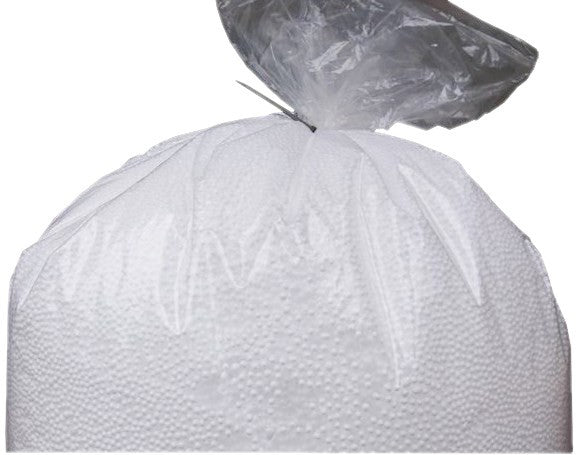
Beads - Cusion Filler
10cuft EPS (Expanded Polystyrene) Poly Beads — Lightweight Cushion & Void-Fill Beads
These EPS “poly beads” are a clean, lightweight loose-fill material supplied in a large-volume pack, designed for topping up and refilling soft furnishings and for protective packing where a mouldable, shock-absorbing fill is needed. EPS beads are widely used as a refill medium because they flow easily, conform to shapes, and add loft without adding much weight.
This product page may cover multiple pack options/variants, so the guidance below focuses on the material and typical performance rather than a single fixed size.
Key Features
Lightweight, high-volume fill
EPS beads provide a lot of volume for their weight, making them ideal when you want to restore “plumpness” without making items heavy or difficult to move.
Free-flowing and mouldable
The beads pour and settle into gaps, helping you achieve an even fill and allowing cushions/bean bags to be shaped and re-shaped during use.
Comfortable support for soft furnishings
Commonly used as a refill for bean bags and certain cushion styles where a soft, sink-in feel is preferred.
Useful as protective void fill
EPS beads can be used to fill voids around items (where appropriate) to reduce movement and provide cushioning during storage or transport.
Easy to top up over time
As seating and cushions compress with use, EPS beads can be added in stages to restore comfort and appearance.
- Material: EPS (expanded polystyrene) beads
- Format: loose-fill beads supplied in a large-volume pack
- Typical uses: cushion/bean bag refill; void filling and cushioning applications
Typical Uses
- Refilling bean bags and floor cushions
- Topping up seat/back cushions that have lost loft
- Craft and hobby projects requiring lightweight filler
- Protective packing/void fill where a mouldable cushion is beneficial
10cuft EPS Poly Beads — Full Product Guide
EPS beads (expanded polystyrene beads) are a popular loose-fill material used for comfort filling and cushioning. They are designed to move and flow, which helps them conform to the shape of a cover or container. This guide explains how the beads behave, where they work best, and how to handle them cleanly and safely.
How It Works
EPS beads act like a “fluid” fill: when poured into a cover, they settle into available space and distribute themselves around internal baffles or seams. Under load (when you sit or lean), the beads shift and compress slightly, then re-settle when the load is removed. This is what gives bean bags and similar products their characteristic mouldable feel.
Because the beads are free-flowing, you can fine-tune firmness by adding small amounts at a time. A little extra fill can make a cushion feel firmer and look fuller; removing some can increase sink-in comfort.
Materials and Construction
EPS (Expanded Polystyrene) is a lightweight plastic foam material. In bead form, it is supplied as many small, round/near-round particles that trap air and provide bulk. The beads are intended to be used inside a suitable cover or liner.
When comparing products online, you may see similar items described as “EPS beads”, “polystyrene beads”, “bean bag refill beads”, or “cushion filler beads”. This listing uses the term “poly beads” alongside EPS; in some markets “poly beads” can also refer to heavier plastic pellets, so it’s helpful that this product is identified as EPS.
Floor Type Compatibility
As a loose-fill product, EPS beads are not a floor covering; however, the way you handle and transfer them can affect your space:
- Hard floors (tile/laminate/wood): escaped beads are easy to see and collect, but they can roll and spread quickly.
- Carpet/rugs: beads can cling and become harder to remove; consider filling over a sheet or in a contained area.
For best results, fill in a controlled area (for example, inside a large plastic storage box, a bathtub, or a small room with doors closed) to keep any stray beads contained.
Health and Safety
EPS beads are very light and can generate static during pouring/transfer. In addition, small “fines” (dust-like particles) may be present depending on handling and transport. General safety guidance for EPS and dust control emphasises minimising dust generation and accumulation, and controlling static where relevant.
- Minimise dust: avoid vigorous shaking or pouring from excessive height; if visible dust is present, consider basic respiratory protection and good ventilation.
- Static control: static can build up during transfer; reducing airflow, avoiding very dry conditions, and grounding yourself before handling can help.
- Keep away from ignition sources: EPS is combustible; keep the product away from open flames, heaters, and sparks during handling and storage.
- Keep away from children and pets: loose beads can be a choking hazard and can create a slip hazard if spilled.
If you require formal handling guidance for workplace use, consult the relevant safety documentation for EPS materials and follow your site risk assessment.
Ideal Applications and Use Cases
Bean bags and loungers
EPS beads are a classic refill choice for bean bags because they flow and mould to the body. Over time, beads can compress and the bag may feel flatter; topping up restores volume and comfort.
Cushions and soft seating
For certain cushion designs, EPS beads provide a soft, adaptable fill. They are especially useful where you want a “sink-in” feel rather than a structured foam feel.
Protective packing and void fill
In packaging contexts, EPS beads can be used to fill voids and reduce movement. They are best suited to applications where containment is assured (for example, inside a sealed bag or liner) to prevent loose beads escaping into the supply chain.
Creative and hobby uses
EPS beads are also used in crafts where lightweight bulk is needed, such as props, displays, and certain upholstery projects (always ensure the final item is appropriately enclosed).
Maintenance, Cleaning and Care
Keeping filled items performing well
- Top up periodically: if a cushion or bean bag looks flat or feels less supportive, add beads in small increments.
- Redistribute fill: knead and shake the item to move beads into low areas and restore shape.
- Use an inner liner where possible: a liner helps contain beads during cover washing or maintenance.
Cleaning up spills
If beads escape during filling, collect them promptly to avoid spreading. For small spills, picking up by hand or using a vacuum can be effective. Avoid aggressive sweeping that can increase static and scatter beads further.
Case Study (Practical Example)
Scenario: A reception area uses large bean bags for informal seating. After months of daily use, the seating looks less full and customers sink lower than intended.
Approach: The team tops up each bean bag in stages, adding a measured amount of EPS beads, then redistributing the fill by kneading and rotating the bag.
Outcome: The seating regains its original shape and comfort without replacing the covers, and future maintenance is simplified by scheduling periodic top-ups.
Who Is It For?
- Facilities and offices maintaining soft seating and breakout areas
- Hospitality venues using bean bags and lounge cushions
- Schools and nurseries (where items are securely enclosed and supervised)
- Home users topping up bean bags and cushions
- Packers and shippers needing a lightweight void-fill option (with appropriate containment)
Colours / Features Available
EPS beads are typically supplied as a neutral/light colour. If your application requires a specific colour or special performance characteristics, check the variant options on this page or contact us for guidance.
Sizes Available
This listing may include multiple pack/quantity variants. Select the option that best matches your required volume and handling preference. If you are planning a large refill project, consider ordering enough volume to complete the job in one session so the feel remains consistent across items.
Need help choosing?
If you’re unsure how much fill you need, tell us what you’re refilling (e.g., bean bag, floor cushion, back cushion) and roughly how many items, and we can help you estimate the most suitable pack option.
References used for general handling guidance: OSHA guidance on static electricity and dust control, and EPS material safety/handling documentation.