

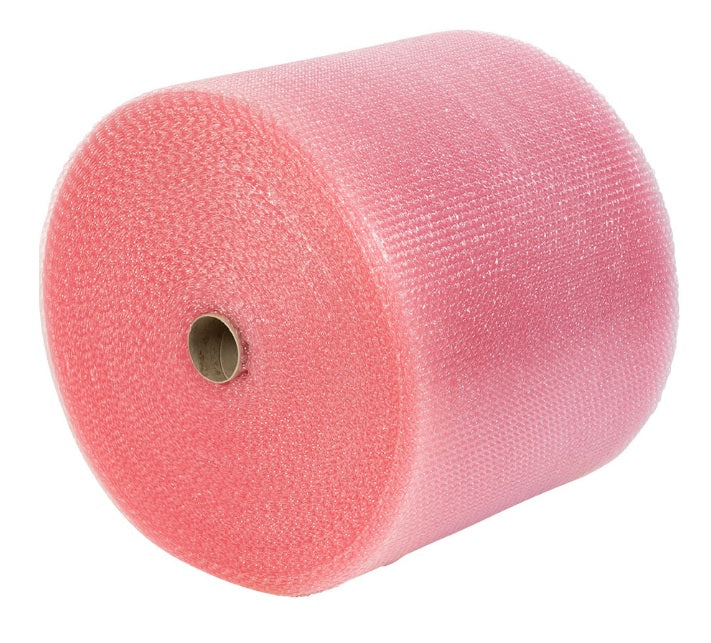
Antistatic Bubble (AS60 x 75M)
600 – Small Anti-Static Bubble Wrap (Antistatic Bubble AS60 x 75M)
When you’re packing, storing or shipping electrostatic-sensitive items, you need two things at the same time: dependable cushioning and packaging that helps reduce static build-up around the product. This small anti-static bubble wrap is designed for exactly that job. It combines a protective bubble layer with anti-static properties to help safeguard delicate components and finished goods during handling, internal transfers and distribution.
Anti-static bubble wrap is commonly used across electronics manufacturing, repair and refurbishment, IT asset handling, e-commerce fulfilment and engineering environments where electrostatic discharge (ESD) can damage components or cause intermittent faults. The small bubble profile provides close, even contact and consistent cushioning, making it a practical choice for wrapping items with edges, corners and delicate surfaces.
This listing covers a configurable product with multiple purchase options. Select the option that best suits your packing volume and workflow.
Key Features
Anti-static protection for ESD-sensitive goods:
Helps reduce static build-up around the wrapped item, supporting safer handling of electronics and other static-sensitive products during packing and transit.
Small bubble cushioning:
The small bubble format provides uniform surface coverage and reliable shock absorption for lightweight and delicate items, helping to reduce scuffs and impact damage.
Roll format for efficient packing:
Supplied on a roll so you can dispense quickly, cut to length, and wrap items of different shapes without excessive waste.
Flexible and easy to wrap:
Conforms around irregular shapes and corners, making it suitable for a wide range of components, assemblies and boxed goods.
Clear product identification:
Anti-static bubble is commonly supplied in a distinctive pink film to help differentiate it from standard bubble wrap in busy packing areas (appearance may vary by batch).
Practical for packing benches and fulfilment lines:
A straightforward protective material that integrates easily into day-to-day packing processes, from single-item dispatch to batch packing.
Key Features (Bullet Summary)
- Anti-static bubble wrap designed for ESD-sensitive items
- Small bubble profile for close, consistent cushioning
- Roll supply for fast dispensing and cut-to-length use
- Flexible wrap for corners, edges and irregular shapes
- Ideal for electronics packing, storage and shipping workflows
Typical Uses
- Wrapping circuit boards, components and electronic assemblies before boxing
- Protecting IT equipment and peripherals during storage or relocation
- Adding a cushioning layer inside cartons to reduce movement in transit
- Separating items in totes, bins or returnable packaging to prevent abrasion
- General protective wrapping where anti-static packaging is required
600 – Small Anti-Static Bubble Wrap — Full Product Guide Introduction
Choosing the right protective wrap is about matching the material to the risk. Standard bubble wrap is excellent for cushioning, but it can allow static charge to build up—something you want to avoid when packing electronics and other ESD-sensitive products. Anti-static bubble wrap is intended to provide cushioning while helping to reduce static build-up around the item, supporting safer handling through packing, storage and distribution.
This guide explains how anti-static bubble wrap is typically used, what to consider when selecting it for your operation, and how to get the best performance from it in real-world packing environments.
How It Works
Bubble wrap protects by trapping air inside sealed bubbles. Those air pockets act as a cushion that absorbs knocks and vibration, helping to reduce the chance of impact damage. Anti-static bubble wrap adds an anti-static characteristic to the film so that static build-up is reduced compared with standard bubble wrap. This is particularly important when wrapping items that can be damaged by electrostatic discharge or when working in environments where static is a known risk.
In practice, anti-static bubble wrap is used as a wrapping layer around the product, as an interleaving layer between items, or as void fill and cushioning inside cartons. The small bubble profile is often preferred for smaller, lighter or more delicate items because it provides close contact and consistent coverage.
Materials and Construction
Anti-static bubble wrap is typically made from polyethylene film formed into a bubble layer. The anti-static performance is achieved through additives or treatments that help reduce static build-up. The result is a flexible, lightweight protective wrap that is easy to handle at packing benches and on fulfilment lines.
Because this is a roll product, it can be dispensed by hand or used with common packing bench accessories (such as cutters or dispensers) depending on your setup. For best results, keep the roll clean and dry and avoid contaminating the surface with dust or debris that could scratch sensitive finishes.
Packaging Performance: Cushioning, Abrasion and Surface Protection
Small bubble wrap is valued for its balanced protection. It cushions against minor impacts and vibration while also helping to prevent surface scuffs when wrapped correctly. For items with delicate finishes, ensure the bubble wrap is applied with sufficient overlap and that the wrapped item is secured so it cannot shift inside the carton.
For heavier items or those with sharp edges, consider using additional protective layers (such as corner protectors, foam, or double-wrapping) and ensure the outer carton is strong enough for the load. Anti-static bubble wrap is a protective wrap, but overall packaging performance depends on the complete pack design: wrap, tape, void fill, carton strength and handling conditions.
Floor Type Compatibility
This product is a packaging material rather than a flooring product, so floor compatibility is not applicable. However, it is commonly used in warehouses, workshops and production areas. If you operate in an ESD-controlled environment, follow your site’s ESD procedures for handling and storage of packaging materials.
Health and Safety
Use safe cutting practices when trimming bubble wrap from the roll. Keep cutting tools stored safely and use appropriate PPE where required by your workplace. As with many plastic films, keep away from heat sources and open flames. Dispose of packaging waste responsibly in line with local recycling and waste regulations.
If you are packing ESD-sensitive items, ensure your overall process aligns with your internal ESD controls (for example, grounded workstations, ESD-safe surfaces, and appropriate handling procedures). Anti-static bubble wrap supports ESD-conscious packing, but it is only one part of a complete ESD protection strategy.
Ideal Applications and Use Cases
Electronics manufacturing and assembly:
Use as a protective wrap for sub-assemblies, boards and finished units prior to boxing or palletisation.
Repair, refurbishment and returns processing:
Ideal for wrapping items moving between benches, storage and dispatch, helping to reduce handling damage and static risk.
IT asset handling and relocation:
Useful for protecting equipment during internal moves, storage, or shipment to third-party service providers.
E-commerce and fulfilment:
A practical option for packing electronics and accessories where cushioning and anti-static properties are both required.
Engineering and precision components:
Suitable for delicate parts where surface protection and cushioning are important and static control is beneficial.
Maintenance, Cleaning and Care
Anti-static bubble wrap is designed for packaging use and is typically used as a consumable. Store rolls in a clean, dry area away from direct sunlight and excessive heat. Keep the roll wrapped or covered when not in use to reduce dust contamination. If the roll becomes dirty, it’s best to replace it rather than risk transferring debris to sensitive surfaces.
To reduce waste, train packers to cut appropriate lengths and use consistent wrapping methods. Standardising pack styles for common products can improve protection and reduce material usage.
Case Study (Example Packing Workflow)
A small electronics fulfilment team ships a mix of circuit boards, accessories and boxed devices. Previously, they used standard bubble wrap for everything, but they noticed occasional issues with static-sensitive items and inconsistent packing quality between staff.
They introduced small anti-static bubble wrap as the default wrap for ESD-sensitive orders and created a simple packing standard:
- Wrap the item with sufficient overlap so all surfaces are covered
- Secure the wrap so it cannot unwind in transit
- Use a correctly sized carton and add void fill to prevent movement
- Label and segregate ESD-sensitive shipments where required
The result was a more consistent packing process and improved confidence when shipping sensitive components.
Who Is It For?
- Electronics manufacturers, assemblers and test facilities
- Repair centres and refurbishment operations
- Warehouses and fulfilment teams shipping electronics
- IT departments handling equipment moves and storage
- Any business that needs cushioning plus anti-static packaging support
Colours / Features Available
Anti-static bubble wrap is commonly supplied in a pink-tinted film to help identify it as anti-static packaging (appearance can vary). The key functional feature is the anti-static characteristic combined with a small bubble cushioning layer.
Sizes Available
This product is supplied as a roll. The specific roll specification referenced for this listing is shown in the existing product details as “Antistatic Bubble (AS60 x 75M)”. As this is a configurable listing, purchase options may vary—please select the variant that matches your required quantity and your packing workflow.
Need help choosing?
If you’re unsure whether small bubble anti-static wrap is the best option for your application, consider the weight and fragility of the item, the transit risk, and whether your goods are ESD-sensitive. For heavier items or higher-risk distribution, you may need additional protective packaging alongside bubble wrap.