

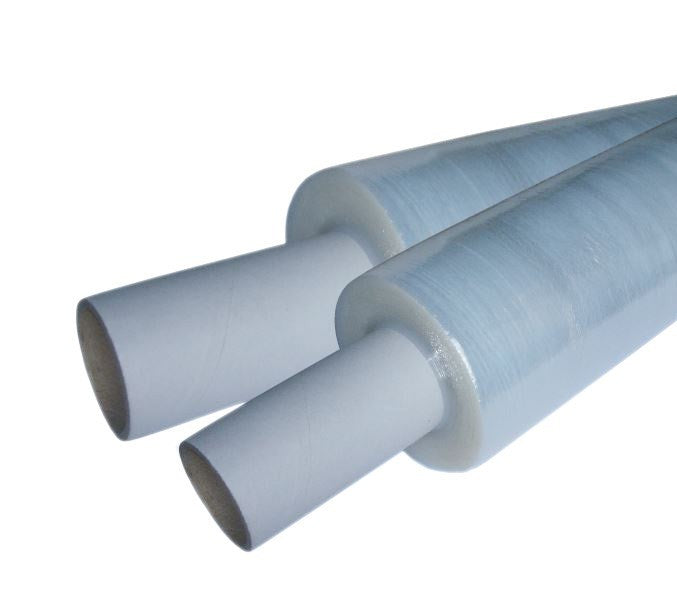
Pallet Stretch Wrap - Hand Roll
400mm x 250m x 20 micron Hand Pallet Wrap (Stretch Film) — Load Stability Made Simple
Hand pallet wrap (also known as hand stretch film) is one of the most practical ways to stabilise palletised goods, bundle cartons, and protect products from dust and light scuffing during storage and transit. This hand-applied stretch film is supplied on a roll designed for manual use, making it ideal for warehouses, dispatch areas, retail stockrooms, and mobile packing operations where a stretch-wrap machine isn’t available or isn’t necessary.
This listing covers a hand roll format stretch film commonly used for everyday pallet wrapping. The film is designed to cling to itself as you wrap, creating a tight, secure containment force around your load. Used correctly, it helps reduce shifting, improves handling safety, and can lower the risk of damage caused by movement in transport.
Key Features
Hand-roll convenience:
Designed for manual application around pallets, cartons, and irregular loads. A straightforward solution for low-to-medium wrapping volumes, ad-hoc wrapping, or locations without powered equipment.
Stretch film load containment:
Stretch wrap works by elongating as you apply it, then contracting to hold the load together. This helps keep boxes aligned and reduces the chance of items sliding or toppling.
Self-cling performance:
Stretch film is made to cling to itself so layers bond together during wrapping. This creates a stable wrap without needing tape between layers.
Protection from dust and scuffs:
While not a waterproof barrier, stretch film provides a practical outer layer that helps keep dust off and reduces minor abrasion during handling.
Versatile for bundling:
Beyond pallets, hand stretch film is widely used to bundle long items, secure grouped cartons, and keep components together for picking and dispatch.
- Hand-applied stretch film for pallets, cartons, and bundling
- Helps stabilise loads to reduce shifting in storage and transit
- Clings to itself to build secure layers quickly
- Everyday warehouse essential for packing benches and goods-out areas
- Suitable for irregular shapes where strapping or shrink solutions are less convenient
Typical Uses
- Wrapping pallets for courier collection or trunking
- Stabilising mixed-carton pallets and part pallets
- Bundling boxes, tubes, profiles, and long packs
- Securing protective corner boards or edge protectors in place
- Keeping products clean during short-term storage
Hand Pallet Wrap — Full Product Guide
Choosing the right pallet wrap is about matching the film to your load type, handling conditions, and wrapping method. Hand stretch film is popular because it’s quick to deploy, requires minimal setup, and works across a wide range of packaging tasks. The guidance below explains how hand pallet wrap works, how to apply it effectively, and what to consider when selecting a roll for your operation.
How It Works
Stretch film is engineered to elongate under tension. As you pull the film around the pallet, it stretches and then tries to recover, creating a tightening effect that holds the load together. Each pass overlaps the previous layer, and the film’s cling helps the layers bond to one another. The result is a stable, unified load that is easier to move with pallet trucks or forklifts.
For best results, aim for consistent tension and overlap. Too little tension can lead to loose wrap and load movement; too much tension can crush cartons or distort lighter products. A steady, repeatable wrapping pattern is usually more effective than simply adding extra layers at random.
Materials and Construction
Hand pallet wrap is typically produced from polyethylene stretch film designed for packaging applications. The film is supplied on a core suitable for hand use and is intended to unwind smoothly as you walk the pallet. Many operations pair hand film with a simple dispenser to improve comfort, reduce fatigue, and help maintain consistent tension.
Stretch film is commonly supplied as clear film for visibility of labels and barcodes, though some ranges include opaque or coloured options for security or identification. If you require a specific colour or performance characteristic, check the available options within the product range.
Floor Type Compatibility
Hand wrapping is performed by walking around the pallet, so the surrounding floor conditions matter. On smooth warehouse floors, wrapping is typically fast and consistent. On uneven surfaces, ramps, or outdoor yards, take extra care to maintain safe footing and stable pallet positioning.
- Smooth concrete / epoxy floors: Ideal for consistent wrapping speed and tension.
- Uneven or outdoor surfaces: Wrap more slowly and ensure the pallet is stable before starting.
- Confined aisles: Consider turning the pallet on a turntable or using a dispenser to reduce awkward movements.
Health and Safety
Hand wrapping is a manual task that can involve repetitive movement and bending. A few simple practices can improve safety and reduce strain:
- Use a dispenser where possible: Helps reduce hand fatigue and improves control.
- Keep posture in mind: Bend at the knees rather than the waist when wrapping the base.
- Maintain clear space: Ensure the area around the pallet is free from trip hazards.
- Don’t over-tighten fragile loads: Excess tension can crush cartons or deform products.
- Secure the tail end: Press the film firmly to the wrapped layers so it doesn’t unravel.
Ideal Applications and Use Cases
Hand pallet wrap is especially useful when you need flexibility. It’s a strong choice for:
- Low-to-medium throughput sites where a machine isn’t justified
- Mixed loads with varying carton sizes and shapes
- Short runs and ad-hoc wrapping (returns, rework, urgent dispatch)
- Irregular items that are difficult to strap or box
- Supplementary containment alongside corner boards, top sheets, or strapping
If you regularly wrap high volumes of uniform pallets, a machine film and stretch wrapper may improve consistency and reduce film usage. For many businesses, however, hand film remains the most cost-effective and adaptable option.
Maintenance, Cleaning and Care
Stretch film itself requires minimal maintenance, but good storage and handling will help preserve performance:
- Store in a clean, dry area away from direct sunlight and heat sources.
- Keep rolls in their packaging until use to reduce dust contamination.
- Avoid crushing the roll edges which can affect unwind and cause tearing.
- Use dispensers responsibly and check that spindles rotate freely for smooth application.
If the film becomes difficult to unwind, check for damage to the roll edge, contamination on the outer layers, or excessive heat exposure during storage.
Case Study (Typical Warehouse Scenario)
A small distribution team dispatches a mix of full pallets and part pallets daily. Full pallets are often stable, but part pallets can shift during courier handling. By applying hand stretch film with consistent overlap from the base upward—adding extra reinforcement around the mid-section and top—the team improves load integrity and reduces incidents of cartons sliding during transit. The clear film also keeps labels visible for scanning at each handling point.
This kind of everyday improvement is where hand pallet wrap excels: it’s quick to implement, requires no equipment investment beyond a dispenser, and can be adapted to different pallet profiles throughout the day.
Who Is It For?
- Warehouses and fulfilment centres needing flexible, manual wrapping
- Manufacturers bundling products or securing outbound pallets
- Retail stockrooms preparing store transfers
- Trades and installers transporting materials and equipment
- Any operation needing a simple way to stabilise loads without a machine
Colours / Features Available
Stretch film is commonly supplied in clear for visibility and easy identification of goods. Some product ranges also offer opaque or coloured films for security, UV exposure reduction, or load identification. Please refer to the options available on this product page for the current selection.
Sizes Available
This product page may represent a configurable range (for example, different pack quantities or related options). Please select the option that matches your requirements from the variants shown on the page.
Practical Wrapping Tips (Getting the Best Results)
- Anchor the film: Start by attaching the film tail to the pallet base or a corner of the load, then wrap a few turns to lock it in.
- Build a strong base: Wrap the bottom section thoroughly to help prevent the load from sliding on the pallet.
- Overlap consistently: A steady overlap pattern helps create uniform strength across the load.
- Reinforce weak points: Add extra wraps around bulges, corners, or unstable layers.
- Finish securely: Press the film end firmly onto the wrapped layers so it bonds and doesn’t unravel.
Need help choosing the right pallet wrap?
If you can share what you’re wrapping (carton weight, pallet height, and whether loads are uniform or mixed), we can help you select the most suitable hand film option and packing method.