

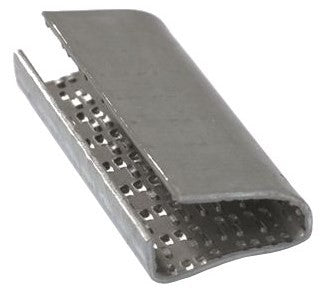
Metal Seals for Strapping/Banding
16mm x 25mm Lapover Metal Seals for Steel Strapping
Lapover metal seals are a dependable, widely used method of securing steel strapping (also known as banding) around loads for storage and transport. This product is a 16mm x 25mm lapover metal seal designed to be applied over overlapping strap ends and then crimped to lock the strap in place. When paired with the correct steel strapping and the appropriate tensioning and sealing tools, lapover seals help create a strong, consistent joint that supports stable unitisation of goods.
These seals are commonly chosen in industrial and warehouse environments where steel strapping is preferred for its strength and resistance to abrasion. They are also a practical option for operations that need a straightforward, mechanical seal method without heat or adhesives. As with all strapping systems, performance depends on using compatible components (strap width/type, seal type, and tool set) and applying them correctly.
Key Features
- Lapover seal design – fits over overlapped strap ends before crimping, creating a secure mechanical lock.
- Standard 16mm x 25mm size – a common seal format used with 16mm steel strapping systems.
- Metal construction – suited to demanding environments where steel strapping is used for robust load restraint.
- Tool-applied closure – designed to be crimped using compatible sealing tools for repeatable results.
- Bulk supply format – typically supplied in high quantities (often boxes/packs of 1,000) to support ongoing packing operations.
Typical Uses
- Securing palletised loads with steel strapping for transport stability
- Bundling long or heavy items (e.g., timber packs, metal stock, building materials)
- Unitising cartons or products where high strap tension is required
- Warehouse dispatch, export packing, and industrial distribution
16mm x 25mm Lapover Metal Seals — Full Product Guide
Choosing the right seal is essential for a reliable steel strapping joint. Below is a practical guide to help you understand what lapover seals are, how they are used, and how to select compatible components for your strapping setup.
How It Works
A lapover seal is used by overlapping the two ends of steel strapping around the load, sliding the seal over the overlapped section, and then crimping the seal with a compatible sealer. The crimping action deforms the metal seal so it grips the strap surfaces and holds tension. This creates a mechanical connection that helps maintain strap tension during handling and transit.
Lapover seals are a common choice for steel strapping because they are simple to apply and work well with manual or semi-manual strapping processes. The quality of the joint depends on correct tensioning, correct seal placement, and using the correct tool for the seal and strap type.
Materials and Construction
These are metal seals intended for use with steel strapping/banding systems. Metal seals are designed to withstand the forces typically associated with steel strapping applications, including higher tension levels and tougher handling conditions. The seal’s shape and dimensions are engineered to accept the strap overlap and to crimp effectively when compressed by the sealing tool.
Because steel strapping systems can vary (strap thickness, finish, and grade), it’s important to match the seal type and tool to your specific strap. If you are unsure, check your current strap specification or consult your tool/strap supplier for compatibility guidance.
Strap and Tool Compatibility (What to Check)
To achieve a secure seal, confirm the following before ordering or switching components:
- Strap width: this seal size is commonly used with 16mm steel strapping.
- Seal type: lapover seals are different from other seal styles (for example, semi-open seals often used with plastic strapping). Ensure you are selecting lapover for your steel strapping method.
- Tooling: use a compatible tensioner and sealer designed for the strap width and seal style. The wrong tool can lead to under-crimping, over-crimping, or inconsistent joints.
- Application method: manual, pneumatic, or battery-assisted tools may have different seal requirements—always follow the tool manufacturer’s guidance.
Floor Type Compatibility
Lapover seals themselves do not impose floor requirements, but steel strapping operations often benefit from a stable working area. In busy packing stations, consider how strapping tools, dispensers, and the load will be positioned. A clear, level workspace helps operators tension and seal consistently and reduces the risk of strap recoil or misalignment.
Health and Safety
Steel strapping can store significant energy when tensioned. For safe use:
- Wear appropriate PPE such as gloves and eye protection when handling and cutting steel strap.
- Use the correct cutter and keep hands clear of the strap path when releasing tension.
- Inspect tools regularly to ensure the sealer jaws and tensioner components are in good condition.
- Train operators on correct tensioning and sealing technique to reduce the risk of seal failure or strap snap-back.
Always follow your site safety procedures and the guidance provided with your strapping tools and materials.
Ideal Applications and Use Cases
Lapover metal seals are typically selected for applications where steel strapping is used to provide strong load restraint. Common scenarios include:
- Heavy or rigid products that benefit from high strap tension
- Export packing where loads may experience multiple handling stages
- Bundling of long items where maintaining alignment is important
- Industrial warehousing where abrasion resistance and durability are priorities
Maintenance, Cleaning and Care
Metal seals require minimal maintenance, but good handling practices help maintain consistent sealing performance:
- Store seals dry and keep them free from excessive dirt or debris that could interfere with tool jaws.
- Keep sealing tools clean and periodically check for wear on crimping surfaces.
- Run periodic checks on sealed joints during production to confirm consistent crimp quality.
Case Study (Typical Workflow Example)
A warehouse dispatch team shipping mixed industrial goods uses steel strapping to stabilise pallets for carrier collection. Operators position the strap around the pallet, overlap the strap ends, slide on a lapover seal, tension the strap to the required level, and crimp the seal. By using a consistent seal type and compatible tooling, the team achieves repeatable closures and reduces rework caused by loose straps during transit.
This is a representative example of how lapover seals are commonly used in practice; your optimal method will depend on load type, strap specification, and handling conditions.
Who Is It For?
- Warehouses and distribution centres using steel strapping for pallet stability
- Manufacturers bundling heavy or rigid products
- Export packers and logistics teams needing robust mechanical strapping joints
- Facilities standardising on lapover seals for consistent sealing performance
Colours / Features Available
These are metal seals supplied in a standard finish typical for steel strapping accessories. If you require a specific finish or corrosion resistance level for your environment, confirm requirements before ordering.
Sizes Available
This product listing covers a 16mm x 25mm lapover seal format. Strapping systems often include multiple seal sizes to match different strap widths. If you use other strap widths, select the corresponding seal size to ensure correct fit and crimp performance.
Need help matching seals to your strapping?
If you can share your strap width/type and the tool model you use, we can help confirm compatibility so you get the best performance from your steel strapping system.