

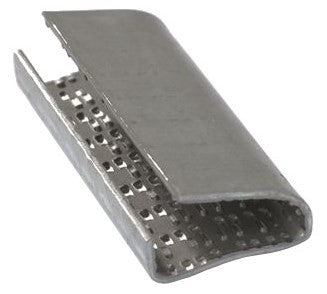
Metal Seals for Strapping/Banding
Heavy Duty Lapover Metal Seals for Steel Strapping (16mm x 25mm)
Heavy duty lapover metal seals are a proven, high-strength method of securing steel strapping around loads for storage and transport. Designed to be crimped firmly onto steel banding, these seals create a reliable mechanical lock that helps maintain strap tension and reduces the risk of slippage during handling, stacking, or transit. This product page covers the general performance and selection guidance for lapover metal seals used with steel strapping systems, including how they work, where they’re typically used, and how to choose the right sealing method for your application.
Lapover seals are commonly selected for demanding industrial environments where steel strapping is preferred for its strength and resistance to cutting or abrasion. When correctly matched to the strap width and used with the appropriate sealing tool, a heavy duty lapover seal can provide a robust joint suitable for heavy loads, awkward shapes, and long-distance distribution.
Key Features
Lapover seal design:
Formed to allow the steel strap to overlap within the seal before crimping, helping create a secure, high-friction joint when compressed with the correct sealer.
Heavy duty performance:
Built for tougher strapping applications where higher joint strength and resistance to movement are required compared with lighter-duty seals.
Compatible with steel strapping systems:
Intended for use with steel banding/strapping and the appropriate sealing tool (commonly single-notch/side-action style sealers depending on your system).
Consistent, repeatable sealing:
When used with a suitable tool and correct technique, lapover seals support consistent closures across repeated cycles of packing.
Industrial-ready for transport and storage:
Commonly used in warehousing, manufacturing, export packing, and logistics where loads may be exposed to vibration and handling impacts.
- Heavy duty lapover metal seals for steel strapping/banding
- Designed to be crimped with the correct steel strapping sealer
- Helps maintain strap tension and reduce slippage during transit
- Suitable for demanding loads and industrial packing environments
- Commonly supplied in bulk packs for efficient operations
Typical Uses
- Securing heavy cartons, crates, and pallets with steel strapping
- Bundling long or irregular items such as timber, profiles, or fabricated components
- Export packing where loads may experience extended handling and vibration
- Industrial warehousing and distribution where consistent closures are required
- Manufacturing environments where steel strapping is used for unitising products
Heavy Duty Lapover Metal Seals — Full Product Guide
Choosing the right seal is as important as choosing the right strap. The seal is the joint that holds the system together, and its performance depends on correct matching between strap width, strap thickness, seal type, and the sealing tool used. This guide explains the fundamentals of lapover metal seals and provides practical advice for selecting and using them effectively.
How It Works
A lapover seal is a metal sleeve that is placed over overlapping layers of steel strapping. After the strap is tensioned around the load, the overlapping strap ends are fed into the seal. A compatible sealer tool then crimps the seal, deforming the metal and biting into the strap surfaces. This deformation increases friction and mechanical interlock, helping the joint resist loosening under vibration or load movement.
In many steel strapping systems, the seal type and the tool style are paired. Supplier listings commonly describe lapover seals as being used with steel strapping/banding and sealed using a suitable sealer tool (often described as single-notch or side-action depending on the system). Always confirm tool compatibility with your strapping setup before ordering in volume.
Materials and Construction
Lapover seals are manufactured from metal and formed to a consistent profile so they can be applied quickly and crimped reliably. Heavy duty versions are typically made to withstand higher compression forces during sealing and to provide improved joint strength for more demanding loads.
Some supplier specifications for heavy duty lapover seals include dimensional details beyond width and length (for example, listings that include a thickness measurement such as 0.7 mm for certain heavy duty lapover seals). If your application is highly load-critical, it can be helpful to compare seal gauge/thickness across suppliers and ensure it matches your tool and strap combination.
Strap and Tool Compatibility
For best results, match the seal to:
- Strap width: The seal must match the nominal strap width used in your operation.
- Strap thickness: Heavier strap may require a heavy duty seal and a tool capable of forming a strong crimp.
- Sealer type: Different seal profiles are designed for different sealer mechanisms. Using the wrong tool can lead to incomplete crimps or reduced joint strength.
- Tensioning method: Manual, pneumatic, or battery tensioners may be used in steel strapping systems; ensure the sealing stage is compatible with your workflow.
If you are unsure, a practical approach is to confirm the strap specification you currently use (width and thickness) and the exact model/type of sealer tool in your packing line, then select the seal type recommended for that combination.
Floor Type Compatibility
Metal seals are typically used in industrial packing areas where steel strapping is handled. Consider your working environment:
- Warehouse floors: Keep seals and tools organised to reduce the risk of dropped metal parts becoming a slip hazard.
- Outdoor yards: If strapping is applied outdoors, store seals in a dry area to help maintain consistent performance and reduce contamination.
- Clean production areas: Where cleanliness is critical, implement a simple control process for metal offcuts and used seals.
Health and Safety
Steel strapping systems can store significant energy under tension. Follow safe working practices:
- Wear appropriate PPE such as gloves and eye protection when tensioning and sealing steel strap.
- Use the correct tool for the seal type to avoid partial crimps and unexpected strap release.
- Inspect seals and tools regularly for wear or damage that could affect closure quality.
- Dispose of used seals safely and keep work areas clear of metal debris.
Always follow your site’s risk assessments and the tool manufacturer’s operating instructions.
Ideal Applications and Use Cases
Heavy duty lapover metal seals are commonly used where steel strapping is chosen for strength and security. Typical scenarios include:
- Heavy pallet loads: Unitising dense or high-value goods where maintaining strap tension is important.
- Irregular or rigid products: Items that can abrade or cut lighter strapping materials.
- Long-distance distribution: Loads exposed to vibration, repeated handling, and stacking.
- Industrial bundling: Grouping bars, profiles, timber, or fabricated components.
Maintenance, Cleaning and Care
Metal seals themselves require minimal maintenance, but overall system performance depends on good handling and tool condition:
- Store seals dry and clean to reduce contamination that could affect crimp quality.
- Keep sealing tools maintained (clean jaws, check alignment, and replace worn parts as recommended).
- Perform periodic seal checks by visually inspecting crimps for consistent deformation and secure bite into the strap.
Case Study (Typical Packing Scenario)
A warehouse team shipping heavy, mixed pallets experiences occasional strap loosening after long-haul transport. By reviewing the strapping system, they confirm the strap width and thickness, then switch to a heavy duty lapover seal matched to their sealer tool. With consistent tensioning and a repeatable crimp, they reduce rework and improve load stability during transit. This type of improvement typically comes from correct matching of strap, seal, and tool, plus consistent operator technique.
Who is it for?
- Warehouses and distribution centres using steel strapping for heavy loads
- Manufacturers bundling rigid or abrasive products
- Export packers and logistics teams needing robust closures
- Operations seeking consistent, repeatable sealing in higher-volume packing
Colours / Features Available
Metal seals are typically supplied in a standard metal finish. Availability of coatings or alternative finishes can vary by supplier and application requirements. If you need a specific finish for corrosion resistance or process control, confirm requirements before ordering.
Sizes Available
This product listing represents a lapover metal seal format supplied for a specific strap width category. Strapping and sealing components are often offered in multiple sizes across a range of strap widths and gauges. If you require a different strap width, seal profile, or heavy duty gauge, check the available options within the strapping and seals range or contact the supplier with your strap specification and tool type.
Need help matching seals to your strapping?
Share your strap width and thickness, plus the type/model of sealer tool you use, and we can help identify the most suitable seal format for your application.