

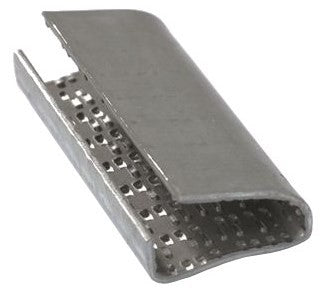
Metal Seals for Strapping/Banding
19mm x 25mm Lapover Metal Seals for Strapping & Banding
Lapover metal seals are a proven, high-strength method of securing steel strapping around heavy or irregular loads. This product is a 19mm x 25mm lapover metal seal designed for use with strapping/banding systems where a dependable mechanical joint is required. Once applied with the appropriate sealing tool, the seal locks the overlapped strap ends together to help maintain tension during handling, storage and transit.
These seals are commonly selected for industrial packaging environments because they are simple, consistent and compatible with established steel strapping workflows. They are particularly useful where loads may be subject to vibration, shifting or impact and where a robust seal is preferred over lighter-duty closure methods.
Key Features
- Lapover seal design: Intended to join overlapped steel strap ends to create a secure, tool-applied closure.
- For 19mm strapping systems: Sized for use with 19mm steel strapping/banding applications.
- Metal construction: A durable seal option suited to demanding industrial packaging tasks.
- Consistent application: When used with the correct sealer, helps deliver repeatable sealing results across multiple packs.
- Common bulk supply format: Often supplied in larger pack quantities to support production and warehouse use.
Typical Uses
- Securing palletised loads with steel strapping for transport stability
- Bundling timber, metal stock, pipes, profiles and other long products
- Unitising heavy cartons, crates or export packs where high strap tension is required
- Industrial warehousing and distribution where loads may be moved repeatedly
19mm x 25mm Lapover Metal Seals — Full Product Guide
Choosing the right seal is as important as choosing the right strap. A seal that matches your strapping width and your application method helps ensure the joint performs as intended. The 19mm x 25mm lapover metal seal is a widely used option for steel strapping systems, offering a practical balance of strength, speed of application and compatibility with common tools.
How It Works
In a typical steel strapping process, the strap is wrapped around the load and tensioned to the required level. The strap ends are then overlapped and positioned within the lapover seal. A compatible sealing tool is used to crimp or form the seal around the strap layers. This deformation creates a mechanical lock that holds the strap ends together and helps retain the applied tension.
Because the seal is applied by tool, the quality of the joint depends on correct tool selection, correct positioning and consistent technique. In production environments, this repeatability is one of the reasons lapover seals remain a popular choice.
Materials and Construction
These are metal seals intended for strapping/banding use. Metal seals are commonly chosen for steel strapping because they are designed to withstand the forces involved in high-tension applications. The lapover format is engineered to accept overlapped strap ends and to be formed by a sealer to create a secure closure.
As with any strapping component, overall performance is influenced by the strap specification, the tool used and the nature of the load. If you are unsure which seal type is best for your strapping grade or your tool, it is good practice to test a sample pack under realistic conditions.
Strapping System Compatibility
This seal size is intended for 19mm strapping systems. In practice, that means it is typically paired with 19mm steel strapping and a sealer designed for lapover seals of this width. Using the correct width seal helps ensure the strap sits properly within the seal and that the tool forms the seal in the correct location.
If your operation uses multiple strap widths, keep seals clearly separated and labelled to reduce the risk of mismatching components. A seal that is too wide or too narrow can lead to poor formation and reduced joint reliability.
Load and Handling Considerations
Steel strapping is often selected for heavy, rigid or abrasive loads. Lapover metal seals are commonly used in these scenarios because they provide a strong, tool-formed joint. Consider the following when specifying your strapping closure:
- Load movement: If the load may settle or shift, maintaining strap tension becomes more important.
- Vibration in transit: Repeated vibration can challenge weaker closures; a properly formed metal seal helps resist loosening.
- Edge protection: Sharp edges can damage strap; edge protectors can help reduce strap wear and improve stability.
- Environmental exposure: Storage conditions (moisture, temperature changes) can affect packaging components; choose a system appropriate for your environment.
Health and Safety
Steel strapping systems can store significant energy when tensioned. Always follow safe strapping practices:
- Use the correct tensioner and sealer for the strap width and seal type.
- Wear appropriate PPE (for example, gloves and eye protection) when tensioning and sealing.
- Keep hands clear of the seal and tool jaws during operation.
- Cut and dispose of strap ends carefully to reduce the risk of injury from sharp edges.
- Train operators on correct tool use and inspection of finished seals.
Good safety practice also includes checking that the load is stable before strapping and that the strap path will not slip off the load during tensioning.
Ideal Applications and Use Cases
Lapover metal seals are commonly used across manufacturing, warehousing and export packing. They are particularly suitable where a strong mechanical joint is required and where steel strapping is already the preferred method of unitising. Typical examples include:
- Timber and building materials: Bundling and securing packs for forklift handling and transport.
- Metal and engineering stock: Strapping bars, tubes, profiles and sheet packs.
- Industrial distribution: Stabilising heavy pallet loads that may be moved multiple times.
- Export packing: Supporting robust containment for longer supply chains.
Maintenance, Cleaning and Care
Metal seals themselves require minimal maintenance, but overall system performance depends heavily on tool condition and correct storage:
- Tool upkeep: Keep sealing tools clean and inspect forming jaws for wear. Worn jaws can lead to inconsistent seal formation.
- Storage: Store seals in a dry area and keep cartons closed to reduce contamination with dust or debris.
- Process checks: Periodically inspect sealed straps for correct formation and retention, especially after tool changes or operator changes.
In high-throughput environments, a simple routine inspection schedule can help maintain consistent sealing quality.
Case Study (Typical Workflow Example)
A warehouse shipping heavy, rigid products may use 19mm steel strapping to unitise loads for transport. Operators wrap the strap around the pallet, tension it to the required level, then apply a lapover seal using a compatible sealer. By standardising on a consistent seal size and maintaining tools, the team can achieve repeatable closures across shifts, helping reduce rework and improving load stability during handling.
This kind of workflow is common in industrial packaging because it balances speed, reliability and straightforward operator training.
Who is it for?
- Warehouses and distribution centres using steel strapping for heavy loads
- Manufacturers bundling long or rigid products
- Export packers needing robust containment methods
- Operations that require repeatable, tool-applied sealing performance
Colours / Features Available
Metal seals are typically supplied in a standard metal finish. Product availability may vary by pack quantity and stock status.
Sizes Available
This listing covers 19mm x 25mm lapover metal seals. If you use other strap widths or require alternative seal styles, check the wider metal seals range to match your strapping system and tools.
Need help choosing the right seal? If you can share your strap width, strap type and the tool you are using, we can help confirm compatibility within your strapping setup.