

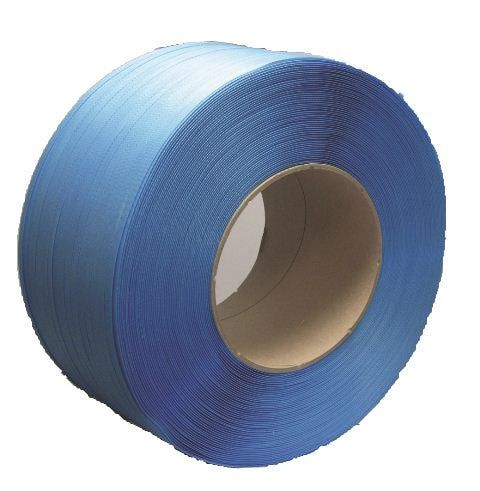
Machine Core Strapping/Banding (Cardboard Core)
Blue Machine Core Strapping (Cardboard Core) — Product Overview
Blue machine core strapping (sometimes called machine banding) is designed for use in strapping machines that dispense strapping from a cardboard core. This product is supplied as a long-length roll of narrow-gauge plastic strapping, intended to provide consistent feed, reliable tensioning and secure unitisation for cartons, bundles and light-to-medium pallet loads.
This listing covers a machine-core strapping roll in blue, supplied on a cardboard core. It is commonly selected where operators want quick visual identification of strapped goods, straightforward stock control, and a clean, professional finish on outbound shipments.
Key Features (at a glance)
- Machine-core format (cardboard core) — built for strapping machines that accept core-wound rolls.
- Long roll length — fewer roll changes and less downtime during busy packing runs.
- Blue strapping — easy to spot on cartons and pallets for fast checks and traceability.
- Consistent feed — helps support smooth dispensing and repeatable strap placement.
- General-purpose banding — suitable for bundling, carton closure and unitising loads for storage or transit.
Typical Uses
- Securing cartons for dispatch in warehouses and fulfilment centres
- Bundling products together (e.g., boxed items, printed materials, flat packs)
- Unitising light-to-medium loads on pallets for internal movement or shipping
- General packing lines where a machine-dispensed strap improves speed and consistency
Blue Machine Core Strapping — Full Product Guide
Choosing the right strapping is about more than width and roll length. The best results come from matching the strap type and core format to your machine, your sealing method, and the demands of your load. The guide below explains how machine-core strapping is typically used, what to check before ordering, and how to get consistent performance on the packing line.
How It Works
Machine-core strapping is dispensed from a roll mounted inside (or adjacent to) a strapping machine. The machine feeds the strap around the pack, applies tension, then seals the strap to form a closed loop. The strap’s job is to hold items together and resist movement during handling, storage and transport.
In most packing environments, the key performance goals are:
- Repeatable tension — enough to stabilise the load without crushing cartons or damaging edges.
- Reliable sealing — a consistent join so straps don’t open during transit.
- Clean feed and tracking — smooth dispensing to reduce misfeeds and machine stoppages.
Materials and Construction
This product is supplied as plastic strapping on a cardboard core for machine use. Plastic strapping is widely used in distribution and warehousing because it is lightweight, easy to handle, and compatible with common machine sealing methods.
The cardboard core format is important: many strapping machines are designed around a specific core type and core size. Using the correct core format helps the roll sit properly, unwind smoothly, and maintain stable strap tracking through the machine’s feed path.
Colour: Blue. Colour can be useful for quick visual checks (for example, confirming that a carton has been strapped, or distinguishing one packing line’s output from another).
Machine Compatibility (What to Check Before Ordering)
Because machine-core strapping is used with equipment, compatibility checks are essential. Before ordering, confirm:
- Core type — this listing is for cardboard core machine strapping.
- Strap width — match the strap width to your machine’s specification and guides.
- Roll length — longer rolls reduce changeovers, but ensure your machine can accommodate the roll size.
- Sealing method — confirm whether your machine uses heat sealing, friction welding, or another method, and ensure the strap type is suitable.
If you are replacing an existing strap, the simplest approach is to compare the strap width and core format to your current roll and machine manual.
Floor Type Compatibility
Strapping itself does not depend on floor type, but the packing environment can affect performance. In dusty areas, strap debris and carton fibres can build up in machine guides. On smooth warehouse floors, strap offcuts can become a slip hazard if not managed. Good housekeeping and routine machine cleaning help maintain consistent feed and safe working conditions.
Health and Safety
Strapping is a tensioned packaging material and should be handled with care:
- Eye protection is recommended when cutting tensioned straps, as ends can spring back.
- Use appropriate cutters rather than knives to reduce the risk of injury and product damage.
- Keep hands clear of machine feed paths and sealing areas during operation.
- Dispose of offcuts promptly to reduce trip and slip risks.
Always follow your strapping machine manufacturer’s operating and maintenance guidance.
Ideal Applications and Use Cases
Blue machine-core strapping is commonly used in:
- Warehousing and distribution — securing cartons and consolidating shipments.
- E-commerce fulfilment — fast, repeatable strapping for outbound parcels and cartons.
- Manufacturing and assembly — bundling components or finished goods for internal movement.
- Print and mailing — bundling boxed or stacked items for handling and dispatch.
It is especially useful where a machine-applied strap improves throughput and consistency compared with manual strapping.
Maintenance, Cleaning and Care
To keep strapping performance consistent:
- Store rolls clean and dry to avoid contamination that can affect feeding and sealing.
- Keep the roll wrapped until use to reduce dust pickup.
- Clean machine guides regularly to remove strap dust and carton fibres.
- Check tension settings when changing strap type or when strapping different carton strengths.
If you notice inconsistent seals or frequent misfeeds, review the strap path for debris and confirm the roll is seated correctly on the core holder.
Case Study (Typical Packing-Line Improvement)
A common scenario is a busy dispatch area where operators are changing rolls frequently and dealing with occasional misfeeds. Switching to a long-length machine-core roll and standardising on one strap type can reduce changeover frequency and help operators maintain consistent tension and sealing settings. The result is often smoother throughput, fewer interruptions, and more uniform strapped loads ready for palletisation and carrier collection.
Exact results depend on machine type, pack size, and operating practices, but the principle is consistent: stable feed and fewer roll changes support a more efficient packing line.
Who Is It For?
- Packing teams using strapping machines that accept cardboard-core rolls
- Warehouses that want fast, repeatable strapping for cartons and bundles
- Operations that benefit from colour identification (blue strap for quick visual checks)
- Businesses looking to reduce downtime by using long roll lengths
Colours / Features Available
This product is supplied in blue. If you use multiple strap colours across different lines or customers, colour can help with quick identification during picking, staging and dispatch checks.
Sizes Available
This listing represents a machine-core strapping roll supplied on a cardboard core. Options may be available across different strap widths and roll lengths within the same product family. Select the variant that matches your machine specification and your packing requirements.
If you are unsure which option is correct for your equipment, compare the strap width and core format to your current roll and consult your machine documentation.