

Strapping/Banding Tools/Trollies
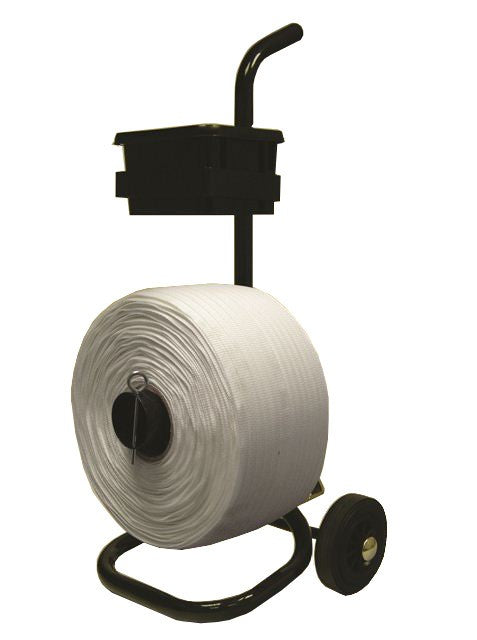
Extruded Polyester Strapping Dispenser (Trolley) — Overview
A strapping dispenser trolley is designed to make PET (extruded polyester) strapping easier to handle at the point of use. By keeping the coil supported and controlled, it helps reduce tangles, prevents strap overrun, and improves workflow when banding cartons, pallets, and other loads in busy packing and despatch areas. Many dispenser trolleys also include practical storage for the tools and accessories commonly used alongside PET strapping.
Key Features
Controlled dispensing (brake mechanism)
A built-in brake helps stop the coil from free-spinning when you pull strap quickly. This control reduces overruns and helps keep the strap neat and ready for the next application.
Mobile, point-of-use convenience
Wheels and a stable frame allow the dispenser to be moved to where strapping is needed—ideal for warehouses, packing benches, and despatch lanes where loads are prepared in multiple locations.
Designed for PET / extruded polyester strapping
This trolley is intended for use with extruded polyester (PET) strapping coils, supporting efficient dispensing during manual strapping operations.
Accessory storage (tool tray / bucket)
Many PET strapping trolleys include a tray or bucket for keeping seals/buckles and hand tools close by, helping operators stay organised and reducing time spent searching for accessories.
Helps reduce tangles and coil damage
Keeping the coil properly supported and restrained can reduce strap tangling and minimise the chance of the coil being knocked or damaged during handling.
Key Features (Bullet Summary)
- Dispenser trolley for extruded polyester (PET) strapping
- Brake mechanism to help prevent strap overrun
- Mobile design for warehouse and packing environments
- Integrated storage for tools and accessories (tray/bucket depending on model)
- Supports cleaner, more efficient strapping workflows
Typical Uses
- Pallet strapping in warehouses and distribution centres
- Carton and case banding in packing and fulfilment operations
- General despatch and goods-out areas where strapping is used frequently
- Workstations where operators need strap, seals/buckles, and tools kept together
Extruded Polyester Strapping Dispenser — Full Product Guide
Choosing the right dispenser trolley can make a noticeable difference to day-to-day strapping efficiency. The aim is simple: keep the PET strap coil controlled, accessible, and easy to move—while keeping the associated tools and accessories close at hand. Below is a practical guide to what a PET strapping dispenser does, how it’s typically used, and what to consider when selecting one for your operation.
How It Works
A PET strapping dispenser trolley holds a coil of extruded polyester strapping on a central spindle or reel support. The strap is pulled from the coil as needed. A brake mechanism applies resistance to the coil so it doesn’t continue spinning after the operator stops pulling. This helps prevent loose loops, tangles, and wasted time re-threading strap.
In many packing environments, the dispenser is positioned next to the load. The operator pulls the required length of strap, applies it around the carton or pallet, and then uses the appropriate tensioning and sealing method (tooling and seals/buckles vary by strapping system). The dispenser’s role is to keep the strap supply stable and manageable throughout the process.
Materials and Construction
Dispenser trolleys are typically built with a robust metal frame designed for industrial use. The frame supports the weight of a full coil and provides stability during dispensing. Wheels are fitted to allow movement across warehouse floors, and the handle/frame geometry is designed to keep the trolley balanced when being pushed or pulled.
Because strapping is often used in high-throughput areas, durability matters. A well-built trolley helps maintain consistent dispensing performance and reduces downtime caused by bent frames, damaged wheels, or unreliable braking.
Floor Type Compatibility
Most dispenser trolleys are intended for typical warehouse and industrial floors. For best results, use on relatively smooth surfaces where the wheels can roll freely. If your operation includes thresholds, ramps, or uneven surfaces, consider how frequently the trolley will be moved and whether the wheel size and frame stability suit your environment.
Health and Safety
Controlled dispensing is not only about efficiency—it can also support safer working practices. A brake helps reduce sudden strap overruns that can create loose loops on the floor. Keeping strap, tools, and accessories organised on one trolley can also reduce clutter around the workstation.
As with all strapping operations, operators should follow site safety procedures and use appropriate PPE where required. Ensure the trolley is positioned securely before pulling strap, and avoid leaving loose strap lengths where they could become a trip hazard.
Ideal Applications and Use Cases
This type of dispenser is commonly used wherever PET strapping is applied manually and repeatedly. Typical scenarios include:
- Warehouse palletising: moving the trolley to each pallet position and dispensing strap as loads are built.
- Packing benches: keeping strap and accessories close to the operator for frequent carton banding.
- Despatch lanes: supporting quick strap application during peak shipping periods.
- Mixed-product environments: where operators need a mobile strapping station rather than a fixed dispenser.
Maintenance, Cleaning and Care
To keep a dispenser trolley working smoothly:
- Check the brake: ensure it applies consistent resistance and adjust/inspect if dispensing becomes too free-running or too tight.
- Inspect wheels: remove debris and check for wear so the trolley remains easy to move.
- Keep the spindle/reel area clean: dust and debris can affect how the coil sits and rotates.
- General inspection: periodically check fasteners and frame condition, especially in high-use areas.
Case Study (Typical Workflow Improvement)
In a busy goods-out area, operators often need to strap multiple pallets across a shift. Without a dispenser trolley, coils may be placed on the floor or a bench, which can lead to strap tangling, uncontrolled uncoiling, and time lost re-organising the strap supply. Introducing a dedicated PET strapping dispenser trolley can streamline the process by keeping the coil controlled with a brake and keeping accessories in one place. The result is typically a tidier workstation and a more consistent strapping routine—particularly during high-volume periods.
Who Is It For?
- Warehouses and distribution centres using PET strapping for pallet loads
- Packing and fulfilment teams that strap cartons or bundles regularly
- Operations that want a mobile, organised strapping station
- Sites looking to reduce strap tangles and improve point-of-use efficiency
Colours / Features Available
Features can vary by model, but commonly include a brake mechanism and integrated storage (tray or bucket) for tools and accessories. If you are matching an existing strapping system, check compatibility with your coil format and preferred accessories.
Sizes Available
Dispenser trolleys are typically selected based on the strapping coil format they are designed to hold (for example, the coil core size used by your PET strapping). If you are unsure which option is suitable for your strapping, contact us with the details of your PET strap coil and we can help confirm compatibility.
Need help choosing?
If you’re selecting a dispenser to pair with your PET strapping and tools, share your strapping type and coil format and we’ll help you identify the most suitable trolley for your application.