

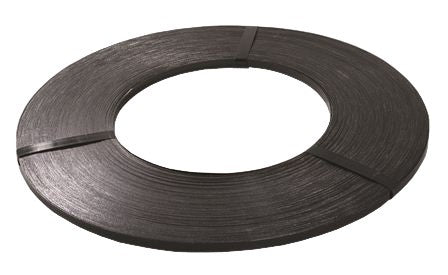
Steel Strapping/Banding
16 x 0.5mm x 701m Oscillation Wound Steel Strapping (Steel Banding) — Overview
Steel strapping (also called steel banding) is a heavy-duty strapping option designed for securing demanding loads where high strength, minimal stretch and excellent edge stability are important. This product is an oscillation wound coil of steel strapping in the 16mm width and 0.5mm thickness class, supplied as a long-length coil (listed as 701m per coil on the product specification). It is commonly selected for industrial bundling, pallet stabilisation and unitising applications where plastic strapping may not provide the required performance.
Oscillation wound coils are produced so the strap is laid in an oscillating pattern across the coil width, creating a stable pack that is well suited to continuous dispensing. This winding style is often referred to as mill wound in the strapping industry. (Terminology varies by supplier, but “oscillation wound” and “mill wound” are frequently used to describe the same coil format.)
Key Bullet Points
- Heavy-duty steel banding for securing rigid, dense or sharp-edged loads.
- Oscillation (mill) wound coil format for stable dispensing and high meterage per coil.
- 16mm width / 0.5mm thickness class—a widely used size for industrial strapping systems.
- Long coil length (listed as 701m) to reduce changeovers in busy packing areas.
- Compatible with common steel strapping tools (manual, pneumatic or battery systems) when matched to strap width/thickness.
Typical Uses
- Unitising heavy cartons, cases or crates on pallets
- Bundling timber, boards, profiles and building materials
- Securing metal stock, pipes, bars and fabricated components
- Stabilising loads for storage, export packing and transport
- Applications where heat, abrasion or sharp edges make plastic strapping less suitable
16 x 0.5mm Oscillation Wound Steel Strapping — Full Product Guide
Choosing the right steel strapping is about more than just width and thickness. The best results come from matching the strap to the load characteristics, the tensioning method, and the closure system (seals or seal-less joints). Use the guide below to understand how oscillation wound steel strapping is typically used, what to consider during selection, and how to get consistent performance in day-to-day packing.
How It Works
Steel strapping secures a load by applying tension around the product or pallet and locking that tension in place using a closure method. Once tensioned, steel strap provides a firm, stable hold with very low elongation compared with many plastic alternatives. This makes it particularly useful for loads that:
- are heavy and may shift under vibration
- have sharp edges that could cut or abrade softer strapping
- need a rigid, “locked-in” restraint for transport or storage
Oscillation wound coils are designed for efficient dispensing. The strap is wound so it can be pulled smoothly from the coil while maintaining a stable coil shape. In many catalogues and supplier descriptions, this coil format is also described as mill wound.
Materials and Construction
This product is steel strapping/banding supplied in an oscillation wound coil. Steel strapping is manufactured from steel strip and supplied in coil form for use with strapping tools and dispensers. The key specification points shown on this listing are:
- Width: 16mm
- Thickness: 0.5mm
- Coil length: 701m (as listed)
- Winding: oscillation wound (mill wound)
Because configurable product pages can represent multiple variants, always confirm the exact variant details (pack quantity, SKU and any finish notes) shown next to the option you select.
Floor Type Compatibility (Dispensing & Work Area)
Steel strapping coils are typically used with a dispenser (also called a strapping trolley) to keep the coil controlled and to reduce the risk of the strap springing open. For best results:
- Warehouse floors: Smooth concrete floors are ideal for moving a dispenser and keeping the coil stable.
- Outdoor yards: If strapping outdoors, use a robust dispenser and keep the coil protected from contamination where possible.
- Bench use: For fixed packing benches, a stationary dispenser or coil holder helps maintain consistent feed.
Where the load is strapped on uneven ground, focus on safe coil handling and stable positioning of the dispenser rather than trying to pull strap directly from a loose coil.
Health and Safety
Steel strapping is a high-tension packaging material and should be handled with care. Follow your site’s safety procedures and tool manufacturer guidance. Common good practices include:
- Wear appropriate PPE (e.g., gloves and eye protection) when handling strap and cutting ends.
- Use a dispenser to control the coil and reduce the risk of sudden uncoiling.
- Keep clear of the strap line during tensioning and sealing, especially on high-tension applications.
- Use correct cutters designed for steel strapping—avoid improvised cutting methods.
- Dispose of off-cuts safely to prevent punctures and trip hazards.
Ideal Applications and Use Cases
Steel strapping is commonly chosen when the load demands high strength and resistance to damage. Typical use cases include:
- Timber and building products: Bundling sawn timber, boards, sheet materials and packs of construction products.
- Metal and engineering: Securing bars, tubes, coils, fabricated parts and heavy components.
- Industrial distribution: Stabilising heavy cartons or crates on pallets where minimal stretch is preferred.
- Export packing: Providing robust restraint for long-distance transport where loads may be exposed to vibration and handling.
If your load has sharp corners, consider using edge protectors to reduce the risk of product damage and to help distribute strap pressure more evenly.
Maintenance, Cleaning and Care
Steel strapping itself is a consumable, but consistent performance depends on good handling and tool care:
- Store coils properly: Keep coils dry and protected from contamination. Store on pallets or racking to avoid damage.
- Keep tools maintained: Tensioners and sealers should be inspected regularly for wear, especially gripping surfaces and cutting blades.
- Use the right closures: Match seals and tools to the strap width and thickness class to avoid poor joints.
- Control strap feed: Use a dispenser brake (if fitted) to prevent overrun and tangling.
Case Study (Typical Scenario)
Scenario: A warehouse ships dense, heavy products on pallets and experiences occasional load shift when using plastic strapping. The team switches to steel strapping for key lanes where loads are heavier and edges are more abrasive.
Approach: The operator dispenses oscillation wound steel strap from a trolley, tensions the strap around the pallet, and applies the appropriate closure method for steel strapping. The long coil length reduces changeovers during peak dispatch.
Outcome: Improved load stability and reduced strap damage on sharp edges, with more consistent restraint during transport.
Note: This is a general example of how steel strapping is commonly used; always validate the method and tooling for your specific load and site requirements.
Who Is It For?
- Manufacturers and warehouses shipping heavy or rigid products
- Timber, steel, engineering and building product distributors
- Export packers and logistics teams needing robust unitising
- Operations that require low-stretch strapping and strong load restraint
Colours / Features Available
This listing is for steel strapping/banding in an oscillation wound coil format. Steel strapping is typically supplied in a metallic steel finish and may be offered by suppliers in different surface finishes or coatings depending on the range. If your application requires a specific finish, check the selected variant details or contact the supplier for confirmation.
Sizes Available
This product page represents a specific size class shown in the title: 16mm x 0.5mm, supplied as an oscillation wound coil with 701m listed length. If you need alternative widths, thicknesses, or coil formats (for example different winding styles), browse the steel strapping category or request guidance on selecting the most suitable option for your load and tooling.
Selection Tips (Practical Buying Guide)
- Match strap to the load: Heavier, rigid loads and sharp edges often benefit from steel strapping.
- Confirm tool compatibility: Ensure your tensioner/sealer is designed for the strap width and thickness class.
- Choose the right closure: Seals and seal-less joints must be appropriate for steel strap and the tension level required.
- Plan for handling: Use a dispenser/trolley to improve safety and reduce tangles.
- Consider edge protection: Protect both the product and the strap joint area on sensitive loads.
If you’d like help matching seals, tools or dispensers to this steel strapping size class, share your current tool type (manual/pneumatic/battery) and the kind of loads you strap, and we can narrow down the most suitable setup.