

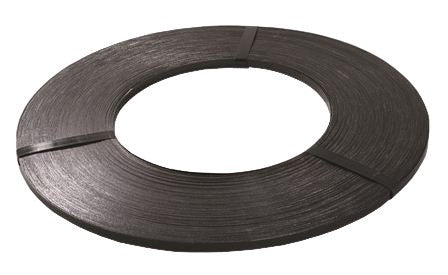
Steel Strapping/Banding
Ribbon Wound Steel Strapping (Steel Banding) — Product Overview
Ribbon wound steel strapping is a heavy-duty steel banding solution designed for securing demanding loads where high strength, minimal stretch and excellent edge stability are required. This product listing covers ribbon wound steel strapping supplied on a coil, commonly used for unitising, bundling and reinforcing loads for storage and transport. Steel strapping is widely chosen for applications where plastic strapping may not provide the required rigidity, heat resistance or cut-through performance.
Ribbon wound coils are wound in a way that helps the strap pay off smoothly and consistently when used with appropriate dispensers and tensioning/sealing tools. This makes it suitable for both warehouse packing stations and industrial environments where repeatable, controlled strapping is important.
Key Features
- High-strength steel banding: Designed for securing heavy, rigid or high-value loads where strong retention is essential.
- Low elongation: Steel strapping typically stretches less than plastic alternatives, helping maintain tension on loads that must stay tightly bound.
- Ribbon wound coil format: Supports smooth pay-off and efficient handling when paired with suitable dispensers and tools.
- Excellent load stability: Helps resist shifting during handling, stacking and transit—particularly useful for dense or sharp-edged products.
- Suitable for harsh conditions: Steel strapping is commonly selected where heat, abrasion or sharp corners can challenge other strapping types.
- Compatible with common steel strapping tools: Typically used with manual or pneumatic tensioners and sealers, plus appropriate seals for the strap width.
Typical Uses
- Securing palletised loads of bricks, blocks, stone, tiles and other dense building materials
- Bundling steel, timber, pipe, profiles and fabricated components
- Unitising cartons or cases where high retention force is required
- Strapping machinery, motors and industrial parts for shipment
- Reinforcing loads with sharp edges (often used with edge protectors)
Ribbon Wound Steel Strapping — Full Product Guide
Introduction
Steel strapping (also called steel banding) remains a go-to choice for heavy-duty packaging and industrial load restraint. Ribbon wound steel strapping is supplied as a coil intended to dispense cleanly and predictably, supporting efficient strapping workflows. The result is a secure, professional finish that helps protect goods in storage and transit.
How It Works
Steel strapping is applied around a product or palletised load, tensioned to the required tightness, and then sealed to lock the tension in place. Depending on your process and tooling, sealing may be achieved using seals and a sealer, or by other joining methods supported by your equipment. Once sealed, the strap forms a rigid band that helps prevent movement, spreading or separation of the load.
Ribbon wound coils are designed to pay off in a controlled manner. When used with a compatible dispenser, the strap can be drawn from the coil smoothly, reducing tangles and improving consistency during application.
Materials and Construction
This product is steel strapping supplied in a ribbon wound coil. Steel strapping is valued for its strength and stiffness, making it suitable for heavy loads and applications where maintaining tension is critical. In many industrial packing environments, steel strapping is selected because it can better tolerate sharp edges and high compression forces compared with many plastic strapping options.
Note: Steel strapping systems often include complementary components such as seals, buckles (where applicable), tensioners, sealers, dispensers and edge protectors. Selecting the correct accessories for the strap width and your chosen method of sealing is essential for safe, reliable performance.
Floor Type Compatibility
Steel strapping can be used in a wide range of packing environments, from warehouse benches to production lines. For best results, use a stable working area and a suitable dispenser to control the coil. In busy packing areas, dispensers help keep the coil contained and reduce the risk of the strap springing outward when handled.
Health and Safety
Steel strapping is a high-tension packaging material and should be handled with care. Always follow site safety procedures and tool manufacturer guidance. Common best practices include:
- Wear appropriate PPE: Gloves and eye protection are commonly recommended when handling steel strapping and during tensioning/sealing.
- Control the coil: Use a dispenser designed for steel strapping coils to help manage pay-off and reduce the risk of recoil.
- Use edge protection: For sharp corners or delicate surfaces, edge protectors can help reduce strap damage and protect the load.
- Stand clear during tensioning: Keep hands and body clear of the strap line and tool path while tensioning and sealing.
- Dispose of off-cuts safely: Steel strapping off-cuts can be sharp; collect and dispose of them in a controlled manner.
Ideal Applications and Use Cases
Steel strapping is typically chosen when the load is heavy, rigid, abrasive, or has sharp edges that can cut into softer strapping materials. It is also used where minimal stretch is important—helping maintain a tight band around loads that must remain stable over time.
Common industrial sectors and use cases include:
- Construction and building supplies: Bundling and palletising dense materials such as blocks, bricks and paving products.
- Metal and fabrication: Securing steel sections, coils, sheet bundles, fabricated frames and components.
- Timber and panel products: Bundling timber packs and sheet materials where rigidity and edge resistance are beneficial.
- Logistics and export packing: Reinforcing crates, pallets and heavy consignments for long-distance transport.
Maintenance, Cleaning and Care
Steel strapping itself requires minimal maintenance, but good storage and handling practices help preserve coil condition and improve usability:
- Store coils in a dry area: Keep strapping protected from moisture and contaminants to maintain condition.
- Keep coils secured: Store coils safely to prevent unwinding or damage to edges.
- Inspect before use: Check for kinks, severe bends or damage that could affect tensioning or sealing.
- Maintain tools: Clean and service tensioners and sealers according to the tool manufacturer’s guidance for consistent seals and safe operation.
Case Study (Typical Scenario)
A warehouse shipping dense, sharp-edged products (such as metal components or building materials) needs a strapping solution that maintains tension and resists abrasion during forklift handling. By using ribbon wound steel strapping with a compatible dispenser and sealing method, the team can apply consistent tension and create secure load bands that help reduce shifting and damage in transit. Adding edge protectors at corners further improves strap life and protects the product surfaces.
Who is it for?
- Packing teams shipping heavy or rigid goods that require strong retention
- Industrial users who need low-stretch strapping for stable load containment
- Operations handling sharp-edged products where strap durability is important
- Warehouses and manufacturers seeking a robust strapping option for demanding transport conditions
Colours / Features Available
Steel strapping is typically supplied as steel banding in a coil format. Availability of finishes or coatings can vary by product line and specification. If you require a particular finish or performance characteristic, confirm suitability before ordering.
Sizes Available
This product page represents a steel strapping option within the ribbon wound range. Steel strapping is commonly offered in multiple widths, thicknesses and coil lengths depending on the application and tooling. Select the variant that matches your required strap width and your tensioning/sealing equipment.
If you are unsure which specification is best for your load, consider the weight and rigidity of the product, the presence of sharp edges, and the type of tool and seals you plan to use.
Reference listings used for general guidance on this product type and matching specification:
Springpack (25 x 0.8 mm x 258 m ribbon wound steel strapping): https://www.springpack.co.uk/kgs-2580-rw-steel-strapping-313158.html
Schott Packaging (25 mm x 0.8 mm ribbon wound steel strapping coil): https://schottpackaging.co.uk/product/25mm-x-0-8mm-ribbon-wound-steel-strapping-coil/
StrapTite (ribbon wound steel strapping range): https://www.straptite.co.uk/ribbon-wound-steel-strapping
Order Packaging (steel strapping / ribbon wound strapping coils category): https://orderpackaging.co.uk/product-category/strapping/steel-strapping/ribbon-wound-strapping-coils