

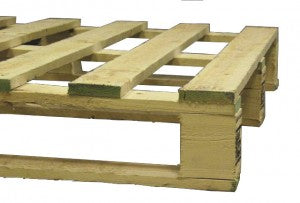
Timber Pallets
Euro Timber Pallets (EPAL / EUR Format) — Overview
Euro timber pallets are the most widely used wooden pallet format across Europe, designed for efficient handling, storage and transport throughout supply chains. They are built to a standardised footprint so they work seamlessly with common racking, pallet trucks, forklifts and automated handling systems. This listing covers Euro-format timber pallets supplied for general distribution and warehousing use, where a consistent pallet size and dependable construction are essential.
Because pallet listings can cover multiple supply options, this guide focuses on the format, construction principles and compliance markings typically associated with Euro pallets, rather than a single fixed specification for one variant. If you need help selecting the right pallet type for your operation (new vs used, exchange grade, heat-treated export pallets, etc.), contact us and we’ll point you to the best option.
Key Features
Standard Euro footprint
A consistent Euro pallet footprint helps reduce wasted space in trailers and containers, improves warehouse slotting, and supports predictable unit-load planning.
Designed for mechanical handling
Euro pallets are engineered for use with pallet trucks and forklifts, supporting routine handling in busy warehouse environments.
Timber construction
Wooden pallets provide a strong, repairable platform that is widely accepted across logistics networks and can be reused through multiple cycles.
Exchange-system familiarity
Euro pallets are commonly used in exchange and pooling contexts, making them a practical choice where compatibility with partners and depots matters.
Export-ready options (ISPM 15)
Where required for international shipping, Euro pallets may be supplied heat treated to ISPM 15 requirements and marked accordingly.
Key Features (Bullet Summary)
- Euro-format timber pallet for warehousing and distribution
- Compatible with common pallet handling equipment
- Standardised footprint for efficient storage and transport planning
- Timber platform suitable for repeated use and repair
- Heat-treated (ISPM 15) options available for export where required
Typical Uses
- Warehouse storage and picking operations
- Inbound and outbound distribution to retail, manufacturing and 3PL networks
- Unitising cartons, sacks, drums and mixed loads for safer handling
- Export shipments (when supplied with ISPM 15 heat treatment and markings)
- Cross-docking and short-turn logistics where standard pallet footprints speed up handling
Euro Timber Pallets — Full Product Guide
Choosing the right pallet is about more than just “a wooden base.” Pallets influence handling speed, load stability, storage density, damage rates and even customs compliance for export. The Euro pallet format is popular because it standardises the platform beneath your goods, helping your packaging, stretch wrap, strapping and warehouse processes work together consistently.
This guide explains how Euro timber pallets are typically built, how they are used, and what to look for when specifying pallets for your operation.
How It Works
A pallet creates a rigid platform that allows goods to be moved as a single unit load. Cartons or products are stacked on the deck, then stabilised using stretch film, strapping, edge protection or shrink wrap. Once unitised, the load can be lifted and transported using pallet trucks or forklifts, reducing manual handling and improving throughput.
Euro pallets are designed around a standard footprint so that:
- Loads fit predictably into trailers and warehouse bays
- Racking and conveyors can be configured around a known base size
- Partners and depots can handle the pallet without special equipment
Materials and Construction
Euro pallets are made from timber components assembled into a deck-and-block structure. While exact build details can vary by grade and licensing system, the Euro pallet format is commonly associated with a defined construction pattern and consistent overall dimensions. Official EPAL information for the EPAL Euro pallet (EPAL 1 / EUR) lists a pallet size of 1200 × 800 × 144 mm and a construction comprising 11 boards, 9 blocks and 78 nails, with an approximate weight of 25 kg. These standardised elements help ensure predictable performance and interchangeability across supply chains.
Timber pallets are valued because they are:
- Strong for everyday distribution loads
- Repairable (damaged boards/blocks can often be replaced)
- Widely accepted across logistics networks
- Reusable through multiple handling cycles when managed correctly
Floor Type Compatibility
Euro pallets are commonly used on a wide range of warehouse floors and handling environments. For best results:
- Smooth concrete floors: ideal for pallet trucks and stable stacking.
- Racking systems: ensure the pallet type and condition are suitable for your rack design and load requirements.
- Conveyors / automation: confirm that the pallet specification and condition meet the requirements of your automated handling equipment.
Where pallets are used on uneven surfaces, outdoors, or in high-impact handling environments, consider specifying a pallet grade and condition appropriate to the risk of damage and the consequences of failure.
Health and Safety
Pallet safety is critical. Always follow site risk assessments and safe systems of work. General best practices include:
- Inspect before use: check for broken boards, protruding nails, split blocks or contamination.
- Keep loads stable: use appropriate stretch wrap/strapping and corner protection to reduce shifting.
- Do not exceed rated loads: EPAL states a safe working load of 1,500 kg for the EPAL Euro pallet (EPAL 1 / EUR) and a maximum stacked load of 5,500 kg for the bottom pallet in a stacked load on a solid, even surface.
- Handle correctly: ensure forks are correctly spaced and fully inserted to reduce pallet damage and load tipping.
If your operation involves heavy point loads, unusual load shapes, or high stacking, we recommend confirming the pallet specification and load limits for your exact use case.
Export Compliance (ISPM 15 Heat Treatment)
If you ship goods internationally, many destinations require wood packaging material (including pallets) to comply with ISPM 15. EPAL explains that since 1 January 2010, all newly produced EPAL Euro pallets are treated to ISPM 15, using HT (heat treatment). The ISPM 15 heat-treatment requirement is that the wood core reaches at least 56°C for a minimum of 30 minutes. EPAL also notes that methyl bromide (MB) treatment is prohibited for EPAL pallets.
Where applicable, compliant pallets carry the IPPC mark and treatment code (e.g., HT), along with other identifying marks. EPAL notes that the ISPM 15/IPPC mark is branded on the central blocks on the long sides of the pallet.
Important: Export requirements vary by country and shipment type. Always confirm the destination’s current rules and ensure your pallet supply matches your documentation needs.
Ideal Applications and Use Cases
Euro timber pallets are a strong all-round choice for:
- General warehousing: consistent footprint supports efficient slotting and replenishment.
- Distribution networks: widely recognised pallet format helps reduce handling friction with partners.
- Manufacturing: supports WIP movement and finished goods dispatch.
- Retail logistics: standard pallet base simplifies planning for store deliveries and RDC operations.
- Export shipments: when supplied heat treated and correctly marked for ISPM 15 compliance.
Maintenance, Cleaning and Care
Good pallet management reduces damage and improves safety:
- Store pallets dry: keep under cover where possible to reduce moisture uptake and degradation.
- Rotate stock: use a sensible rotation method to avoid long-term storage of the same pallets.
- Remove damaged pallets: quarantine pallets with broken boards, loose blocks or protruding nails.
- Keep handling gentle: avoid impacts with forks and do not drag pallets across rough surfaces.
For operations with hygiene requirements, consider whether timber pallets are appropriate or whether alternative materials are required by your standards.
Case Study (Typical Scenario)
A distributor shipping mixed cartons to multiple depots standardises on Euro-format pallets to simplify trailer planning and reduce rework. By building consistent unit loads and applying stretch wrap plus edge protection, the business reduces product damage and speeds up cross-docking. For export lanes, the distributor specifies heat-treated pallets with the correct markings to avoid customs delays and re-palletisation costs.
This kind of standardisation is often where Euro pallets deliver the biggest operational benefit: fewer exceptions, faster handling, and more predictable storage and transport utilisation.
Who Is It For?
- Warehouses and 3PLs needing a widely compatible pallet format
- Manufacturers shipping palletised goods through European supply chains
- Distributors looking to standardise unit loads for efficiency
- Exporters who require ISPM 15 heat-treated pallets (where applicable)
Colours / Features Available
Timber pallets are typically supplied in natural wood appearance. Depending on supply and specification, pallets may feature compliance and identification markings (e.g., EPAL/EUR branding and IPPC/HT stamps where applicable). If you need a specific marking or pallet grade for your process, please confirm requirements before ordering.
Sizes Available
This product listing represents Euro-format timber pallets. The EPAL Euro pallet (EPAL 1 / EUR) is specified by EPAL as 1200 × 800 × 144 mm. If you require a different pallet footprint, a half pallet, or a bespoke solution for unusual loads, contact us to discuss options.
Need help building a complete palletised load?
We can also advise on complementary packaging such as stretch film, strapping, edge protectors and pallet wrap dispensers to improve load stability and reduce transit damage.