

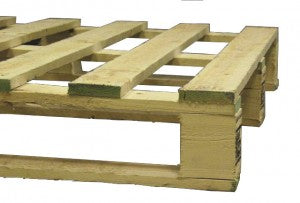
Timber Pallets
Euro Timber Pallets (Light) — Overview
Euro timber pallets (light duty) are a practical, cost-effective way to unitise and move goods through storage, picking, dispatch and short-to-medium distance distribution. Designed around the widely used Euro pallet footprint, this light-duty timber pallet option is ideal when you need a dependable platform for boxed, wrapped or strapped loads but don’t require the heavier construction associated with premium or repairable pool pallets.
Because timber pallets are compatible with common warehouse handling equipment, they help streamline day-to-day operations: goods can be stacked, moved, staged and loaded with less manual handling. Light-duty pallets are also commonly chosen for one-way shipments, internal transfers, and applications where pallet weight and cost are key considerations.
Key Features
Light-duty timber construction:
A lighter build helps reduce pallet weight and cost while still providing a stable base for many typical packaged goods.
Euro-format footprint:
Euro pallets are a widely recognised standard in warehousing and distribution, helping improve compatibility with racking, trailers and handling processes that are set up around Euro dimensions.
Forklift and pallet truck handling:
Timber pallets are designed to be moved using standard material-handling equipment, supporting efficient loading/unloading and internal transport.
Suitable for strapping and stretch wrapping:
A timber deck provides a solid platform for stretch wrap, banding/strapping and corner protection, helping keep unit loads stable in transit.
Cost-effective for transit and storage:
Light-duty pallets are often selected where the priority is economical unitisation for distribution, staging or short-term storage.
Key Features (Bullet Summary)
- Light-duty timber pallet option for economical unit loads
- Euro-format pallet style for broad logistics compatibility
- Works with common warehouse handling equipment
- Good base for stretch wrap, strapping and protective packaging
- Useful for one-way shipments, internal moves and general distribution
Typical Uses
- Warehouse picking, staging and dispatch
- Distribution of boxed or shrink-wrapped goods
- Retail and wholesale deliveries where Euro pallets are preferred
- Internal transfers between sites or departments
- Export or one-way shipments where pallet return is unlikely
Euro Timber Pallets (Light) — Full Product Guide Introduction
This guide explains how light-duty Euro timber pallets are typically used, what to consider when selecting a pallet for your operation, and how to get the best performance from your palletised loads. As with any pallet, suitability depends on the nature of the goods, how the load is built, and the handling and transport conditions. If you are unsure which pallet specification is right for your application, it’s best to confirm your requirements before ordering.
How It Works
A pallet creates a rigid base that allows goods to be handled as a single unit load. Products are stacked on the pallet deck and then stabilised using stretch wrap, strapping, tape, edge protectors or a combination of these. Once secured, the pallet can be moved using a pallet truck or forklift, reducing manual handling and improving throughput in busy warehouse environments.
Light-duty pallets are commonly used where loads are relatively uniform and well-packaged (for example, cartons, cases, or shrink-wrapped trays). They can also be used with slip sheets, layer pads, or top sheets to improve load stability and protect packaging surfaces.
Materials and Construction
These pallets are made from timber. Timber pallets are widely used because they are practical, easy to handle, and compatible with many packaging and load-securing methods. A typical timber pallet uses deck boards fixed to bearers/blocks/stringers to create a stable platform with clearance for forks.
Because this is a light-duty option, the construction is intended to balance strength with lower weight and cost. For best results, match the pallet to the load type and handling method, and avoid overhanging loads or point-loading that can concentrate weight on a small area.
Floor Type Compatibility
Timber pallets are commonly used on smooth warehouse floors and loading bays. For consistent handling, ensure the travel route is clear of debris and that thresholds, dock plates and uneven surfaces are managed appropriately. If your operation uses conveyors, automated handling, or very tight racking tolerances, confirm that a light-duty timber pallet is suitable for those systems.
Health and Safety
Safe pallet use starts with inspection and good load-building practice:
- Inspect before use: Check for damaged boards, protruding nails, splits, or instability.
- Build stable loads: Keep weight evenly distributed and avoid excessive overhang.
- Secure the load: Use appropriate stretch wrap and/or strapping, and consider edge protection for sharp corners.
- Handle correctly: Ensure forks are fully inserted and the load is stable before lifting or travelling.
If you are shipping goods, also consider any site-specific requirements for pallet condition and cleanliness.
Ideal Applications and Use Cases
Light-duty Euro timber pallets are often chosen for:
- General distribution: Palletised cartons and packaged goods moving through standard logistics networks.
- One-way shipments: Where pallet return is not economical or not expected.
- Cost-sensitive operations: Where you need a functional pallet platform without the added cost of heavy-duty specifications.
- Short-term storage: Staging and holding stock prior to dispatch.
If your loads are very heavy, high-value, or subject to repeated handling cycles, you may want to compare against heavier-duty timber pallets or alternative pallet types.
Maintenance, Cleaning and Care
Timber pallets are generally low maintenance, but a few simple practices can extend usable life and reduce handling issues:
- Store pallets in a dry, well-ventilated area where possible.
- Avoid dragging pallets across rough surfaces to reduce board damage.
- Do not stack unstable pallets; keep stacks aligned and within safe height limits.
- Remove damaged pallets from service to prevent product damage and handling incidents.
For operations with hygiene requirements, confirm whether timber pallets are acceptable and whether any additional controls are needed.
Case Study (Example Workflow)
Scenario: A distributor ships mixed cartons to regional customers on a daily route. Orders are picked into cartons, stacked onto a light-duty Euro timber pallet, and stabilised with stretch wrap and corner protection. The pallet is then moved to a dispatch lane using a pallet truck and loaded onto a vehicle with a forklift. This approach reduces manual handling, speeds up loading, and helps keep cartons aligned and protected during transit.
This is a typical example of how a light-duty pallet can support efficient warehouse flow when loads are well-packaged and properly secured.
Who is it for?
- Warehouses and distributors shipping palletised cartons or shrink-wrapped goods
- Businesses needing an economical pallet for one-way or non-returnable shipments
- Operations using standard pallet trucks and forklifts for daily handling
- Sites that prefer Euro-format pallets for compatibility with existing processes
Colours / Features Available
Timber pallets are typically supplied in natural wood finish. As a timber product, appearance can vary between batches. If you require specific markings, treatments, or pallet features for your supply chain, confirm requirements prior to purchase.
Sizes Available
This product is listed as a Euro-format light-duty timber pallet. If you need a different pallet footprint, heavier-duty construction, or bespoke pallet requirements, consider selecting an alternative pallet type or contacting the supplier to confirm available options.
Need help choosing?
If you can share your load type (cartons/bags/drums), approximate unit load weight, handling method (pallet truck/forklift), and whether the pallet is one-way or returnable, it’s easier to confirm the most suitable pallet option.