

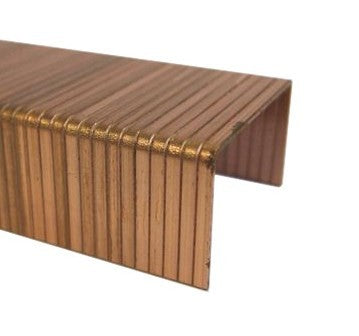
Staples
13/6 Staples — Reliable Everyday Staples for Compatible Staplers & Tackers
13/6 staples are a widely used staple format for light-to-medium fastening tasks where you want a neat, consistent finish and dependable holding power. This product page represents 13/6 staples supplied in a convenient bulk pack, making them a practical choice for offices, schools, facilities teams, workshops, and general maintenance environments where staples are used regularly.
The “13/6” designation refers to the staple series/type (13) and the leg length (6 mm). As with all staples, correct fit is essential: always confirm your stapler or tacker is designed to accept type 13 / 13-6 staples before ordering or loading. When matched to the right tool, 13/6 staples feed smoothly, clinch cleanly, and help you achieve repeatable results across everyday fastening jobs.
Key Features
- Common 13/6 format: A popular staple type used across many compatible staplers and tackers, making it easy to standardise supplies.
- 6 mm leg length: The “/6” indicates a 6 mm leg length, suited to typical paper, light card, and other light fastening tasks (tool and material dependent).
- Bulk pack convenience: Supplied in a large pack quantity (commonly 5,000 staples on this listing), ideal for high-usage environments and reducing re-order frequency.
- Consistent fastening: Designed to deliver uniform staple formation when used in compatible equipment, supporting tidy, professional results.
- General-purpose use: Suitable for a broad range of day-to-day stapling and light tacking applications where 13/6 is specified.
Typical Uses
- General office stapling where a 13/6 staple is specified by the stapler/tacker
- Schools, colleges, and training centres for routine document fastening
- Facilities and maintenance teams for light fastening tasks using compatible tackers
- Workshops and stores for bundling paperwork, labels, and light packaging tasks
- Back-of-house administration in retail, hospitality, and healthcare settings
13/6 Staples — Full Product Guide
Choosing the right staples is about more than just “will they fit?” The correct staple type helps your tool operate smoothly, reduces jams, and improves the quality of the finished fastening. This guide explains what 13/6 staples are, how they’re typically used, and what to consider when selecting them for your workplace.
How It Works
Staples work by being driven through the material and then clinched (bent) by the stapler or tacker’s anvil/clinching mechanism. When the staple size matches the tool’s magazine and driver blade, the staple is guided accurately, driven straight, and formed consistently. Using the correct staple type helps maintain reliable feeding and reduces the likelihood of misfires or jams.
With 13/6 staples, the “13” identifies the staple series/type used by certain staplers and tackers, while “6” indicates a 6 mm leg length. The leg length influences how much material the staple can pass through and still clinch properly. If the leg is too short for the stack or substrate, the staple may not close correctly; if it’s too long, it may protrude or not clinch as intended depending on the tool and material.
Materials and Construction
Staples are typically manufactured from steel wire formed into strips for loading into compatible magazines. Many 13/6 staples on the market are supplied with protective finishes (for example galvanised steel on comparable products) to support durability in everyday use. The key performance factors are consistent wire gauge, accurate forming, and cleanly cut points—these help the staple drive smoothly and clinch evenly.
Because staple construction can vary by manufacturer, always consider the requirements of your stapler/tacker and the environment you’re working in. If you’re fastening in areas where moisture or corrosion could be a concern, check whether a corrosion-resistant finish is required for your application.
Tool Compatibility (Staplers & Tackers)
Compatibility is the most important selection step. 13/6 staples are intended for tools that explicitly state they accept type 13 / 13-6 staples. Even if a staple looks similar to another size, small differences in crown width, wire gauge, or strip format can affect feeding and clinching.
Best practice:
- Check your tool’s manual, packaging, or the markings on the magazine for the supported staple types.
- If your tool lists a range (for example 13/4 to 13/8), ensure 13/6 falls within that range.
- If you’re unsure, compare the staple type currently used successfully in your tool and match like-for-like.
Floor Type Compatibility
This product is a stationery/equipment staple and is not a flooring product. Floor type compatibility does not apply.
Health and Safety
Staples are sharp and should be handled with care. Follow standard workplace safety practices:
- Keep staples away from children and store securely.
- When clearing jams or reloading, follow the stapler/tacker manufacturer’s instructions and keep fingers clear of the driving mechanism.
- Dispose of loose staples safely to avoid puncture injuries.
If you are using a tacker for light fastening tasks, consider eye protection where there is any risk of staple ricochet or misfire, and ensure the workpiece is stable before fastening.
Ideal Applications and Use Cases
13/6 staples are commonly chosen for routine fastening where a compact leg length is appropriate. Typical use cases include:
- Document fastening: Day-to-day paperwork, handouts, and internal documents (within the capacity of your tool).
- Light card and labels: Attaching labels or light card where a neat staple is preferred.
- General admin and facilities: Regular tasks where a compatible stapler/tacker is already standardised on type 13 staples.
For thicker stacks or tougher substrates, you may need a different leg length or staple type—always match the staple to both the tool and the material.
Maintenance, Cleaning and Care
Staples themselves require minimal maintenance, but correct storage and tool care improve performance:
- Store dry: Keep staples in a dry place to help prevent corrosion and maintain smooth feeding.
- Keep the tool clean: Dust and debris in the magazine can contribute to misfeeds; periodic cleaning helps.
- Use the right staples: The most common cause of jamming is using an incompatible staple type or size.
- Load carefully: Insert staple strips correctly and avoid forcing the magazine closed if something doesn’t align.
Case Study (Typical Workplace Scenario)
Scenario: A busy office and facilities team uses a mix of desk staplers and light-duty tackers for routine admin tasks. Staples are consumed quickly, and frequent small re-orders create downtime and inconsistent stock levels.
Approach: Standardising on a single staple type (13/6 where compatible) and purchasing in bulk pack quantities helps reduce ordering frequency and ensures teams can reload quickly without searching for the correct staples.
Outcome: Fewer interruptions, more consistent fastening results, and simpler stock control—especially where multiple departments share supplies.
Who Is It For?
- Offices that want a dependable, commonly used staple format for compatible tools
- Schools and education settings with regular stapling needs
- Facilities teams and workshops using compatible tackers/staplers for light fastening
- Procurement teams looking to simplify ordering with a standard staple type and bulk pack size
Colours / Features Available
Staples are typically supplied in a standard metallic finish. Feature availability (such as protective coatings/finishes) can vary by manufacturer and batch; refer to the product options on this page for the exact variant supplied.
Sizes Available
This listing is for 13/6 staples (6 mm leg length). If your tool supports other leg lengths within the type 13 range, you may also find alternative options elsewhere. Always select the staple size specified by your stapler/tacker for best performance.
Need help choosing? If you can share the make/model of your stapler or tacker (or the staple type printed on the tool), we can help confirm whether 13/6 is the correct match.