

Envelopes
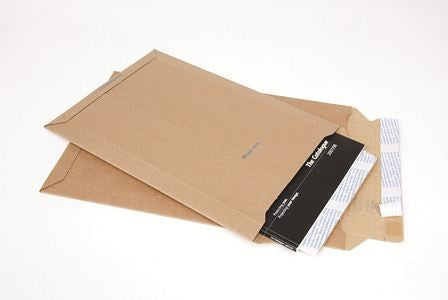
C3 Manilla Board Back Envelopes (457 x 324) — Rigid Protection for Important Documents
When you need to post or courier documents that must arrive flat and presentable, board-backed envelopes are a simple, reliable solution. This product is a manilla board back envelope in the C3 format, designed to help protect contents from bending and creasing during handling and transit. The rigid board backing adds stiffness, making these envelopes a popular choice for sending certificates, artwork, photographs, brochures, and other paperwork that benefits from extra support.
Because this is a configurable product listing, options may vary (for example pack quantities). Please select the option that best suits your requirements.
Key Features
Board-backed rigidity:
Built with a stiff board back to help keep documents flat and reduce the risk of corner damage or creasing in the post.
C3 format for larger documents:
Suitable for sending larger sheets and document sets that need more room than standard letter sizes.
Manilla finish:
Manilla is a widely used envelope material for business and mailing applications, offering a practical, professional appearance.
Designed for postal handling:
Board back envelopes are commonly chosen for mail streams where items may be stacked, sorted, or handled multiple times.
Simple, dependable document mailing:
A straightforward packaging choice for offices, studios, schools, and print environments where flat delivery matters.
Key Features (Bullet Summary)
- Rigid board back helps protect documents from bending
- C3 size (457 x 324) for larger paperwork and flat items
- Manilla envelope style for everyday business mailing
- Ideal for certificates, artwork, photos, brochures, and reports
- Multiple purchase options may be available on this listing
Typical Uses
- Posting certificates, legal documents, and contracts
- Sending artwork, prints, and photographs that should stay flat
- Mailing brochures, catalogues, and presentation packs
- Dispatching office paperwork between sites or to clients
- Schools, colleges, and training providers sending documents
C3 Manilla Board Back Envelopes — Full Product Guide
Board-backed envelopes are designed for one main purpose: to help your contents arrive in the same condition they left you. If you regularly send documents that must remain flat, a rigid-backed envelope can be a more suitable choice than a standard paper envelope. Below is a practical guide to help you decide if this product is right for your workflow and how to get the best results when packing and posting.
How It Works
A board back envelope combines an outer envelope body with a stiff backing board. When documents are placed inside, the board provides support across the full face of the envelope. This helps reduce flexing during handling, which in turn helps reduce creases, folds, and bent corners. For many businesses, this is an easy upgrade from standard envelopes when presentation and document integrity matter.
Board-backed envelopes are commonly used for flat items that are vulnerable to bending, such as certificates, photos, and printed materials. They can also be useful for multi-page document sets where the thickness and weight can cause a standard envelope to sag or crease.
Materials and Construction
This product is described as a manilla board back envelope. “Manilla” refers to the familiar kraft-style envelope material used widely in offices and mailing rooms. The key construction feature is the rigid board backing, which provides stiffness and helps keep contents flat.
In day-to-day use, the board back is what differentiates this style from standard envelopes. It is particularly helpful when items may be placed in mail trays, stacked with other post, or handled through sorting processes.
Document Fit and Packing Tips
To get the best performance from a board-backed envelope, it helps to pack thoughtfully:
- Keep contents flat: Avoid folding documents. If you must include multiple items, stack them neatly so edges align.
- Mind the corners: Ensure corners are not catching on the inside of the envelope when inserting.
- Don’t overfill: Overstuffing can strain seams and reduce the envelope’s ability to stay flat.
- Consider additional protection: For high-value prints or photos, you may wish to use an inner sleeve or protective sheet before inserting.
These simple steps help the envelope do its job—supporting and protecting the contents during transit.
Floor Type Compatibility
This section is not applicable to this product type. Board-backed envelopes are a postal packaging item rather than a flooring product.
Health and Safety
As with most packaging products, safe handling is straightforward. Take care when opening cartons and handling large quantities to avoid paper cuts. If using cutting tools to open outer packaging, keep blades away from the envelopes to prevent accidental damage.
When preparing mail, ensure addresses and labels are applied clearly and securely. If you are sending sensitive documents, consider your organisation’s data handling procedures and whether additional tamper-evident measures are required for your application.
Ideal Applications and Use Cases
Board-backed envelopes are widely used across many sectors because they solve a common problem: keeping documents flat. Typical use cases include:
- Offices and administration: Sending contracts, reports, and client paperwork.
- Education: Mailing certificates, transcripts, and official letters.
- Print and design: Dispatching proofs, brochures, and presentation materials.
- Photography and art: Posting prints and photographs that should not be bent.
- Events and venues: Sending programmes, promotional packs, and printed collateral.
If your recipients expect documents to arrive crisp and professional, board-backed envelopes can help support that expectation.
Maintenance, Cleaning and Care
Envelopes are typically single-use packaging items, so “maintenance” is mainly about storage and handling before use:
- Store flat: Keep envelopes flat to preserve their shape and rigidity.
- Keep dry: Store in a dry environment to avoid moisture affecting paper and board.
- Avoid crushing: Don’t place heavy items on top of stored envelopes, as this can deform corners and edges.
Good storage helps ensure the envelopes perform as intended when you need them.
Case Study (Example Workflow)
Scenario: A training provider regularly posts certificates and course completion packs to learners. Standard envelopes occasionally arrive creased, leading to reprints and re-posting.
Approach: The provider switches to board-backed envelopes for certificate mailings. Certificates are inserted flat, with a protective sheet on top to prevent scuffing.
Outcome: The rigid backing helps reduce bending in transit, improving presentation on arrival and reducing the need for replacements.
This is a common reason organisations choose board-backed envelopes: they help protect the appearance of important documents and reduce avoidable rework.
Who Is It For?
- Businesses that send important paperwork and want it to arrive flat
- Schools, colleges, and training providers mailing certificates
- Designers, printers, and marketers sending brochures or proofs
- Artists and photographers posting prints and photos
- Anyone who wants a sturdier alternative to standard envelopes for flat items
Colours / Features Available
This listing describes a manilla board back envelope. If other options are available (such as different pack quantities), they can be selected from the product options on this page.
Sizes Available
This product is listed as C3 with dimensions 457 x 324. If this page offers additional variants (for example different pack sizes), please choose the option you require.
Frequently Asked Questions
What is a board back envelope used for?
A board back envelope is used to help keep documents flat during mailing. The rigid backing helps reduce bending and creasing compared with standard envelopes.
What kinds of items are best suited to this envelope?
Common items include certificates, artwork, photographs, brochures, and important paperwork that should arrive in good condition.
Is this suitable for business mailing?
Yes—manilla board-backed envelopes are commonly used in offices and mailing rooms for professional document dispatch.
Note: Product specifications and available options should always be confirmed from the selections shown on this page.