

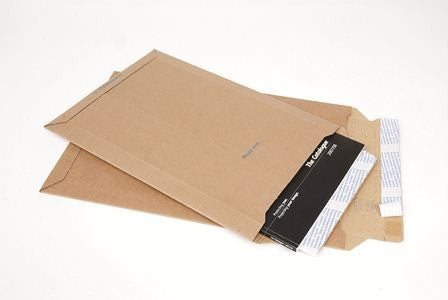
Envelopes
324 x 229 mm Manilla Board-Back Envelopes (C4) — Protect A4 Documents in the Post
These C4 manilla board-back envelopes (324 x 229 mm) are designed for sending A4 paperwork without folding, while the rigid board-backed construction helps reduce bending and creasing during handling. They’re a practical choice for offices, mailrooms, schools, print rooms and fulfilment teams that need a dependable envelope for certificates, brochures, contracts, reports and other flat documents.
Manilla is a popular envelope material for everyday dispatch because it’s lightweight, cost-effective and presents well. The added board back gives extra stiffness compared with standard paper envelopes, helping contents arrive in better condition—especially when items are posted through sorting systems or stacked in transit.
Key Features
C4 document fit (A4 flat):
The C4 format is commonly used for A4 sheets and booklets that you want to keep flat. The 324 x 229 mm size provides the space needed for typical A4 documents and inserts without folding.
Board-backed rigidity:
A stiff board panel is integrated into the envelope to help resist bending. This is ideal for important paperwork, printed materials and items that can be damaged by creasing.
Manilla envelope material:
Manilla is widely used for postal envelopes thanks to its balance of strength, weight and professional appearance. It’s suitable for routine business mail and internal distribution.
Professional presentation for business mail:
Board-back envelopes are commonly chosen for formal documents because they help keep contents neat and presentable on arrival.
Convenient pack quantities:
Available in trade-friendly pack sizes (for example, packs of 125 are commonly offered on this listing), making it easy to stock for regular dispatch.
Key Features (Bullet Summary)
- Format: C4 (ideal for A4 documents sent flat)
- Size: 324 x 229 mm
- Construction: Manilla envelope with rigid board back
- Purpose: Helps protect documents from bending and creasing
- Use: Office, education, print, legal, finance, fulfilment and general mailrooms
Typical Uses
- Posting contracts, invoices, statements and HR documents
- Sending certificates, coursework, exam papers and school communications
- Mailing brochures, catalogues, presentations and printed reports
- Dispatching artwork prints, flat samples and other bend-sensitive items
- Internal mail between departments where documents must stay flat
324 x 229 mm Manilla Board-Back Envelopes (C4) — Full Product Guide
Choosing the right envelope is about more than just size. If you’re sending paperwork that needs to arrive crisp and professional, a board-back envelope can be a simple upgrade that reduces damage and rework. This guide explains what board-backed envelopes are, how they’re typically used, and what to consider when selecting them for your workplace.
How It Works
A board-back envelope combines a standard envelope body with a rigid board panel. When documents are inserted, the board acts like a built-in support sheet. This helps the envelope keep its shape and reduces the chance of the contents being bent during handling, stacking or transport.
For many organisations, this means fewer creased documents, fewer reprints, and a better experience for the recipient—especially when sending time-sensitive or customer-facing paperwork.
Materials and Construction
Manilla outer: Manilla paper is commonly used for postal envelopes because it offers a good balance of durability and weight. It’s a familiar, professional-looking material for everyday business mail.
Board back: The board panel provides stiffness. Compared with standard envelopes, this construction is better suited to documents that must remain flat.
Envelope format: This product is listed as C4 (324 x 229 mm), a widely used size for sending A4 documents without folding.
Document and Insert Compatibility
C4 envelopes are typically chosen for:
- A4 sheets (letters, forms, invoices, statements)
- A4 booklets and stapled packs
- Brochures and printed presentations
- Certificates and official documents that should not be folded
If you regularly send thicker packs, consider how many sheets you typically include and whether you need additional capacity. For single documents and standard multi-page packs, board-back envelopes are a common, reliable choice.
Postal Handling and Protection
Postal systems can involve multiple touchpoints—sorting, stacking, bagging and vehicle transport. A board-backed envelope helps by:
- Reducing bending when envelopes are stacked under other mail
- Helping prevent corner creases and edge damage
- Keeping documents flatter for a more professional arrival
While no envelope can eliminate all risk, board-backed designs are widely used when presentation and document condition matter.
Floor Type Compatibility (Workplace Fit)
These envelopes suit a wide range of workplace environments:
- Offices and admin teams: day-to-day outgoing mail and internal distribution
- Mailrooms: batch processing of letters and document packs
- Schools and universities: coursework returns, certificates and parent communications
- Legal and finance: formal documents that must remain neat and legible
- Print rooms: sending proofs, reports and flat printed materials
Health and Safety
For safe and efficient packing:
- Store envelopes flat in a dry area to maintain shape and stiffness.
- When packing in volume, use a stable work surface to reduce repetitive strain.
- Take care with paper edges and corners when handling quickly in a mailroom setting.
Ideal Applications and Use Cases
Customer-facing documents: When presentation matters—welcome packs, policy documents, statements and formal letters—board-backed envelopes help keep paperwork crisp.
Compliance and recordkeeping: For documents that may be scanned, filed or archived on arrival, avoiding creases can improve readability and reduce processing issues.
Education and certification: Certificates and official letters often need to arrive flat and uncreased, making board-backed envelopes a practical choice.
Printed collateral: Brochures and reports look better when they arrive flat, especially for marketing or tender submissions.
Maintenance, Cleaning and Care
Envelopes don’t require maintenance, but good storage helps performance:
- Keep packs sealed until needed to reduce dust and handling marks.
- Avoid storing near moisture or heat sources that could warp paper and board.
- Rotate stock (first in, first out) if you hold large quantities.
Case Study (Typical Scenario)
A busy admin team sends out multi-page A4 document packs daily. Using standard envelopes, they notice a portion arrive creased, leading to reprints and follow-up calls. Switching to board-backed C4 envelopes helps reduce bending in transit, improving presentation and cutting down on rework—especially for documents that recipients file or scan.
Who Is It For?
- Businesses sending A4 paperwork that must arrive flat
- Mailrooms processing regular batches of outgoing documents
- Schools, colleges and training providers sending certificates and letters
- Legal, finance and HR teams posting formal documentation
- Print and marketing teams mailing brochures and reports
Colours / Features Available
This listing is for manilla board-back envelopes in a C4 format. If your organisation needs alternative colours, window options, or different closure styles, check the related envelope ranges available on the site.
Sizes Available
This product page represents the C4 size (324 x 229 mm). If you need other envelope sizes for different document formats (for example, smaller letter sizes or larger flat mailers), browse the envelope category for additional options.
Need help choosing?
If you’re unsure whether C4 is the best fit for your inserts, consider the document size (flat vs folded), the thickness of your pack, and how important presentation is on arrival. Board-backed envelopes are a straightforward choice when you want extra stiffness without moving to heavier packaging formats.