

Envelopes
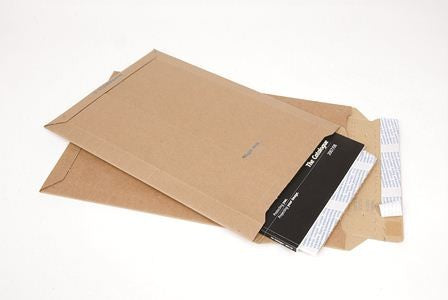
Rigid Corrugated Envelopes (C4) — Protective Postal Packaging for Flat Documents
Rigid corrugated envelopes are designed for sending important paperwork and flat items through the post with added protection against bending, creasing and edge damage. This product is a C4-format rigid corrugated envelope, commonly chosen when you want to post A4-sized documents without folding. The corrugated construction provides stiffness and cushioning, helping contents arrive in better condition compared with standard paper envelopes.
These envelopes are a practical choice for busy dispatch environments where speed matters: load the contents, seal, label and send. They’re also useful for anyone shipping items that need to stay flat in transit—such as certificates, contracts, brochures, catalogues, artwork prints and other paper-based materials.
Key Features
Rigid corrugated protection: Corrugated board construction helps resist bending and corner knocks during handling and transit, offering stronger protection than lightweight envelopes.
C4 format for flat A4 mailing: C4 envelopes are widely used for sending A4 documents without folding, helping keep paperwork presentable on arrival.
Professional presentation: A rigid mailer supports a neat, premium feel for customer-facing documents such as welcome packs, legal paperwork and marketing collateral.
Efficient packing workflow: A simple “insert, seal, label” process supports quick order fulfilment for offices, print rooms and eCommerce dispatch.
Helps reduce damage-related costs: Better protection can mean fewer returns, reprints and customer service issues caused by creased or bent documents.
- Rigid corrugated construction for improved stiffness and impact resistance
- C4 format suited to flat A4 documents and similar items
- Ideal for documents, brochures and prints that must arrive uncreased
- Simple packing process for fast dispatch
- Great for offices and fulfilment where consistent protection is required
Typical Uses
- Posting A4 documents flat (contracts, invoices, statements, certificates)
- Sending brochures, catalogues, presentation packs and marketing literature
- Mailing photographs, art prints and paper-based media that must stay flat
- Dispatching thin, flat items that benefit from rigid protection
- Internal mail between sites where paperwork needs to remain presentable
Rigid Corrugated Envelopes C4 — Full Product Guide
Choosing the right postal packaging is about balancing protection, speed and cost. Rigid corrugated envelopes are a popular solution when you need a lightweight mailer that still offers meaningful stiffness. Below is a practical guide to help you decide if this C4 rigid corrugated envelope is the right fit for your dispatch needs.
How It Works
A rigid corrugated envelope uses corrugated board to create a stiff outer shell around your contents. When a mailer is handled through sorting, stacking and delivery, the envelope may be flexed or compressed. Corrugated board helps resist that flexing and provides a buffer against minor impacts. The result is a mailer that is better suited to protecting flat items than standard paper envelopes.
For best results, insert your documents or flat items so they sit neatly within the envelope without forcing the edges. Seal securely, apply your address label, and ensure any barcodes or postage labels are placed on a smooth, flat area for reliable scanning.
Materials and Construction
Corrugated board is made with a fluted inner layer sandwiched between liner layers. This structure is what gives corrugated packaging its stiffness and protective performance. In envelope form, it creates a rigid mailer that helps protect corners and edges—areas that are often most vulnerable during transit.
Rigid corrugated envelopes are commonly selected when you want a step up from standard envelopes but don’t need the bulk of a box. They can also be a good alternative to board-backed envelopes when you want more all-round rigidity.
Document Fit and Capacity (Practical Guidance)
C4 is widely used for A4 documents. If you are sending multiple sheets, thicker paper stocks, or a document pack, consider how the contents will sit inside the envelope. Overfilling can place stress on seams and corners and may reduce the protective benefit. For thicker packs, you may prefer to split into multiple mailers or choose a larger format where available.
If you are mailing printed materials such as brochures or catalogues, keep the stack aligned and avoid sharp bends. A rigid corrugated envelope helps maintain a flat profile, which supports a better unboxing experience for the recipient.
Floor Type Compatibility (Packing Bench & Warehouse Use)
In a warehouse or office environment, these envelopes work well at standard packing benches and mailroom stations. They are easy to stack, quick to pick, and straightforward to label. If you use automated label printers, ensure labels are applied smoothly to avoid wrinkles that can affect scanning.
For higher-volume operations, consider setting up a simple packing standard: keep a consistent orientation for labels, use the same seal-check step, and store envelopes flat to maintain their shape.
Health and Safety
Rigid mailers can have firm edges. When packing at speed, take care to avoid paper cuts and edge scrapes. Use safe cutting tools if opening incoming cartons, and keep work areas clear to prevent slips or trips. If you are sealing large volumes, consider ergonomic practices such as alternating tasks and keeping frequently used items within easy reach.
Ideal Applications and Use Cases
Offices and mailrooms: Ideal for sending letters and documents that must remain crisp and professional.
Print and design: Useful for mailing proofs, prints and flat promotional materials.
eCommerce and fulfilment: Suitable for dispatching flat items where a box would be unnecessary.
Education and administration: Great for certificates, transcripts and official paperwork.
Legal and financial services: Helps protect sensitive documents and supports a premium presentation.
Maintenance, Cleaning and Care
Rigid corrugated envelopes are typically supplied ready to use and require no maintenance. Store them in a clean, dry area away from moisture to preserve stiffness and prevent warping. Keep cartons closed when not in use to reduce dust and to maintain a tidy packing area.
If your environment is humid, consider rotating stock so older cartons are used first. Avoid placing heavy items on top of stored envelopes, as prolonged pressure can affect flatness.
Case Study (Example Workflow)
Scenario: A small print shop sends A4 proof packs to clients daily. Previously, proofs were mailed in standard envelopes and occasionally arrived creased, leading to reprints and delays.
Approach: The shop switched to rigid corrugated envelopes for proof packs. Staff inserted the proofs with a protective sheet on top, sealed the envelope, and applied a label in a consistent position.
Outcome: The shop reduced complaints about creasing and improved the perceived quality of deliveries. The packing process remained fast and simple, with minimal change to the workflow.
Note: Results vary depending on carrier handling, packing method and contents.
Who Is It For?
- Businesses that regularly post A4 documents and want improved protection
- Mailrooms and offices seeking a reliable, professional-looking mailer
- Print, marketing and design teams sending flat collateral
- eCommerce sellers shipping thin, flat items that must stay unbent
- Anyone wanting a practical alternative to boxes for flat shipments
Colours / Features Available
This product page may represent multiple options (such as pack quantities or related variants). Please select the option you need from the variant list on the page. If you require a specific feature for your application, check the variant details and product images, or contact us for guidance.
Sizes Available
This listing is for a C4 rigid corrugated envelope format. Where multiple variants are available, you can choose the option that best matches your packing requirements. If you need a different envelope format for larger documents or thicker packs, browse the wider postal envelope range.
Tips for Best Results
- Don’t overfill: Keep contents within a comfortable thickness to maintain rigidity and protect corners.
- Keep contents aligned: Neat stacks reduce edge pressure and help the envelope close properly.
- Seal securely: Ensure the closure is fully pressed down along the full length.
- Label on a flat surface: Smooth labels support reliable scanning and a professional finish.
- Store flat and dry: Preserves shape and performance.
If you’re unsure which rigid mailer is best for your application, tell us what you’re sending (document type, thickness, and how you ship), and we’ll help you choose the most suitable option.