

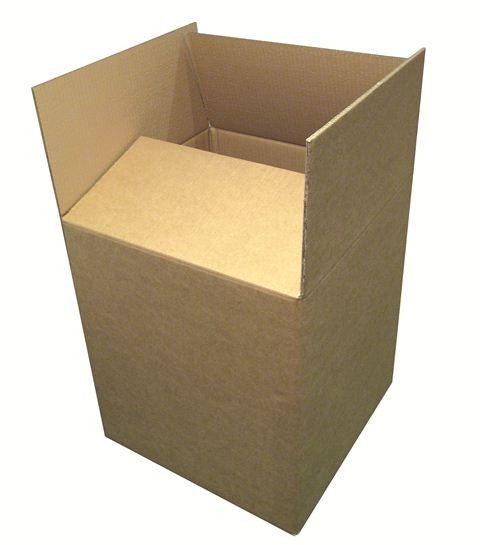
Double Wall Boxes/Cartons
Heavy-Duty Double Wall Carton (D/W) — Reliable Protection for Shipping & Storage
This double wall corrugated carton is designed for dependable packing, stacking and transit protection when you need more strength than a standard single wall box. Double wall board uses two corrugated fluting layers bonded between liner papers, creating a tougher structure that helps resist crushing, punctures and deformation during handling. It’s a practical choice for businesses that ship regularly, store stock in racking, or need cartons that hold their shape when packed with heavier or more fragile items.
Because this listing may cover multiple pack quantities and configurations, the guidance below focuses on the carton type and performance rather than any single pack size. If you’re comparing options, double wall cartons are typically selected where improved compression strength and better edge protection are required—especially for courier networks, palletised distribution, or longer storage periods.
Key Features
Double wall corrugated strength:
Two layers of corrugated fluting provide enhanced rigidity and stacking performance compared with single wall cartons, helping protect contents from knocks and compression.
Improved crush resistance for transit:
A sturdier board structure helps the carton maintain its shape through sorting, loading and unloading—useful for courier and freight environments.
Versatile packing format:
Suitable for a wide range of products, from boxed goods and components to bundled items and mixed orders, making it a dependable everyday shipping carton.
Compatible with common packing methods:
Works well with standard packaging tapes and typical void-fill materials (paper, air pillows, foam, etc.) to stabilise items and reduce movement in transit.
Professional presentation:
A clean, plain carton finish supports straightforward labelling and branding with shipping labels, marker pens, or printed tape.
- Double wall construction for added durability
- Better stacking strength than single wall cartons
- Good all-round shipping box for heavier or fragile items
- Easy to tape and label for dispatch workflows
- Ideal for storage where cartons may be stacked or handled frequently
Typical Uses
- Shipping heavier products that need extra board strength
- Protecting fragile items with added edge and panel rigidity
- Warehouse picking and packing for regular dispatch
- Stock storage, archiving and parts organisation
- Palletised distribution where cartons may be stacked in layers
Double Wall Cartons — Full Product Guide
Choosing the right carton is about balancing protection, cost, packing speed and storage efficiency. Double wall cartons are a popular upgrade when single wall boxes are not quite robust enough for the weight of the contents, the handling conditions, or the stacking requirements. The sections below explain how double wall cartons work, what to consider when selecting them, and how to get the best performance in real-world packing and shipping.
How It Works
Corrugated cartons gain their strength from a layered structure. In a double wall carton, two corrugated “flutes” sit between liner papers. This creates a thicker, more rigid board that can better resist bending and crushing forces. In practical terms, that means improved protection against:
- Compression (stacking loads in storage or on pallets)
- Impact (knocks during handling and transit)
- Puncture (sharp corners or concentrated loads inside the box)
For many operations, double wall cartons are the “safe default” for shipping heavier items or for shipments that may pass through multiple handling points.
Materials and Construction
Double wall cartons are made from corrugated board with two fluted mediums and liner papers. While exact board grades can vary by supplier and specification, the key benefit is the increased thickness and structural integrity compared with single wall. This helps the carton:
- Hold its shape when packed tightly
- Provide better edge protection around corners
- Maintain performance when stacked for short periods
For best results, pair the carton with appropriate internal protection (void fill, cushioning, dividers) based on the fragility and movement risk of the packed items.
Floor Type Compatibility (Warehouse & Packing Areas)
In busy packing environments, cartons are often assembled, filled and staged on benches, conveyors, or warehouse floors. Double wall cartons are well suited to these workflows because they are more resistant to panel flexing when moved or slid across surfaces. They perform well in typical warehouse conditions such as:
- Concrete floors and packing benches
- Conveyor-fed packing stations
- Racking and shelf storage
- Pallet staging areas
If cartons will be stored directly on floors for extended periods, consider using pallets or shelving to reduce exposure to moisture and to maintain carton integrity.
Health and Safety
Good packing practice improves both safety and shipment quality. When using double wall cartons:
- Lift safely: double wall cartons are often chosen for heavier contents—use correct manual handling techniques and team lifts where needed.
- Seal properly: apply tape evenly and firmly to reduce the risk of openings during transit.
- Avoid overfilling: bulging panels can compromise stacking strength and increase the chance of damage.
- Label clearly: ensure shipping labels are flat and readable; add handling labels where appropriate.
Where contents are heavy or dense, consider reinforcing the base with an additional tape strip or using an “H-tape” method for improved closure strength.
Ideal Applications and Use Cases
Double wall cartons are commonly used across eCommerce, manufacturing, distribution and office environments. They are particularly suitable when you need extra confidence in the carton’s ability to protect and stack. Typical use cases include:
- Heavier items: tools, hardware, dense packaged goods, and multi-item orders
- Fragile products: items that benefit from a more rigid outer shell alongside internal cushioning
- Mixed orders: multiple products packed together where internal movement needs controlling
- Returns and exchanges: a stronger carton can better survive a second shipping cycle
- Storage and archiving: cartons that may be stacked or moved repeatedly
Maintenance, Cleaning and Care
Corrugated cartons are designed for packing and shipping rather than cleaning, but a few simple practices help maintain performance:
- Keep dry: store cartons in a clean, dry area to prevent softening of the board.
- Avoid crushing in storage: don’t stack unassembled cartons under heavy loads that could deform them.
- Use the right tape: choose a quality packing tape suited to your environment (temperature and handling conditions can affect adhesion).
- Replace damaged cartons: if a carton is creased, torn or softened, use a new one for best protection.
For operations with seasonal peaks, plan storage space so cartons remain flat and protected until needed.
Case Study (Example Packing Workflow)
Scenario: A small fulfilment team ships a mix of products daily, including heavier multi-item orders. Single wall cartons occasionally arrive with crushed corners after courier handling.
Approach: The team switches to double wall cartons for heavier and mixed orders, adds simple void fill to prevent movement, and uses an H-tape seal on the base and top.
Outcome: The cartons hold their shape better during handling, corner damage is reduced, and packing remains fast because the carton format is familiar and easy to tape and label.
This example illustrates why double wall cartons are often chosen as a practical upgrade when shipment conditions are demanding.
Who Is It For?
- eCommerce sellers shipping orders through courier networks
- Warehouses and distributors needing cartons that stack reliably
- Manufacturers packing components, parts or finished goods
- Offices archiving documents or storing supplies
- Anyone shipping heavier items who wants added protection without moving to specialist packaging
Colours / Features Available
Double wall cartons are typically supplied in a plain corrugated finish suitable for labelling and general-purpose shipping. Depending on the product configuration, you may see multiple pack quantities or related options within the same listing.
Sizes Available
This product page may represent a configurable carton option with different pack quantities. Select the variant that matches your required quantity and workflow. If you need a specific internal fit, allow space for protective packaging (void fill or cushioning) so items are immobilised and protected during transit.
If you are unsure which carton strength is best for your application, a common approach is to choose double wall for heavier contents, higher stacking demands, or more challenging courier routes, and reserve single wall cartons for lighter, lower-risk shipments.