

Equiptment
Overview
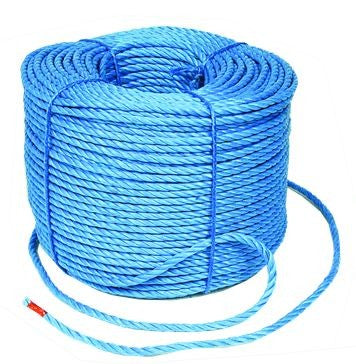
Blue polypropylene rope is a practical, general-purpose rope designed for everyday handling where you want a lightweight line that performs well in wet conditions. Polypropylene is widely chosen for utility and marine-adjacent tasks because it is buoyant (it floats), does not readily absorb water, and is easy to coil, carry and store. This product page may show multiple options (for example, different pack quantities or cut lengths), so the guidance below focuses on the material and typical performance characteristics of polypropylene rope rather than a single fixed length.
Polypropylene rope is commonly supplied in a traditional twisted construction (often 3-strand), giving it a familiar feel in the hand and making it straightforward to splice, knot and secure for day-to-day jobs. The blue colour helps with visibility on site, in yards, and around water, and can also assist with quick identification when you keep multiple rope types in stock.
Key Features
Lightweight & easy to handle
Polypropylene is a low-density polymer, so ropes made from it are typically lighter than many alternatives. That makes it easier to pull through, throw, coil and transport—useful for frequent set-up and take-down tasks.
Floats on water
Polypropylene is buoyant (commonly cited density around 0.91), so the rope floats rather than sinking. This is a major advantage for water-side work, temporary moorings, rescue lines, and any application where you want the line to remain visible and retrievable.
Low water absorption
Polypropylene rope is often listed as having effectively 0% water absorption. In practice, that means it stays lighter in wet conditions and is less prone to becoming waterlogged during outdoor use.
Rot resistant for outdoor use
Because polypropylene does not absorb water in the same way as natural fibres, it is commonly described as rot-proof. This makes it a dependable choice for damp environments and general outdoor storage (while still benefiting from sensible care and inspection).
Good general chemical resistance
Polypropylene is frequently described by suppliers as resistant to many acids/alkalis and common chemicals, which can be helpful in industrial and agricultural settings (always assess suitability for your specific exposure conditions).
UV resistance / UV stabilised options
Many polypropylene ropes are sold as UV resistant or UV stabilised. For long-term outdoor exposure, periodic inspection and replacement planning are still recommended, as UV and abrasion can degrade most rope materials over time.
Traditional twisted construction
Twisted (often 3-strand) polypropylene rope is a familiar, versatile format that knots well and is easy to work with for general tying, lashing and securing tasks.
- Lightweight for easier carrying and handling
- Buoyant (floats on water) for water-side tasks
- Low water absorption for wet-weather use
- Rot resistant compared with natural fibre ropes
- Commonly UV stabilised for outdoor applications
- General-purpose utility for tying, bundling and securing
Typical Uses
- General tying and securing around warehouses, yards and workshops
- Outdoor bundling and temporary lashing
- Water-side tasks where a floating rope is beneficial
- Garden and landscaping jobs (staking, temporary barriers, bundling)
- Site organisation and light-duty equipment tie-downs (non-lifting)
16mm - Blue Polypropylene Rope — Full Product Guide
Choosing the right rope is about matching the material to the environment and the job. Polypropylene is a popular choice when you need a rope that is easy to handle, performs well in wet conditions, and offers good value for general-purpose use. The sections below explain what polypropylene rope is best at, where it is less suitable, and how to get the most from it.
How It Works
Polypropylene rope is made from synthetic polymer fibres twisted into strands and then laid together to form a rope. The twisted construction creates a rope that is flexible, easy to knot, and simple to coil. When you apply load, the strands share the tension along the rope length. Like all ropes, performance depends on correct selection, correct use, and ongoing inspection.
Materials and Construction
Material: Polypropylene (PP). This material is widely used for utility ropes because it is lightweight and water resistant.
Construction: Many polypropylene ropes are supplied as 3-strand twisted rope. Twisted rope is a classic format that is easy to splice and generally grips well in common knots. It can, however, be more prone to untwisting if ends are not properly finished—heat sealing or whipping the ends helps maintain a tidy, durable finish.
Performance Characteristics (What to Expect)
Buoyancy: Polypropylene floats, which helps with retrieval and visibility in water.
Water behaviour: Low water absorption means the rope remains relatively light and manageable when wet.
Outdoor durability: Many products are described as UV resistant or UV stabilised, but long-term exposure to sunlight and weather will still gradually reduce strength. Plan for inspection and replacement in demanding outdoor environments.
Abrasion: Polypropylene is often described as abrasion resistant, but abrasion performance varies by construction and surface conditions. If your application involves repeated rubbing over rough edges, consider protective sleeves, fairleads, or alternative rope materials designed for higher abrasion environments.
Floor Type Compatibility
This rope is typically used as a handling and securing line rather than a floor-installed product. Where it contacts floors or ground surfaces (concrete, tarmac, decking, warehouse floors), avoid dragging under load across sharp or gritty surfaces, as abrasion can damage fibres over time. Use edge protection or route the rope through smooth guides where possible.
Health and Safety
Not for lifting unless specifically certified: General-purpose polypropylene rope is commonly used for tying and securing, but it should not be used for lifting people or loads unless the product is explicitly rated, certified, and used within the correct safety factors and regulations.
Inspect before use: Check for cuts, melted/glazed areas (heat damage), severe abrasion, flattened sections, or contamination. If in doubt, replace.
Avoid shock loading: Sudden jerks can exceed the rope’s capacity even when average loads seem low.
Keep away from heat sources: Synthetic fibres can melt or weaken with heat and friction.
Use appropriate knots and terminations: Knots reduce rope strength. Choose secure knots suited to the task and consider splicing or proper hardware where appropriate.
Ideal Applications and Use Cases
- Marine and water-side utility: Floating behaviour is useful for temporary lines, marker lines, and general water-side handling.
- General site use: Quick tie-offs, bundling, and temporary barriers.
- Agriculture and landscaping: Lightweight rope for everyday tying and securing tasks.
- Warehousing and logistics: Organising, securing light loads, and general-purpose tying (non-lifting).
Maintenance, Cleaning and Care
Cleaning: Rinse with clean water to remove grit and salt after heavy outdoor or marine exposure. Allow to dry before long-term storage.
Storage: Store in a cool, dry place away from direct sunlight when not in use. Avoid contact with sharp edges and keep away from chemicals not known to be compatible with polypropylene.
End finishing: Heat seal cut ends (where appropriate) or whip/tape ends to reduce fraying and maintain a neat coil.
Inspection routine: For frequent-use ropes, adopt a simple inspection routine—look and feel along the rope length for damage, stiffness, or thinning.
Case Study (Typical Scenario)
A facilities team needs a rope that can be used outdoors in wet weather for temporary securing and quick tie-offs. They choose polypropylene because it is lightweight to carry between jobs, remains manageable when wet, and can be stored without the concerns associated with natural fibre rot. The team implements a basic inspection routine and replaces ropes that show abrasion or heat damage from friction points.
Who is it for?
- Maintenance teams needing a dependable general-purpose rope
- Yards, farms and landscaping crews who want a lightweight, water-resistant line
- Water-side users who benefit from a rope that floats
- Workshops and warehouses needing rope for tying, bundling and organisation
Colours / Features Available
This listing is for a blue polypropylene rope. Colour can help with visibility and identification. Depending on the configuration options shown on this page, you may be able to select different pack quantities or lengths.
Sizes Available
This product page may include multiple options (such as different pack sizes and/or lengths). Select the option that best matches your application and handling needs. If you require a specific cut length or bulk supply, check the available variants on this page.
Need help choosing?
If you’re deciding between polypropylene and other rope materials (such as polyester or nylon), consider the environment (wet/dry, UV exposure), abrasion points, and whether buoyancy is important. Polypropylene is an excellent all-round choice when floating and low water absorption are key priorities.