

Equiptment
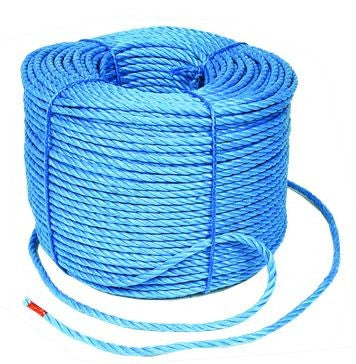
Blue Polypropylene Rope — Overview
Blue polypropylene (PP) rope is a practical, general-purpose rope choice for everyday securing, bundling and handling tasks where you want a lightweight line that’s easy to work with. Polypropylene rope is widely used across warehousing, construction, agriculture and marine environments because it offers a strong balance of usability and value, and it is commonly supplied as a twisted (3-strand) rope made from split-film polypropylene.
This product page may represent multiple options (for example, different coil lengths or pack quantities). Please select the option that best suits your application.
Key Features
Polypropylene (PP) construction
Made from polypropylene fibres, a popular rope material for general handling and securing tasks. Polypropylene rope is commonly specified where a lightweight rope is preferred.
Typically 3-strand twisted / split-film rope
Many blue polypropylene ropes in this category are manufactured as a 3-strand twisted rope using split-film polypropylene, giving a familiar, easy-to-grip rope that handles well for tying and lashing.
Floats on water
Polypropylene rope typically floats due to its low density, which is useful for many waterside and marine-adjacent tasks where you don’t want the rope to sink.
Clear, high-visibility blue colour
The blue colour helps with quick identification on site, in stores, or on vehicles and trailers.
Strength depends on specification
Breaking strength varies by manufacturer, construction and grade. Published specification sheets for blue split-film polypropylene rope show that break load is a distinct value from safe working load, and you should always select rope based on the correct rating for your use.
- Material: Polypropylene (PP)
- Construction: Commonly 3-strand twisted / split-film (varies by supplier)
- Colour: Blue
- Buoyancy: Polypropylene rope typically floats
- Important: Break load is not the same as safe working load—use the correct rating for your application
Typical Uses
- General lashing and securing of loads (non-lifting applications)
- Bundling materials in warehouses and yards
- Site and farm tasks such as temporary tie-downs and barriers
- Marine and waterside tasks where a floating rope is beneficial
- Trailer, tarpaulin and cover tie-downs (where appropriate)
Blue Polypropylene Rope — Full Product Guide
Polypropylene rope is a staple for day-to-day operations because it is straightforward to handle, easy to store, and versatile across many industries. The sections below explain what polypropylene rope is best suited for, how to choose the right option, and how to use it responsibly.
How It Works
Rope works by distributing load through its fibres and construction. In a twisted (3-strand) rope, the strands share the load and provide a balance of flexibility and grip for tying knots. Polypropylene fibres are commonly used for general-purpose ropes, and split-film polypropylene is a frequent construction method for economical, robust lines used in handling and securing.
Because rope performance depends on construction and grade, always check the product’s stated specification for your chosen option and ensure it matches your intended use.
Materials and Construction
Polypropylene (PP)
Polypropylene is a widely used polymer for ropes. It is valued for being lightweight and for its typical buoyancy in water. Many blue polypropylene ropes are produced as split-film polypropylene, which is then twisted into a 3-strand rope.
3-strand twisted / split-film (common)
In this category, product listings and specification sheets commonly describe blue polypropylene rope as 3-strand twisted split-film. This construction is familiar for general tying and lashing tasks and is often chosen for its practicality and cost-effectiveness.
Strength, Ratings and Responsible Selection
When selecting rope, it’s essential to distinguish between break load (the force at which a rope may fail under test conditions) and safe working load (a lower value intended for real-world use). Published polypropylene rope specification sheets explicitly separate these concepts and warn that break load is not the allowable working load.
Key point: strength can vary significantly between manufacturers and constructions even when the diameter and material appear similar. If your application is safety-critical, regulated, or involves lifting, towing, or personnel safety, use the exact product datasheet and follow relevant standards and site rules.
Floor Type Compatibility
Rope is not a floor covering, but it is often used around floors, loading bays and work areas. Polypropylene rope can be used on common industrial surfaces such as concrete and tarmac for temporary barriers, bundling and securing tasks. As with any rope, abrasion against rough surfaces can reduce service life—avoid dragging under load and protect the rope where it passes over sharp edges.
Health and Safety
- Do not use break load as a working limit: always use the correct working load guidance for your application.
- Inspect before use: check for cuts, heavy abrasion, melted/glazed fibres, contamination, or damaged strands.
- Avoid sharp edges: use edge protection where the rope contacts corners or abrasive surfaces.
- Keep clear of snap-back zones: any tensioned rope can recoil if it fails.
- Use appropriate knots and terminations: knots can reduce effective strength; choose methods suitable for the task.
Ideal Applications and Use Cases
This type of rope is commonly chosen for general-purpose tasks where ease of handling and practicality matter:
- Warehousing & logistics: bundling, temporary securing, and organising loads.
- Construction & site work: temporary tie-offs, marking areas, and general handling.
- Agriculture: everyday tying and securing tasks around yards and fields.
- Marine & waterside: applications where a floating rope is beneficial (always ensure suitability for your exact use).
Maintenance, Cleaning and Care
- Storage: store clean and dry where possible, away from excessive heat sources.
- Cleaning: rinse off grit and dirt to reduce abrasion during use.
- Handling: avoid dragging the rope over rough ground under tension; this can accelerate wear.
- Retirement: remove from service if there is significant abrasion, cuts, fused fibres, or any doubt about integrity.
Case Study (Typical Scenario)
Yard & dispatch securing: A dispatch team needs a reliable, easy-to-handle rope for bundling awkward items and creating temporary tie-downs during staging. A blue polypropylene rope is selected for its general-purpose performance and straightforward handling. The team implements a simple inspection routine (checking for abrasion and damage) and uses edge protection where the rope passes over pallet corners to extend service life.
Who is it for?
- Warehouses, yards and logistics teams needing a practical general-purpose rope
- Construction and maintenance teams for everyday tying and securing tasks
- Farm and agricultural users for general yard work
- Marine and waterside users who prefer a rope that typically floats (subject to suitability)
Colours / Features Available
This listing is for blue polypropylene rope. Product ranges may include other colours or constructions; if you need a specific feature (for example, a different construction type), choose the appropriate option or contact us for guidance.
Sizes Available
This product page may cover multiple selectable options (such as different coil lengths or pack quantities). Please choose the variant that matches your requirements. If you need guidance on selecting the right option for your application, contact us with details of how you plan to use the rope.
References used for general category information:
Polypropylene rope specification sheet (blue split-film PP rope): https://www.buyrope.co.uk/pdf/BR-PDF-BLUE-SPLIT-FILM-POLYPROPYLENE-ROPE-Specification-Sheet.pdf
Blue polypropylene rope product listing (category match): https://www.polypropyleneropes.co.uk/proddetail.php?prod=20mm_blue_polypropylene_rope_220m_bulk_coil
Blue polypropylene rope product listing (category match): https://www.ropesandtwines.com/proddetail.php?prod=20mm_blue_polypropylene_rope_220m_coil
Polypropylene rope datasheet (buoyancy/float characteristic): https://www.bullivants.com/getContentAsset/0c37fc7c-6884-48c6-9383-968c5f4716e7/5ff0a0aa-a139-430e-ae3a-1c964a7ccdba/Bullivants-Polypropylene-Rope-Blue-Data-Sheet.pdf