
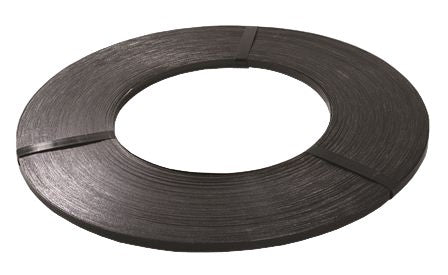
Strapping / Steel Strapping Banding
-
25x0.8mmx258m - Ribbon Wound Steel StrappingRegular price From £93.35 GBPRegular priceUnit price per
-
19x0.5mmx594m - Oscillation Wound Steel StrappingRegular price From £124.50 GBPRegular priceUnit price per
-
16x0.5mmx701m - Oscillation Wound Steel StrappingRegular price From £82.15 GBPRegular priceUnit price per


Strapping / Steel Strapping Banding
Steel strapping (also called steel banding) is a high-strength packaging method used to unitize, reinforce, and secure heavy or rigid loads for storage and transport. Compared with many plastic strapping options, steel strap offers excellent retained tension, high resistance to cutting and abrasion, and strong performance on dense products such as metal, timber, masonry, and machinery components.
Steel Strapping Banding — Helpful Guide
This collection includes three steel strapping formats that cover common industrial use cases—from general pallet unitizing to heavy-duty bundling. The key differences are strap width/thickness (which influences strength and stiffness) and coil winding style (which influences handling and productivity).
Types of steel strapping in this category
- Ribbon wound steel strapping: A traditional flat coil format that is often chosen for mobile or intermittent strapping where simple handling and straightforward dispensing are priorities.
- Oscillation wound steel strapping: A cross-wound coil format that typically provides longer continuous length per coil, helping reduce changeovers in higher-throughput environments when paired with an appropriate dispenser/payoff system.
Products available in this collection (with quick-use guidance)
-
25x0.8mmx258m - Ribbon Wound Steel Strapping
A wider, thicker strap option commonly selected for heavy-duty bundling and securing where higher stiffness and strength are beneficial. Ribbon wound coils are often preferred for simpler handling in manual or mobile strapping setups.
-
19x0.5mmx594m - Oscillation Wound Steel Strapping
A versatile mid-width strap that suits many industrial pallet and bundle applications. The oscillation wound format provides extended strap length per coil, which can reduce downtime from coil changes in repeat operations.
-
16x0.5mmx701m - Oscillation Wound Steel Strapping
A narrower strap that is often used for lighter-to-medium duty unitizing and bundling where easier forming around the pack is helpful. The oscillation wound coil supports longer runs when used with a compatible dispenser.
Understanding steel strap sizes (width x thickness)
Steel strapping is typically specified as width × thickness (for example, 19×0.5 mm). In general, increasing width and/or thickness increases strap stiffness and typical break strength, but also increases the force required to tension and form the strap around a load. Selecting the right size is a balance between load security, handling effort, and the risk of damaging the product edges.
Practical selection overview
- 16×0.5 mm: Often chosen for lighter-to-medium pallet loads and smaller bundles where operator handling and ease of forming are important.
- 19×0.5 mm: A common general-purpose choice for medium-duty industrial loads, offering a strong balance of handling and performance.
- 25×0.8 mm: Typically used for heavy-duty applications where high strength and rigidity are required and where tooling and edge protection are especially important.
Ribbon wound vs oscillation wound: how to choose
Ribbon wound (traditional coil)
Ribbon wound coils are wound in a conventional flat coil. They are frequently selected for manual strapping stations, mobile use, and lower-volume operations where straightforward coil handling is preferred.
- Best for: intermittent use, mobile strapping, simple dispensing setups.
- Operational note: coil changes may be more frequent compared with long-length cross-wound coils.
Oscillation wound (cross-wound coil)
Oscillation wound coils are wound side-to-side in layers, typically allowing more strap length per coil. This can improve productivity by reducing coil changeovers, especially in repeat packaging operations.
- Best for: higher throughput, fixed strapping stations, longer continuous runs.
- Operational note: use a dispenser/payoff designed for oscillation wound strap to help prevent tangles, twists, or uncontrolled payoff.
Case study: reducing load movement on heavy pallets
A warehouse shipping dense, rigid products (such as metal components or masonry) experienced occasional pallet shifting during transport. Stretch wrap alone provided containment but not enough rigidity. By adding steel strapping around the pallet (with edge protection on corners), the load became more resistant to lateral movement and compression changes during handling. The team also reduced rework by standardizing strap size and documenting a consistent tensioning and joint inspection routine.
How to choose the correct steel strapping for your application
1) Start with the load characteristics
- Weight and density: heavier and denser loads typically benefit from wider/thicker strap.
- Edge condition: sharp edges can cut strap or concentrate stress; plan for edge protection and avoid overtensioning.
- Compression and settling: loads that settle (some palletized goods) may require a strapping approach that maintains tension over time.
- Transport severity: long-distance shipping, export handling, or frequent transfers can justify moving up in strap size and improving joint/edge protection.
2) Match the coil style to your workflow
- Mobile/manual work: ribbon wound coils are often simpler to manage.
- Repeat/high-volume work: oscillation wound coils can reduce changeovers when paired with the right dispenser.
3) Ensure tooling and joint method are compatible
Steel strapping performance depends on the entire system: strap size, joint method, tools, and operator technique. Tools must be rated for the strap width and thickness being used. If seals are used, they must match the strap specification and the sealer type. If a sealless joint method is used, confirm it is suitable for the strap grade and thickness.
4) Plan for edge protection and pack integrity
Steel strap can concentrate force at corners. Edge protectors (corner protectors) help distribute pressure, reduce product damage, and reduce the chance of strap damage at sharp edges. They are especially important when applying higher tension or when strapping cartons, coated surfaces, or crushable products.
Common application tips (quality and safety)
Preventing strap damage and joint failures
- Avoid kinks: kinks create weak points that can reduce strap strength.
- Use consistent tension: overtensioning can crush corners or overstress joints; undertensioning can allow load movement.
- Inspect the joint: confirm the seal/crimp or sealless joint is properly formed before moving the load.
- Use the right dispenser: controlled payoff reduces twists and improves operator safety.
Safety essentials for steel strapping
Steel strapping stores energy under tension and has sharp edges. Always follow site safety procedures and ensure operators are trained on recoil hazards and safe cutting practices. Keep bystanders clear during tensioning and cutting, and use appropriate personal protective equipment such as eye protection and cut-resistant gloves.
Q&A
What is the difference between ribbon wound and oscillation wound steel strapping?
Ribbon wound strap is wound in a traditional flat coil and is often easier to handle in mobile or intermittent manual use. Oscillation wound strap is cross-wound to fit more length per coil, which can reduce changeovers in higher-volume operations when used with a suitable dispenser.
How do I choose between 16×0.5 mm, 19×0.5 mm, and 25×0.8 mm steel strap?
Start with load weight, rigidity, and transport conditions. Narrower 16×0.5 mm is commonly used for lighter-to-medium unitizing, 19×0.5 mm is a versatile general-purpose option, and 25×0.8 mm is typically reserved for heavier-duty securing where higher stiffness and strength are needed.
Why does my steel strap sometimes loosen after strapping?
Loosening can occur if the load settles or compresses after tensioning, if the joint is not formed correctly, or if the strap is overtensioned and then relaxes. Improving pack stability, using appropriate edge protection, and verifying tool and joint compatibility can help maintain tension.
Do I need edge protectors when using steel strapping?
Edge protectors are recommended when corners are sharp, surfaces are coated, cartons are used, or higher tension is applied. They spread strap pressure over a larger area, reducing product damage and lowering the chance of strap damage at corners, which can improve overall load security.
What are the main safety risks with steel strapping and how can they be reduced?
Key risks include strap recoil when cutting, sharp edges, and uncontrolled coil payoff. Reduce risk by using proper dispensers, standing clear of the strap line during tensioning and cutting, using correct tools, and wearing eye protection and cut-resistant gloves. Training and consistent procedures are essential.